Travis serves as our Technology Director at CFI. Whether he’s leading facility tours, connecting with entrepreneurs, troubleshooting tech problems, or brainstorming with the team, he’s always on the go. His contributions are vital to the smooth operation of CFI, and we’re incredibly grateful to have him on board! Read on to learn more about Travis!
What college did you attend and what was your major?
I attended the University of North Dakota and majored in Information Systems.
What is your favorite book or movie?
This is a tough question, but I think I would go with “Back to the Future”
If you could drop everything and go anywhere in the world, where would you go?
I have Norwegian heritage and if I could go tomorrow, I would be in Norway.
What is your favorite thing to do in your free time?
Spend time with family and friends
Challenge myself with hobbies that allow me to work with my hands and brain
Volunteer at local organizations
What is your favorite part of living in Grand Forks?
This answer is broader for me. It is North Dakota more than Grand Forks. I like living in North Dakota because of the unique opportunities that exist, the culture of the people, and the speed connections can be created.
What is your favorite part about working at CFI?
My favorite part is the unique experiences. Working at CFI we meet individuals starting companies in bio medical, UAS, to space industries and local entrepreneurs, representatives with the federal and state government, high school and UND students, and more.
Amanda is CFI’s Assistant Director. She helps oversee innovation and commercialization training for faculty, students, and community members. She also leads efforts to implement strategic initiatives, fosters campus and community collaborations, and ensures program effectiveness.
What do you typically do during a day at work?
Lots of meetings! It’s my job to make sure our department runs smoothly so I spend a lot of time connecting with our staff.
What college did you attend and what was your major?
I attended UND and majored in Political Science, which is when I realized that Public Administration is more for me and got my MPA from UND as well.
What is your favorite book or movie?
Dirty Dancing is my all time favorite movie. I’m always happy to carry a watermelon.
If you could drop everything and go anywhere in the world, where would you go?
My favorite city in the world Chiang Mai, Thailand, but maybe Paris, or New York? I could really go anywhere at anytime.
What is your favorite thing to do in your free time?
I love to read and have family dance parties with my 3-year old daughter.
What is your favorite part of living in Grand Forks?
My favorite part about Grand Forks is the commute. JK, but Grand Forks really offers a lot for families and ways to keep busy all year round.
What is your favorite part about working at CFI?
I love the people. The people who work here, both staff and interns, are amazing and get me excited to come to work every day.
Kevin is CFI’s Commercialization Specialist. His focus is on autonomous systems commercialization through various sectors such as UAS, transportation, healthcare, biotech, etc. He is a coach for North Dakota start up programs such as InnovateND and LIFT and coordinates with the University, community and statewide stakeholders.
What do you typically do during a day at work?
I work as the community facing coach helping to guide startups and businesses through their commercialization journey. Specifically, I focus on companies in the autonomous industry and connecting those companies to North Dakota resources and talent. In addition, I am a coach for InnovateND, a startup program funded through the ND Department of Commerce.
What college did you attend and what was your major?
I received a BBA in Entrepreneurship from the University of North Dakota
What is your favorite book or movie?
My favorite movie is The Dark Knight.
If you could drop everything and go anywhere in the world, where would you go?
A dream vacation would be playing golf at Augusta National or St. Andrews in Scotland.
What is your favorite thing to do in your free time?
I love to golf and enjoy going to the lake with friends.
What is your favorite part of living in Grand Forks?
I grew up in Thief River Falls so Grand Forks is a big city to me. However, it still has a small town feel to it with a great community of like-minded people. UND hockey games are always fun too!
What is your favorite part about working at CFI?
I enjoy being able work with creative people between the CFI team and the entrepreneurs we support. I learn something new every day and it is exciting to see all the innovations taking place across various sectors.
Running a small business in Grand Forks is no small feat. From juggling daily operations to planning for growth, it’s easy to feel stretched thin. Winter months bring their own set of challenges—slumps in sales, staffing shortages, and questions about how to expand into new markets.
What if you could tackle these challenges head-on and leave with a plan you’re excited to put into action?
The Solution Sprint Workshop on December 7th is your opportunity to step away from the daily grind, focus on your business, and walk out with a concrete, actionable plan.
Why You Should Attend
If you’re a small business owner looking to:
Attract more customers and boost sales.
Overcome the winter sales slump.
Find and retain reliable staff.
Explore and plan for expansion into new markets.
Then this workshop is for you.
This is a high-impact, hands-on workshop tailored to business owners who want results. Together, we’ll dig into your biggest challenges and work step-by-step to create a strategy that works for you.
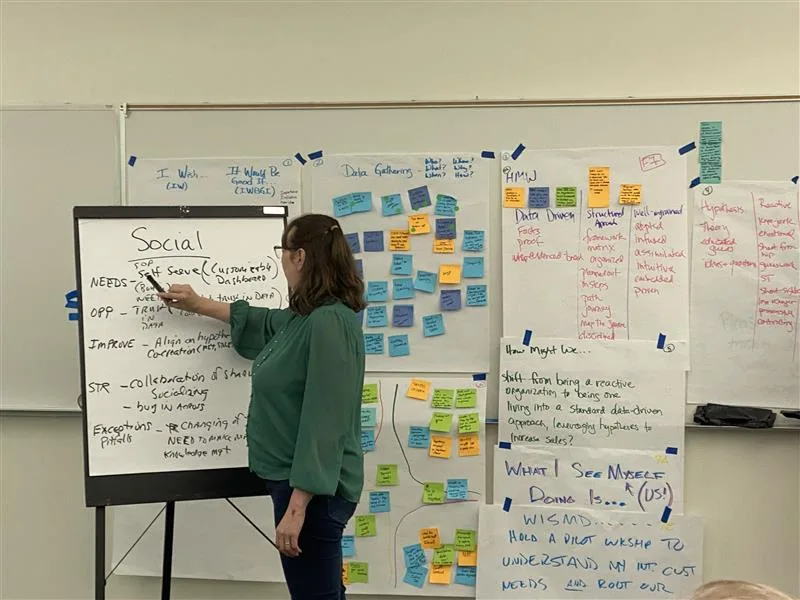
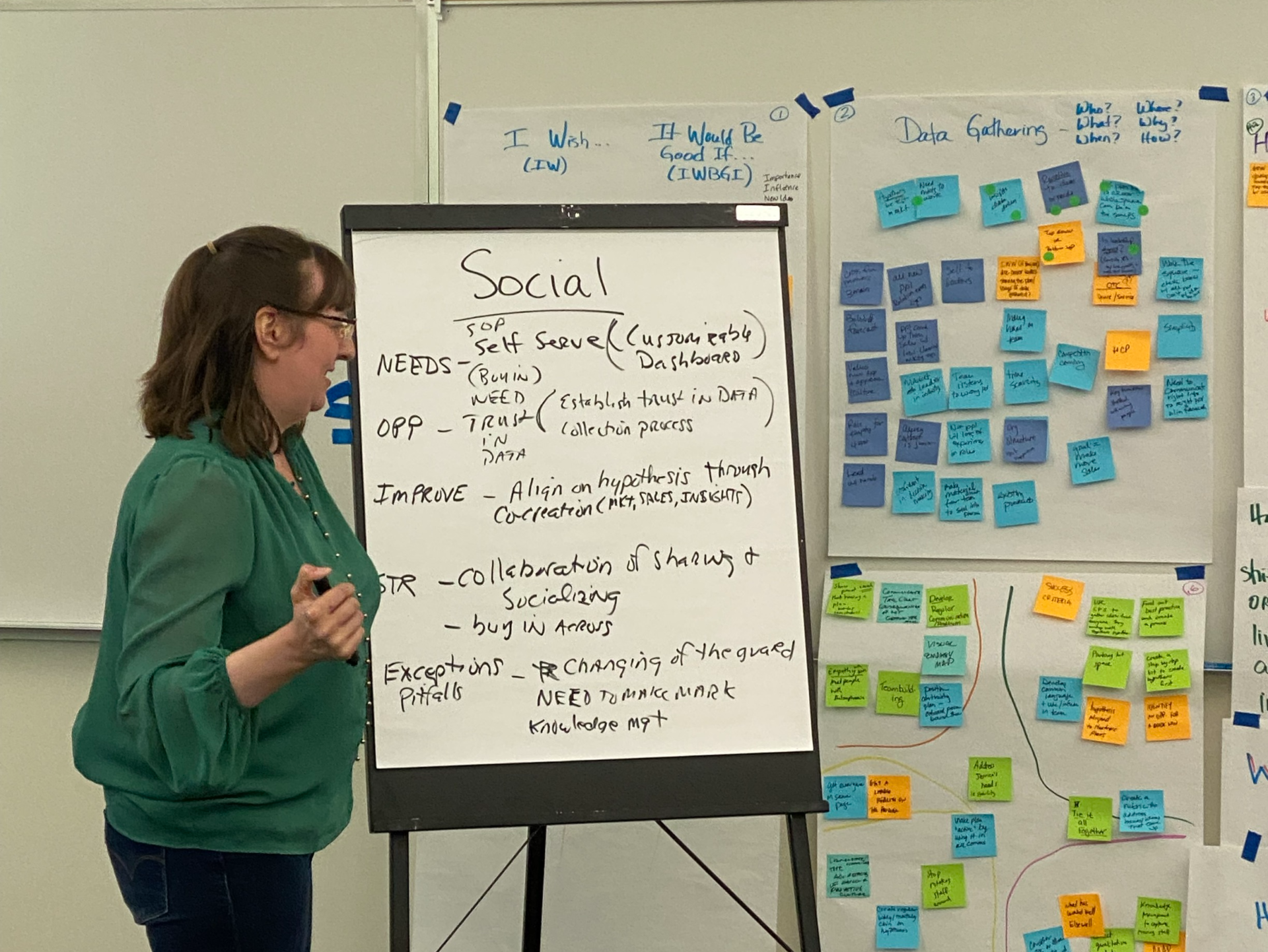
Photo captured doing strategy planning
What to Expect
Here’s how the day unfolds:
9:00 AM – 10:00 AM: Clarify
We’ll start by exploring your vision, gathering insights, and clearly defining your most pressing challenges.
10:00 AM – 11:30 AM: Ideate
Using creative thinking techniques, you’ll brainstorm potential solutions, identifying ideas with the most potential to move forward.
11:30 AM – 12:30 PM: Lunch
Take a break and enjoy a delicious lunch on us while connecting with fellow business owners.
12:30 PM – 1:30 PM: Develop
Refine, evaluate, and strengthen your top ideas to turn them into actionable solutions.
1:30 PM – 3:00 PM: Implement
You’ll finish the day by creating a practical, step-by-step plan that you can execute immediately to grow your business.
Solution Sprint Agenda
Why This Workshop Works
Practical, Hands-On Approach
Forget boring PowerPoints. You’ll roll up your sleeves, work through your real business scenarios, and leave with tools you can use right away.
Collaborative Energy
Connect with other Grand Forks business owners who share your challenges and aspirations. Share insights, learn from their experiences, and leave with fresh perspectives.
Expert Guidance
You’ll be guided by an experienced facilitator who knows how to help you clarify your vision, prioritize what matters, and take action.
Workshop Details
📅 Date: Thursday, December 7th
⏰ Time: 9:00 AM – 3:00 PM (Lunch included!)
📍 Location: Center for Innovation, 4200 James Ray Drive, Grand Forks
💡 Cost: $250 per participant
👉 Sign up now and save $50 with the early bird discount! Use code EARLYBIRD at checkout.
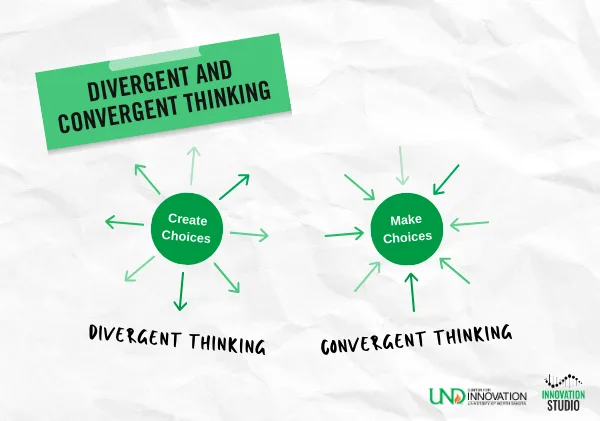
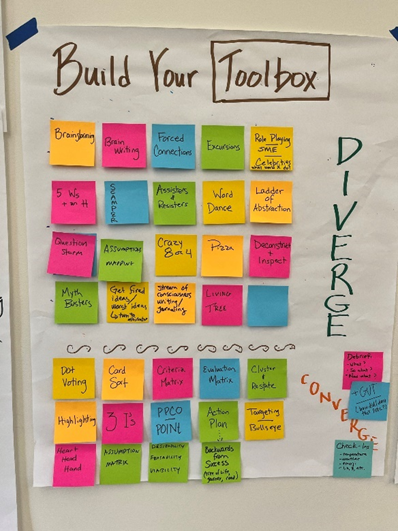
There are two types of thinking to solve any problem: divergent and convergent.
Generally speaking, divergent thinking is all about brainstorming and generating many ideas, while convergent thinking narrows down ideas to come to a final solution.
Most brainstorming sessions do not produce the results you hope for because they blend idea generation and critique in the same conversation. This stifles creativity and leaves valuable ideas unspoken. In fact, 38% of employees hesitate to take initiative because they fear their ideas won’t be fully explored.
Here’s a simple yet effective strategy to boost creativity and morale:
Educate Your Team: Help them understand the difference between convergent and divergent thinking.
Idea-Generation Meetings: Dedicate specific sessions solely to brainstorming big ideas, without any immediate critique.
Evaluation Meetings: Reconvene or hold critique until later so you can assess ideas against your project goals and constraints.
This approach allows for uninhibited creativity followed by focused analysis, ensuring all ideas get the consideration they deserve.
Finding out what your goals really are, the reasons behind them, and what’s stopping you from achieving them is crucial. This exercise brings together teams and stakeholders to gain a shared understanding of their goals, drivers, and barriers. You can discover what is slowing you down or if the purpose or goals are not quite right. Here’s how you can do it:
The Sailboat Exercise
1. Prepare Your Whiteboard:
On a whiteboard, draw a boat out at sea. This boat represents your team or project. Next, draw an island in the distance, which represents your goal.
2. Identify Goals:
Ask the group to write down what they believe the team or project’s goals are on sticky notes. Each person should contribute their thoughts.
3. Share and Organize:
Have each team member share what they have written. Sort the sticky notes around themes near the island. This helps in clustering similar goals and identifying common themes.
4. Identify Drivers:
Draw a sail on your boat. This sail represents what is driving you towards your goal. Ask the group to write down the drivers (factors that are helping achieve the goal) on sticky notes. Share and discuss these drivers, and place them on the sail.
5. Identify Barriers:
Draw an anchor on the boat. This anchor represents the barriers to the goals. Ask the group to write down what’s slowing or stopping you from achieving these goals on sticky notes. Share these barriers and place them around the anchor.
6. Prioritize Goals and Problems:
Finally, give each team member two dot stickers. Ask them to put a vote on the board for the goal they believe is most important to work towards and another dot for the problem they believe is most important to solve. This helps in prioritizing the goals and identifying the most critical barriers to address.
Benefits of the Sailboat Exercise
Shared Understanding: Aligns the team on common goals and barriers.
Clear Drivers: Highlights what is propelling the team forward.
Identified Barriers: Clearly identifies obstacles that need to be addressed.
Prioritization: Helps in focusing on the most important goals and problems.
This exercise can be a powerful tool in both business and personal settings to ensure that everyone is aligned and working towards the same objectives with a clear understanding of the factors influencing their success.
Sona is the Entrepreneur Coach and Start-up Specialist here at the Center for Innovation. Her days here are never the same as she meets with students, faculty, and staff to coach and mentor and instruct in their start-up journey. When she isn’t meeting with people, she typically works on improving and managing the programs in her portfolio.
Tell us a little bit about yourself!
I was born and raised in the former Czechoslovakia/ Czech Republic. I love to dance, I own a dog and a bearded dragon, I speak 5 languages – various skill level, and I am learning how to keep plants alive (gardening).
What college did you attend and what was your major?
My alma mater is Vysoka Skola Banska – Technicka Universita Ostrava, in Ostrava, Czech Republic. It is a university with a primary focus on engineering degrees. I earned an MBA in public finance and public policy and nonprofits from there.
What is your favorite book or movie?
Movie – Divine Secrets of the YaYa Sisterhood or Spanglish. Book – Essentialism by Greg McKeown
If you could drop everything and go anywhere in the world, where would you go?
The Czech Republic. But I love to travel, so I could go to Iceland, Italy, or Turkey!
What is your favorite thing to do in your free time?
Sleep, work out, cook, and read. Oh, and travel. And dance. I need more free time!
What is your favorite part of living in Grand Forks?
Everything is within a very reasonable distance in town, and the rush hour is very short.
What is your favorite part about working at CFI?
My role allows me to be creative, use my strengths, and work on the things I enjoy – developing relationships with students, faculty, and staff, build and grow programs, and witness cool things in the making.
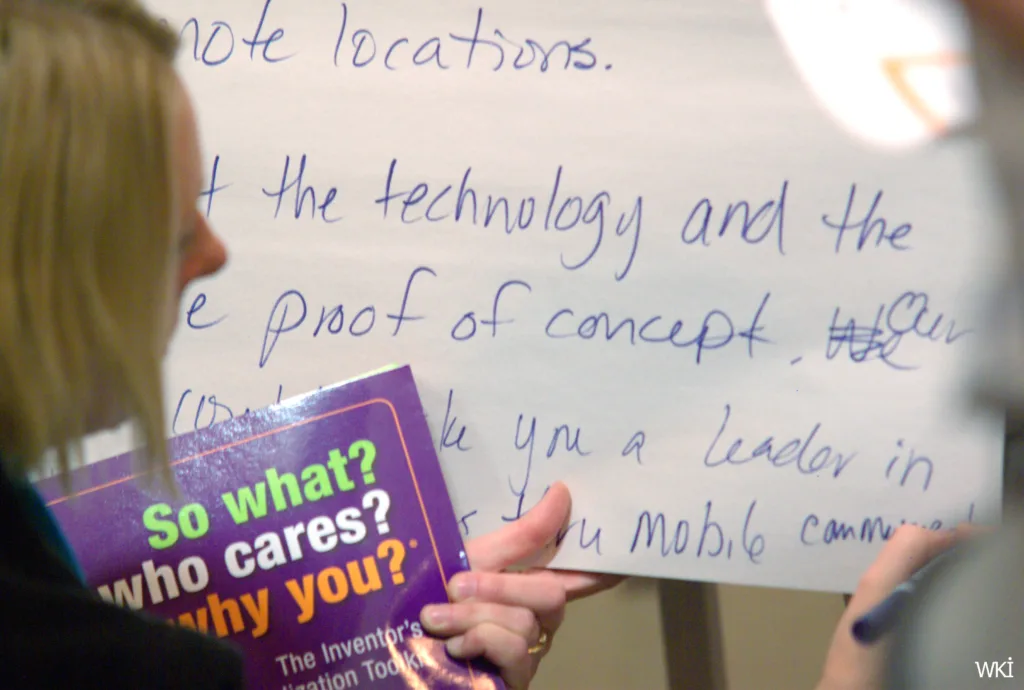
Tamara Bertram, our Innovation Training Specialist, recently attended CPSI (Creative Problem-Solving Institute), an annual conference dedicated to exploring and fostering creativity and innovation. It brings together a diverse group of professionals, educators, and innovators to share insights, learn new techniques, and collaborate on solving complex problems using creative methods. The conference includes various workshops, keynote speeches, and networking opportunities, all aimed at enhancing participants’ creative problem-solving skills.
Tamara facilitated a session called, “From Bach to Brainwaves: Music’s Power to Boost Concentration and Imagination”. This session was designed to understand how music can help you focus and spark new ideas. From musical warm-ups to background music set to the right mood, music can enrich any classroom, workshop, or creative problem-solving session. This session is unique as it offers strategies for educators and facilitators to use music in a way that is approachable and easy to implement in any classroom or training situation. With this session, you will learn how to effectively use music to encourage creativity and discover fun ways to incorporate music activities without needing a background in music.
She also attended and completed CPS Level 3: Creative Problem-Solving Facilitation Techniques.
Level 3: Facilitating CPS
Facilitation skills are central to the effective use of CPS, whether in formal meetings or informal brainstorming sessions. This course is designed for those who already know the CPS process in theory and are ready to put it into action as a facilitator. This course uses peer-group practices to prepare participants for working with actual clients. Through this course Tamara learned how to facilitate each step of the CPS process.
Other sessions were all breakout-style in the afternoons, all with different topics. Afternoon sessions offered practical and inspiring models to help attendees assess their work, life, and options for a more satisfying professional path.
“Life Strategic Planning” tackled common feelings of burnout and provided four mental models to bring clarity and prioritize effective next steps.
“Why Isn’t Creativity a School Subject?” introduced Create 8, a curriculum addressing the gaps in creativity education and interactive and reflective learning methods.
“Flightpath”, participants developed strategic plans using Creative Problem Solving (CPS) and business tools.
“The Hero’s Journey” workshop connected personal creative journeys to the archetypal hero’s journey, offering insights for living a creative life.
“Solo Genius is a Myth” emphasized the importance of social relationships in creativity, guiding participants to map their social capital for better productivity and well-being.
Each session combined adult learning techniques, interactive strategies, and personalized action plans to enhance engagement and learning outcomes
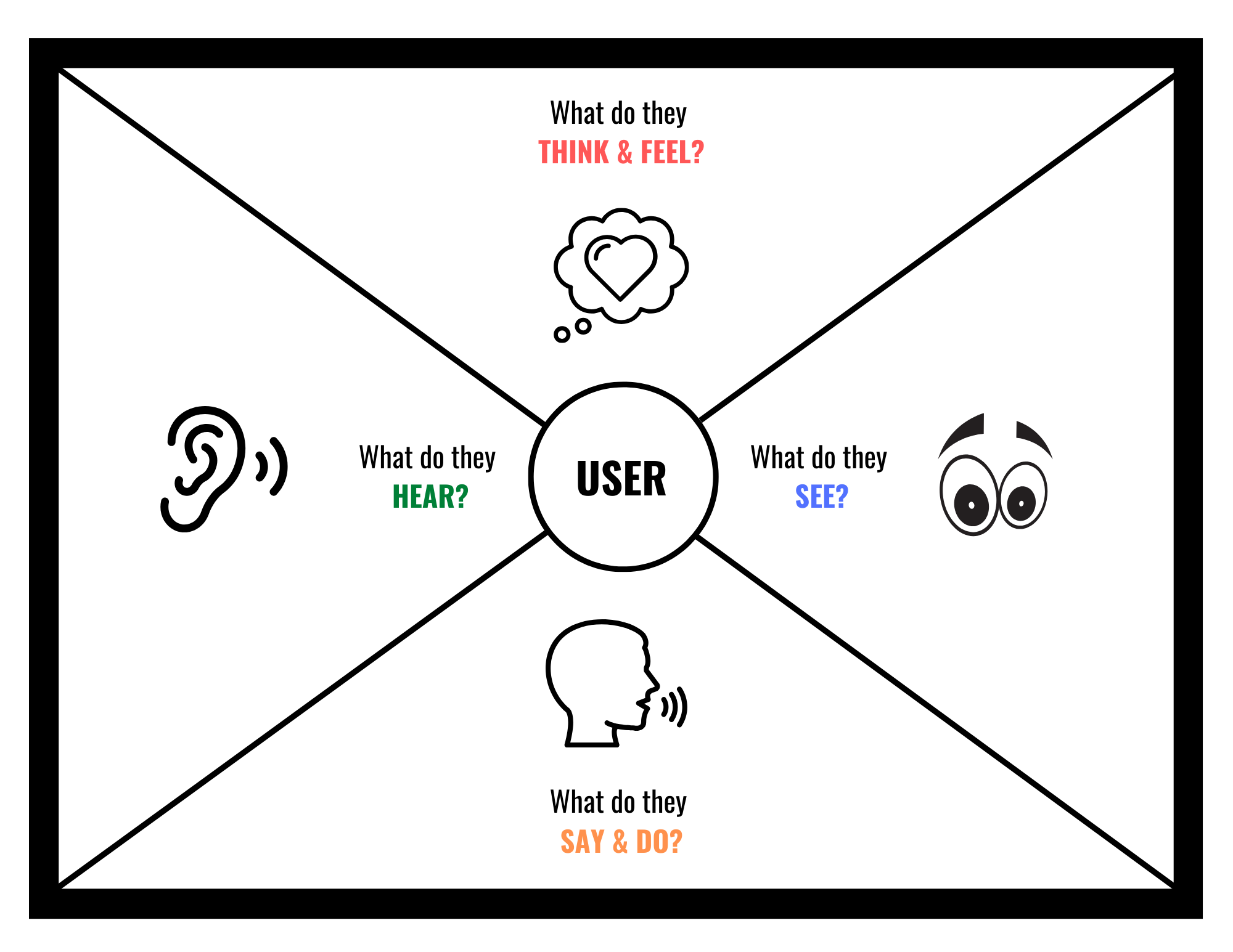
The Empathy Map is a powerful tool used in Design Thinking to better understand users’ needs, behaviors, and experiences. This tool helps businesses and individuals step into the shoes of their users or customers to create more user-centered solutions.
How to Use the Empathy Map:
Define Your User. Clearly identify the user or customer segment you are focusing on. Create a persona to represent this user.
Divide the Map into Sections. The Empathy Map is divided into four quadrants:
Says: What does the customer say out loud in interviews or public?Thinks: What does the customer think about, but might not say out loud? Consider their worries and aspirations.Does: What actions and behaviors does the customer exhibit?
Feels: What emotions is the customer experiencing?
Collect Data. Use various methods such as interviews, surveys, observations, and user feedback to gather information about your customer.
Identify Pain Points and Opportunities. Analyze the Empathy Map to identify the customer’s pain points, frustrations, needs, and desires. Look for patterns and insights that can inform your business or marketing.
Benefits of the Empathy Map:
Deeper Understanding: Provides a comprehensive view of the customer’s experience.
User-Centered Solutions: Helps create solutions that are more aligned with the customer’s actual needs and emotions.
Enhanced Communication: Facilitates better communication and understanding among team members by providing a shared reference point.
Innovative Thinking: Encourages thinking beyond traditional solutions by focusing on the customer’s perspective.
Applying the Empathy Map in Business and Life:
In Business:
Product Development: Use the Empathy Map to design products that better meet user needs.
Customer Service: Improve customer service strategies by understanding customer emotions and behaviors.
Marketing: Create marketing messages that resonate with the target audience’s feelings and thoughts.
In Life:
Personal Relationships: Gain insights into the thoughts and feelings of friends and family to improve communication and empathy.
Problem-Solving: Approach personal challenges by understanding your own thoughts, feelings, actions, and spoken words.
Career Planning: Reflect on your own experiences and aspirations to make informed career decisions.
The Empathy Map is a versatile tool that can be adapted to various contexts, helping both businesses and individuals develop deeper insights and more effective solutions.