Author: Haylee Bjork

LAUNCH event highlights UND’s growing culture of innovation

UND founders pitch ventures tackling challenges in health care, aerospace, education and more

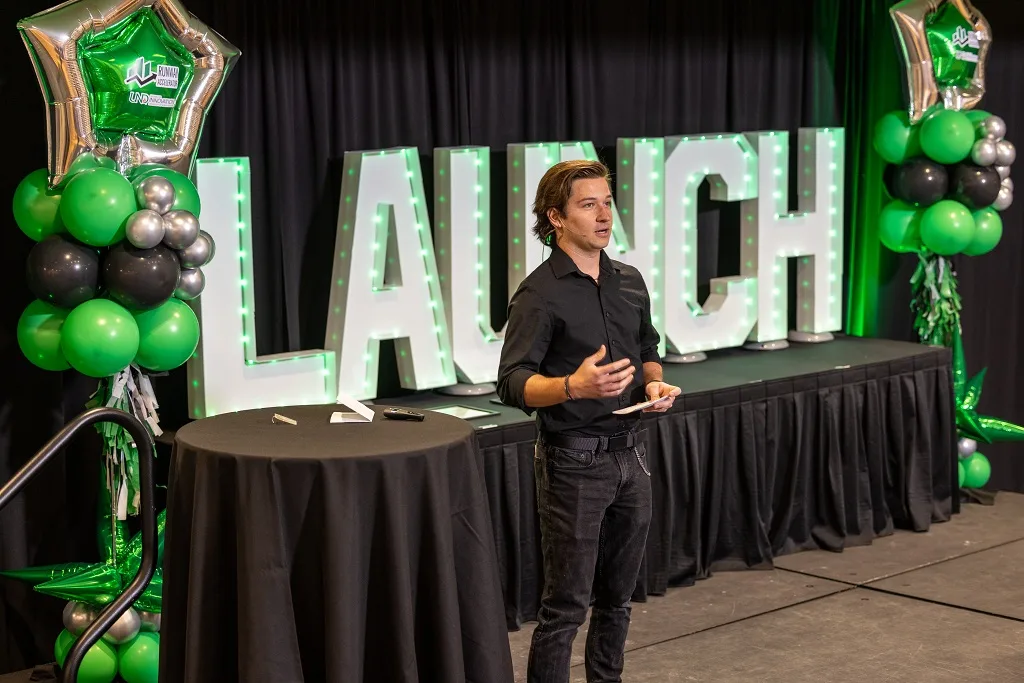
Spencer Milanowski, a helicopter aviation student at UND, takes the stage at the LAUNCH Event to describe his start-up company’s conversion kits, which can turn recreational vehicles into electric-powered machines for personal transportation. Photo by Mark Maliskey of Mark Maliskey Photography, Grand Forks.

On April 29, innovation took center stage at the second annual LAUNCH showcase, where 10 student and early-stage founders presented ventures developed through UND Center for Innovation programs, including the Runway Accelerator and the National Science Foundation’s Innovation Corps or I-Corps.

The showcase on the Memorial Union’s Social Stair showed how participants transformed early ideas into real-world, high-impact ventures. The lineup highlighted the university’s growing role as a launchpad for such ventures.

Now in its second year, LAUNCH featured founders from across several disciplines, including health care, engineering and aerospace. Their ventures addressed challenges ranging from maternal mental health and dairy safety to satellite refueling and career-support platforms for both collegiate athletes and immigrant communities.
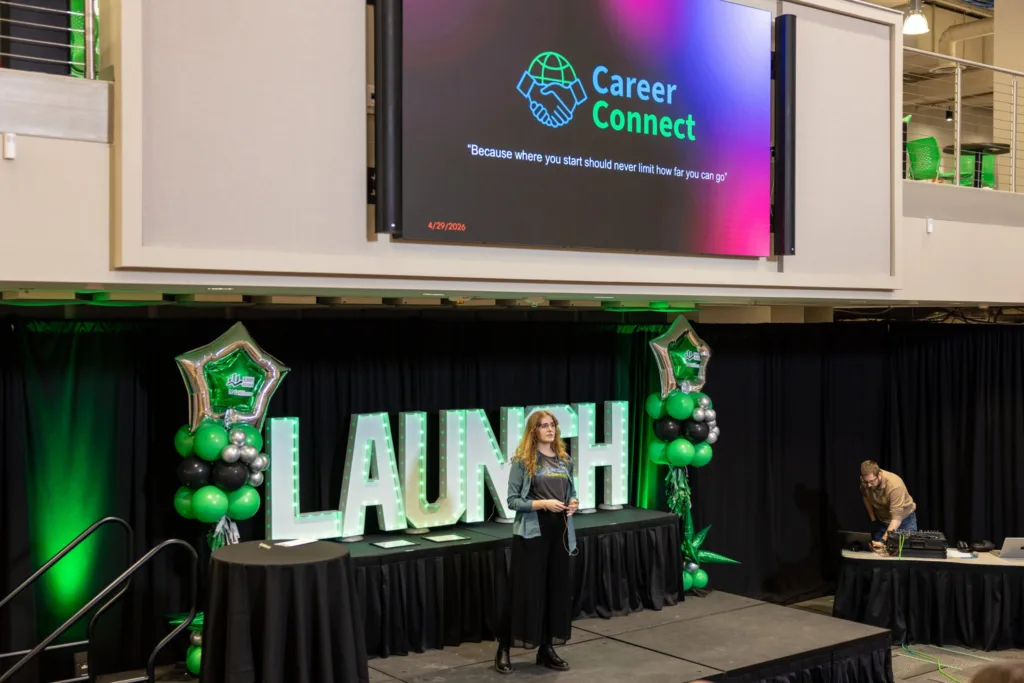
Elisabeth Starosta, founder of Career Connect, talks about her start-up at the LAUNCH event in the Memorial Union on April 29. Photo by Mark Maliskey of Mark Maliskey Photography, Grand Forks.

A culture of innovation

As for the ventures themselves, they all had their origins in various campus programs that give entrepreneurs meaningful support. The Runway program, for example, combines start-up training, mentorship by staff and business owners, networking with peers and industry experts, and access to up to $10,000 in mini-grant startup funding.

Runway is offered to any UND student or alumni during the UND academic year.

The evening opened with remarks from Scott Snyder, UND vice president for Research & Economic Development, followed by President Andrew Armacost, who emphasized the importance of cultivating a strong culture of innovation across campus.

Each founder delivered a four-minute pitch outlining the problem they set out to solve, how their idea evolved, and the practical impact they hope to create.
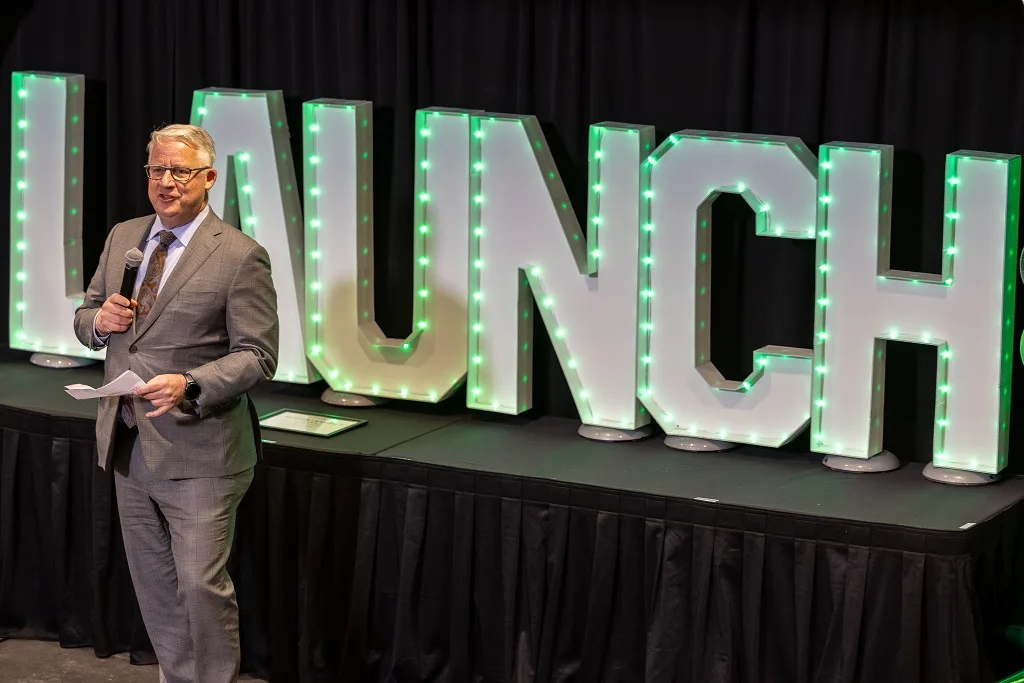
Scott Snyder, vice president for Research & Economic Development at UND, talks about how events such as LAUNCH help propel the culture of innovation on campus. Photo by Mark Maliskey of Mark Maliskey Photography, Grand Forks.

From idea to reality

Presenters included:

  • Jett Sutton, co-founder of NxtSzn — a platform helping collegiate athletes prepare for life after sports through mentorship and career connections.
  • Elisabeth Starosta, founder of Career Connect — a digital hub connecting immigrants, refugees and international students with employment resources and community support.
  • Lilja Jurva, founder of NoDak Therapy — an occupational therapy clinic providing research-based mental health support focused on mothers’ well-being.
  • Mackie Garibaldi, founder of Food Guardian — a portable device that quickly determines whether dairy products are safe to consume.
  • Bappa Ghosh, program lead of Detectology — a health care startup developing faster, more accessible methods for early cancer detection through small blood samples.
  • Chris Pitalo, founder of Moiety Research + Development — a fast-acting medical device to detect toxins and administer antidotes in high-risk environments.
  • Sai Susmitha Guddanti, co-founder of AstroFuel — a solution aimed at extending satellite lifespan through in-orbit refueling.
  • Spencer Milanowski, founder of PRC Electric — conversion kits for recreational vehicles into electric-powered machines for personal transportation
  • Lacey Anderson, founder of Gather & Grow — consultancy offering solutions to K-12 schools for educational experiences
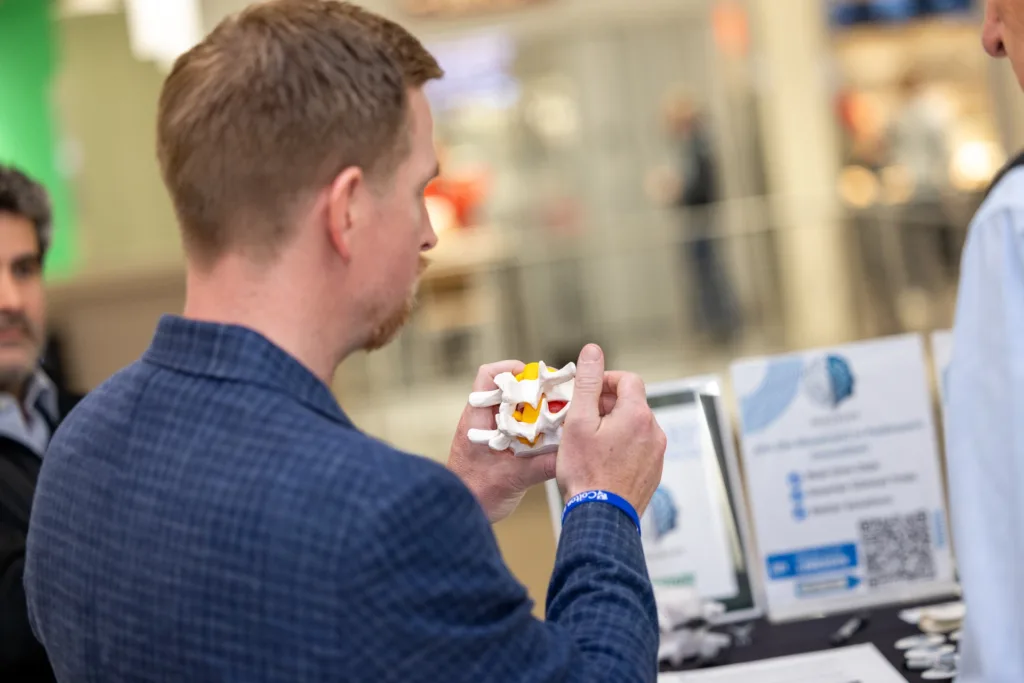
  • Dan Newman, co-founder of SHARP Biomedical — minimally invasive treatments for chronic back pain

Audience members react at the LAUNCH event, as entrepreneurs presented their ideas onstage and described the status of their start-up projects. Photo by Mark Maliskey of Mark Maliskey Photography, Grand Forks.

Turning experience into impact

Following the pitches, Mentors Nick Beaulieu and Pete Haga took the stage to reflect on the role mentorship has played in their careers and why they continue to invest in UND founders.

“UND played a critical role in shaping my career,” Beaulieu said. “Growing up in Larimore, N.D., I didn’t know any engineers or patent attorneys, so I relied on mentors at every step, from engineering school to law school. Being able to give that guidance back to students now has been an incredibly meaningful experience.”

The evening concluded with a networking reception, where founders connected with industry leaders, mentors and community partners to gain feedback and build relationships that could help move their ventures forward.

“LAUNCH highlights how innovation programs such as Runway and I-Corps converge to translate discovery into tangible outcomes,” said Amy Whitney, director of the Center for Innovation.

“The continued growth of this work reflects the momentum behind UND’s culture of innovation and our ongoing commitment to supporting founders across campus.”

The showcase offered a glimpse into UND’s next generation of innovators — and the ideas already shaping what comes next.

A video of the livestreamed event is available for readers who’d like more information. Additional photos of the event are available, too.

If you’re interested in supporting UND’s growing culture of innovation as a mentor, partner or participant, contact the UND Center for Innovation to learn how to get involved.
Philanthropy in Motion: Why Advancement Must Rethink Itself-Now

By DeAnna Carlson Zink

The End of Predictable Advancement 

Advancement has entered a new era—and many organizations are still operating like it hasn’t. 

For years, the work was predictable. Campaigns followed familiar cycles. Engagement strategies were repeatable. Annual plans often looked like a refined version of the year before. 

That world is gone. 

Today, advancement is operating in a reality where the pace of change is constant—and accelerating. What worked a year ago may already be outdated. And organizations that are not evolving are not standing still—they are falling behind. 
This is not a call for incremental improvement. It is a call for a mindset shift. 

Because the question is no longer, “How do we do more?” 

The question is, “How do we adapt fast enough to remain relevant?” 

Analyst or Scientist uses Artificial Intelligence for analysis of information on complex data sets on computer.
Analyst or Scientist uses Artificial Intelligence for analysis of information on complex data sets on computer. Source: Deemerwha studio / Adobe Stock

The Role of AI and Innovation in Modern Philanthropy

At the center of this shift is artificial intelligence and a wave of new technologies that are reshaping how we understand, prioritize, and engage donors. 

AI can surface insights in seconds that once took weeks. It can identify patterns we would have missed. It can streamline work that has long been manual and time-consuming. 

But speed is not the goal. 

Impact is. 

If AI simply helps us move faster through outdated models, we have missed the opportunity. The real value of innovation is not efficiency alone—it is elevation. It should allow us to think more strategically, engage more meaningfully, and focus more intentionally on the relationships that matter most. 

Why Human Connection Still Drives Philanthropy 

Because for all the change around us, one truth remains: 

Philanthropy is—and always will be—human. 

No algorithm replaces trust. No automation replaces connection. No system replaces shared purpose. 

The Future of Advancement Teams 

This is why the future of advancement is not about fewer people—it is about different people. 

We will need teams that are more agile, more curious, and more willing to challenge assumptions. Professionals who can blend relationship-building with data fluency. Leaders who are comfortable testing new ideas, learning quickly, and evolving continuously. 

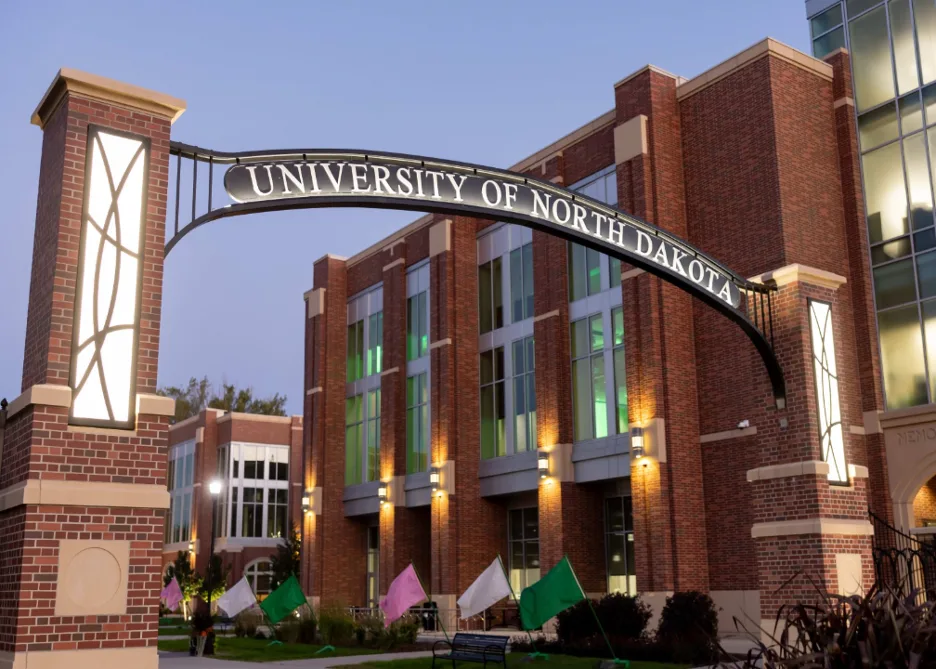
University of North Dakota sign on campus.
University of North Dakota sign on campus. Source: University of North Dakota

Innovation and Opportunity at UND

At institutions like the University of North Dakota—where innovation is central to how we prepare students and serve our communities—this moment represents more than disruption. It represents opportunity. 

An opportunity to rethink how philanthropy fuels progress. 
An opportunity to better connect people to purpose. 
And an opportunity to ensure that every advancement strategy ultimately drives meaningful outcomes. 

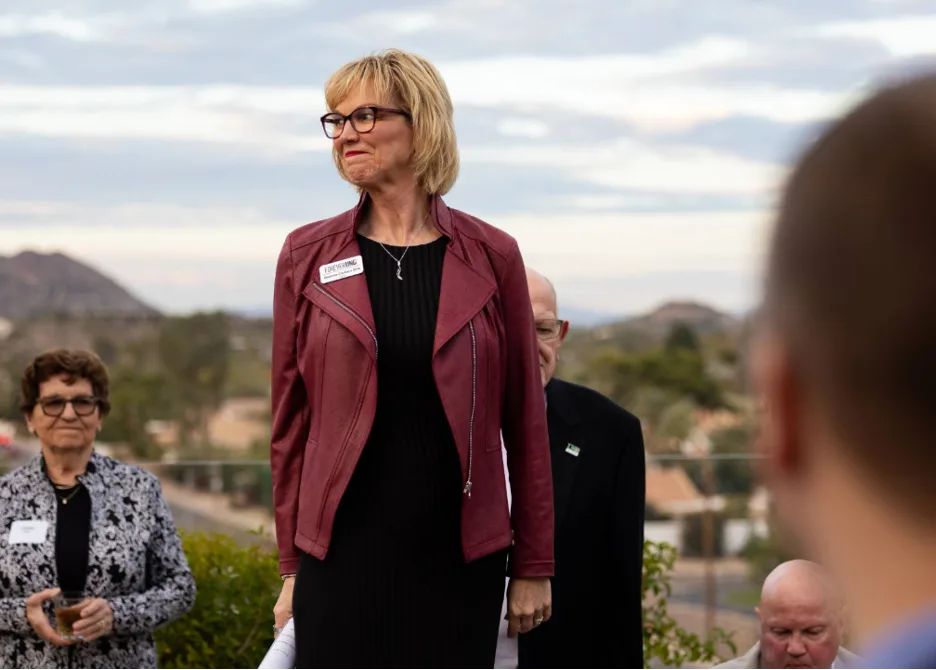
DeAnna speaking at a University of North Dakota Alumni Association & Foundation in Pheonix, Arizona.
DeAnna speaking at a University of North Dakota Alumni Association & Foundation in Phoenix, Arizona. 

Call to Focus on Impact

Because ultimately, this work is not about activity. And it is not about keeping pace for the sake of it. 

It is about impact. 

It is about changing lives—opening doors for students, fueling ideas that shape industries, and creating opportunities that extend far beyond a single campus. 

The future of advancement will belong to those who can embrace change without losing their core—who can leverage innovation without sacrificing authenticity. 

Who can move faster, think bigger, and still remember: 

This work is about people. 

About the Author

DeAnna Carlson Zink serves as Chief Executive Officer of the University of North Dakota Alumni Association & Foundation. With more than two decades of experience in advancement, she is passionate about building modern, high-performing philanthropic organizations that drive impact, expand opportunity, and strengthen the future of higher education. She also serves on the Board of the UND Center for Innovation Foundation, supporting entrepreneurship and innovation across the region. 

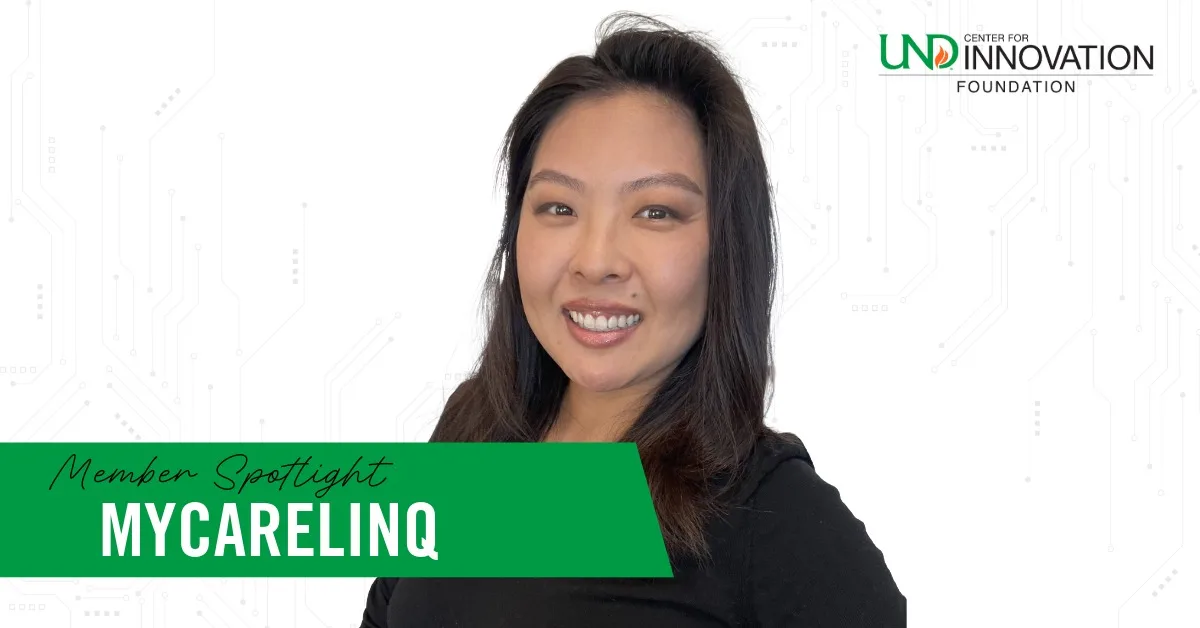
Member Spotlight: My CareLinq

Every family eventually faces a moment when care becomes complicated. It may be a new diagnosis, an aging parent who needs more help, a hospital discharge, a loved one in crisis, or a personal health challenge that suddenly requires more support. In those moments, the burden often extends far beyond healthcare. It affects work, relationships, finances, mental well-being, and the family’s ability to manage everyday life. 

MyCareLinq was created with a bold but practical vision: make high-quality care navigation and coordination accessible to everyone. The company is building a technology-enabled care assistant that helps individuals and families understand what is needed, organize next steps, evaluate options, connect with support, and follow through over time. Instead of leaving families to search, plan, coordinate, and decide on their own, MyCareLinq helps turn complexity into a clear path forward.

Caregiver assisting an elderly woman using a walker while walking along a park path outdoors.

Caregiver assisting an elderly woman outdoors. Source: amazing studio / Adobe Stock

Founder and CEO Min Pomper brings deep experience in healthcare strategy, operations, innovation, and care coordination. The idea for MyCareLinq was also personal. While helping care for a sick parent, Pomper saw how difficult it can be for families to find, organize, and coordinate care while also managing work, family responsibilities, and daily life.   

As MyCareLinq continues to grow, the company is expanding its presence in North Dakota with support from the University of North Dakota Center for Innovation (CFI) and regional partners focused on advancing innovation and entrepreneurship. 

Creating a Better Care Experience

MyCareLinq began with a focus on family caregiving. Through product development, customer feedback, and changing market needs, it has grown into a broader care navigation and coordination solution that can support people across different stages of life and care needs. 

Today, MyCareLinq helps users identify and understand care needs, organize tasks, create actionable care plans, qualify and connect with relevant services, and support follow-through so care tasks are completed, and support actually happens. 

Woman participating and waving in an online video meeting from home, engaged in conversation on her laptop.

Woman on a video call from home. Source: nenetus / Adobe Stock

Valuable Support Expanding into North Dakota

Although MyCareLinq is based in California, the company has built meaningful relationships in North Dakota through its first investor, an owner of InnoVets Aerospace, a disabled veteran-owned business based in Grand Forks. That connection introduced MyCareLinq to North Dakota’s innovation ecosystem, including the University of North Dakota Center for Innovation, the Grand Forks Region Economic Development Corporation, and the gBeta accelerator program.  

According to Min, North Dakota represents a strategic market because of its collaborative business environment, strong regional partnerships, and openness to practical solutions that improve access, experience, and reduce friction for individuals, families, payers, employers, and communities.  

 Grandmother and young children sharing a warm hug while sitting together on a sofa in a family home.

Grandmother and children hugging on a couch. Source: Azee/peopleimages.com / Adobe Stock

Looking Ahead

MyCareLinq is focused on expanding partnerships with employers, healthcare organizations, and community partners that can help bring care navigation support to more families. The company is also partnering with the owners of InnoVets Aerospace to expand government contracting opportunities, with the goal of supporting veterans, military personnel, and their families. 

MyCareLinq’s vision is to make high-quality care navigation accessible to everyone, giving individuals and families a clear, affordable path to understand their needs, make informed decisions, and put the right support in place when care becomes complex. 

Learn More

To learn more about MyCareLinq, explore partnership opportunities, or connect with the team, email hello@mycarelinq.com 

When Should you Protect an Idea? A Guide to Patents and Intellectual Property

By Amy Whitney

So you’ve come up with a great idea, something new, unique, and positioned to do something in a different way. Before you start sharing it widely, it’s important to think about how you’ll protect it.  

Taking steps to protect the design or function of an idea can prevent others from copying or claiming it as their own. 

Two people looking over re-reading paper

Why Protecting Your Idea Matters

The decision to protect your idea should start before you disclose it publicly. In the world of intellectual property (IP), timing is everything. Once an invention is publicly shared you may lose the ability to secure certain rights, including patent protection. Public disclosure can include things like presentations, articles, or meetings with people not considered protected by non-disclosure or confidentiality agreements. 

Hand holding glowing lightbulb representing the proposal of an idea

Timing Is Everything in Intellectual Property

If you believe your idea has market potential, or if you believe the design or function matters to your competitive advantage, it’s worth considering a patent strategy early.  

The U.S. patent system operates on a first-to-file basis, not first-to-invent. That means whoever submits a patent application first typically has the legal advantage, regardless of who created the idea first.

Clock shown in front of person working on computer

Understanding the U.S. “First-to-File” Patent System

When you file, you must be able to clearly describe how your invention works and what makes it different. This means you will need to include drawings, exhibits, and descriptions in detail, especially in comparison to inventions that are relatively close to ideas like what you have developed. It is always a good idea to complete a prior art search, either by yourself with an internet search using sites such as Google Patent, or with the help of a patent attorney or patent agent. 

Business patent and process represented on screen

Provisional vs. Non-Provisional Patents: A Cost-Effective Strategy

For many early-stage founders, cost is a major concern. Patents can be expensive and time-intensive. There is a practical, cost-effective first option, a provisional patent application. A provisional patent filing gives you a full year of “patent pending” status and secures your place in line while you refine your idea, validate your market, or seek funding.  

During the 12 months of your patent-pending status from the provisional patent filing, you can continue developing your invention and decide whether a full nonprovisional patent is worth pursuing. 

Pile of coins shown with an increasing arrow and fluctuating chart

Final Thoughts: Protect Before You Publish

In short, consider protecting your idea when it is genuinely new, when owning the rights matter to the competitive advantage of your business, and before you reveal details publicly.  

Pursuing protection using tools like a provisional or full patent can help safeguard your innovation, giving you additional time to explore its market potential, refine your idea and seek additional funding. 

Team meeting and discussing graphs and charts
Team meeting and discussing graphs and charts

Need Support Protecting Your Idea?

Reach out before you publicly share your idea. Early guidance can save time, money, and legal risk. 

Contact our team to explore your options at und.techtransfer@und.edu 

LAUNCH Demo Day Showcasing Startups and Research Breakthroughs, on April 29th

LAUNCH Event Graphic

The UND Center for Innovation is excited to announce the upcoming LAUNCH Showcase. Members of the media are invited to attend and cover this special occasion, which will showcase innovative projects, highlight student startup ventures, and provide opportunities to connect with campus leaders and partners.

Event Details

What: LAUNCH Showcase

When: 5:30 p.m. – 8 p.m.

Where: Social Stairs in the Memorial Union on UND’s campus

2901 University Ave, Grand Forks, ND 58202

About the LAUNCH Showcase

The Launch Showcase is an annual celebration of startup innovation and the second installment of this growing event. Held on April 29, 2026, at the UND Memorial Union Social Stairs, the Showcase features short startup pitches followed by networking with founders from across UND’s entrepreneurship pipeline. Participating companies include Runway Accelerator founders, NSF I-Corps teams, ventures supported through SBA FAST and SBIR/STTR programs, and potential companies emerging from the Innovation Moonshot Initiative. The event brings together an audience of investors, industry leaders, and entrepreneurial ecosystem partners to help advance these companies and accelerate their development and impact.

RSVP: Registration is open to all. Visit the event’s webpage to register.

For all media inquiries or questions regarding the event, please contact Haylee Bjork.

Contact Information

Haylee Bjork, Marketing Coordinator, UND Center for Innovation

Phone: 701.777.3281

Email: haylee.bjork@UND.edu

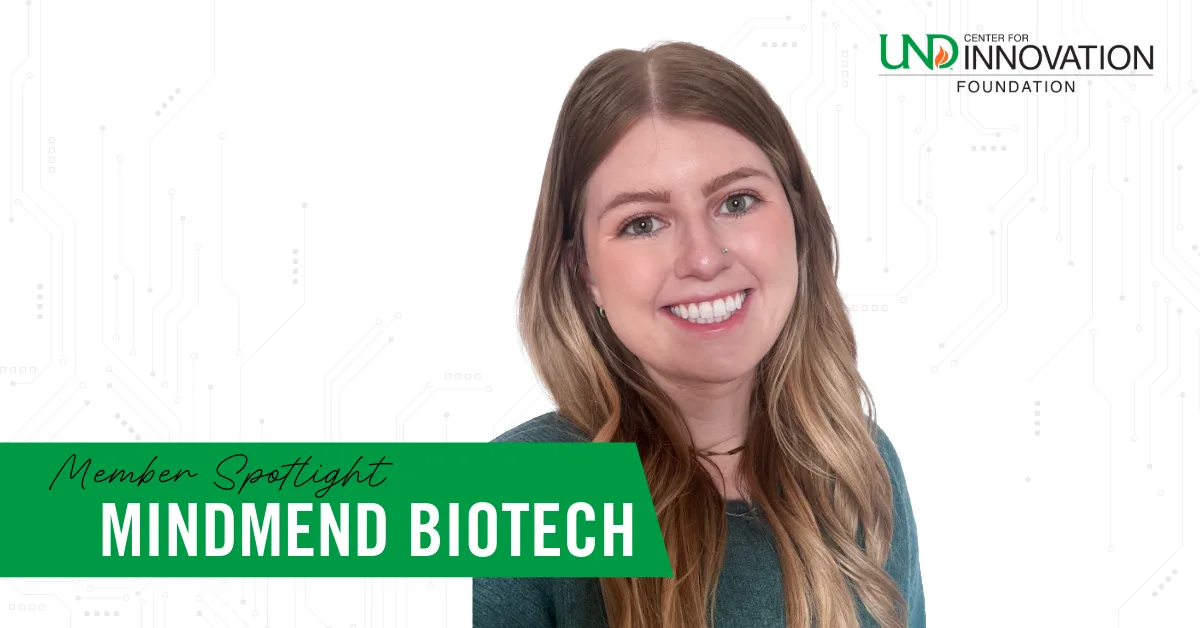
Member Spotlight: MindMend Biotech

Mercedes Terry

Mercedes Terry, Co-Founder and CEO of MindMend Biotech

From Challenge to Innovation

MindMend Biotech is a startup that aims to use continuously tracked health data, rather than subjective diagnosis, to monitor the symptoms of Parkinson’s disease and other neurodegenerative diseases through a wearable device. Mercedes Terry, co-founder and CEO of MindMend Biotech, was inspired by her grandmother’s experience with Parkinson’s Disease. After her grandmother was misdiagnosed and put on medication that negatively affected her health as a result, Terry realized the lack of research and diagnosis tools currently available for others who are also affected by neurodegenerative diseases.

About MindMend

The current diagnosis indicators of Parkinson’s disease are primarily subjective, with lots of symptoms and data being missed between appointments. With MindMend’s wearable device, there will be real-time data available that accurately measures a biological marker, giving consistent objective data that can be used to monitor neurodegenerative diseases.  

This innovation that started by only supporting people with Parkinson’s disease has quickly grown into a tool that also supports the tracking of disease progression, and a company that is “expanding our focus to support both patient care and clinical research,” says Terry. 

Senior woman and doctor talking about healthcare data.

Woman and doctor talking about healthcare data.

Steps Forward

MindMend achieved a major milestone by receiving a patent for their device in December 2025. Not only does this patent recognize the potential of the innovation, but it also highlights its promise to create meaningful impact in the disease research field.  

Each step toward this milestone requires time, resources, and adherence to regulatory requirements before moving on. The process is challenging but rewarding. “I learned that building something meaningful takes constant iteration and the ability to keep going when things do not work the first time,” Terry explained. “Resilience comes from staying focused on the problem you are solving, listening to feedback, and adjusting quickly instead of getting stuck on one idea.” 

CFI’s Impact

The CFI ecosystem offers structure, personalized guidance, and access to resources that support startups throughout the development process. “It helped us stay focused, connect with the right people, and move faster by learning from others who have gone through the process,” said Terry. This support ensures teams move efficiently from initial concept to functional prototypes, all while addressing hurdles along the way.  

NSF I-Corps Training is a five-week program where researchers are able to learn more about commercializing their research or innovation and the societal impact of their work. The program helps businesses develop meaningful business connections, refine their audience, and identify market needs. “Sona Leismeister played a key role by encouraging us to participate in the I-Corps program, which ended up having a major impact on our progress,” Terry shared.

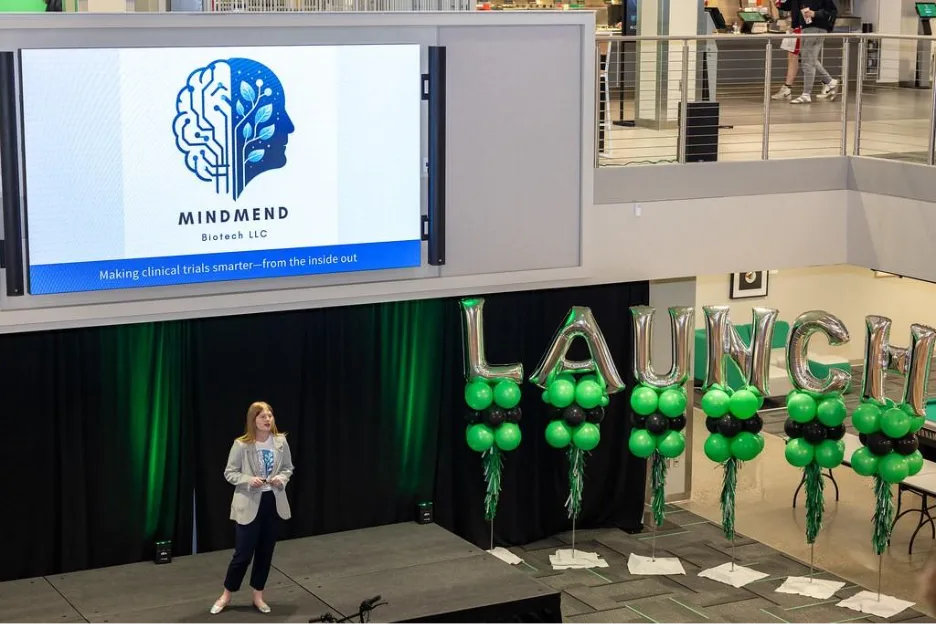
Terry presenting at the LAUNCH: Demo Day event at the UND Memorial Union. Photo by Mark Maliskey or Mark Maliskey Photography, Grand Forks.

Terry presenting at the LAUNCH: Demo Day event at the UND Memorial Union. Photo by Mark Maliskey of Mark Maliskey Photography, Grand Forks.

Looking Ahead

The ability to make a real impact in how neurodegenerative diseases are understood and managed is what’s most exciting when looking into MindMend’s future. Improving how treatments are developed and evaluated through objective data, to achieve better patient outcomes remains central to their mission.

Learn More

To learn more about MindMend Biotech, visit their LinkedIn.  

Member Spotlight: RJ Energy Solutions

RJES Team

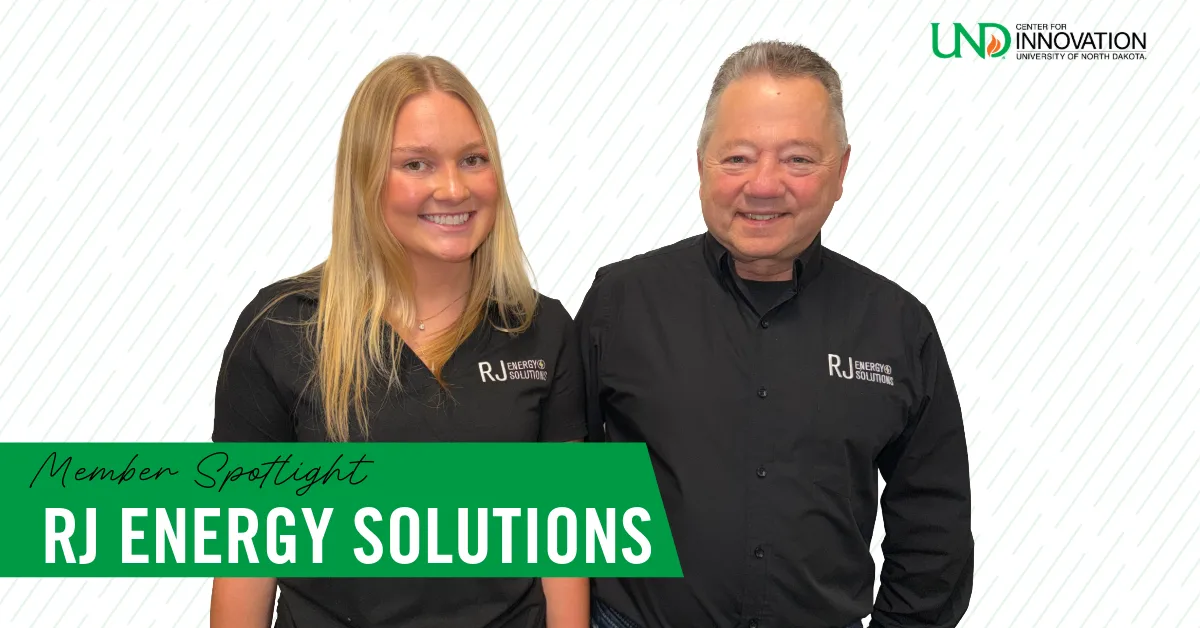
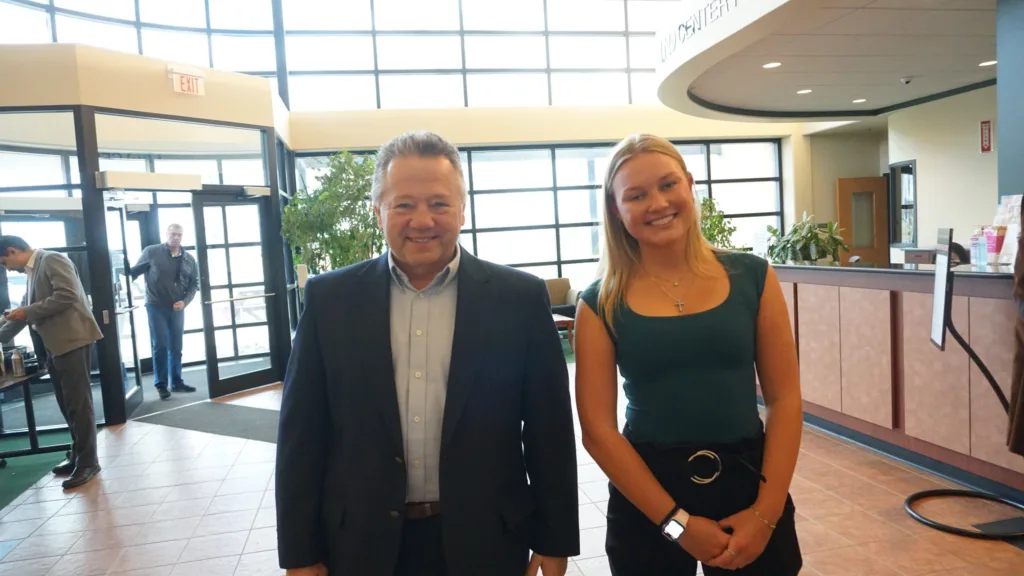
Bella Peterson & Russell Schell

RJ Energy Solutions (RJES) was founded with a clear mission: reduce energy waste, lower cost, improve comfort, and bring practical, innovative efficiency solutions to businesses and homeowners. After several years of experience in the corporate world, founder Russell Schell, felt called back to entrepreneurship and to his passion for advancing energy-efficient technologies.

Turning Innovation into Business

In the early stages, RJ Energy Solutions focused on executing energy-efficient solutions across a variety of sectors. Russell’s technical expertise and drive to innovate laid the groundwork for a pivotal moment in 2024, when he was connected with Bella Peterson, a UND entrepreneurship student.

As a driven and growth-focused professional, Bella helped shift the business from pure innovation to structured business execution. What had been primarily about inventing and refining solutions became a focused effort to bring those solutions to market in a scalable way. Together, Russell and Bella have built a partnership that they describe as a great crossover to execute great solutions.

Russell Schell & Bella Peterson

Solving Energy Waste with Purpose

RJES was created to address one core problem: energy waste and inefficiency. From commercial facilities to residential properties, the company works to identify where systems are underperforming and how to improve them in practical, cost-effective ways.

RJES continues to evolve, leading to the launch of a new venture, Dart Solutions. Dart Solutions is focused on providing predictive maintenance to cut down on energy waste and maintenance dollars.

Business offices represent eco-conscious and sustainable practices.

Maximizing Growth & Expansion

Growth for RJES has come through intentional development. Some of the key milestones thus far include expanding the team, investing in product and solution development, and conducting deep market research to find a niche and innovative approach to where there was a need in the market.

RJES has focused on building a strong foundation, leading to the development of an ecosystem of partnerships, refining approach, and ensuring each step taken is strategic. The launch of Dart Solutions is a great example of the thoughtful growth that takes place.

A hand holding lightbulb symbolizes sustainability and energy-efficiency.

CFI’s Impact: Strengthening the Ecosystem

Joining the UND Center For Innovation was a strategic decision for RJ Energy Solutions. The primary goal was to become more integrated with the entrepreneurial ecosystem while contributing to strong business execution.

The Center for Innovation has played an essential role in business development for RJES’s particularly by connecting the team to NSF I-Corps Hub Great Plains for in-depth market research. I-Corps also helped RJES validate assumptions, refine target markets, and strengthen the company’s value. In addition, CFI supported business planning, pitch practice and development.

Business meeting discussing sustainability and lowering environmental footprint.

Looking Ahead

As RJ Energy Solutions looks to the future, its goals are ambitious yet focused. The long-term vision is to expand across the country, delivering energy efficiency solutions to a broader market.

Through continued innovation, strategic partnerships, and disciplined execution, RJES aims to scale its impact while staying true to its purpose of helping homeowners and businesses operate more efficiently, sustainably, and cost-effectively.

Learn More

To learn more about RJ Energy Solutions, visit rjenergysolutions.com and connect with the RJES team.

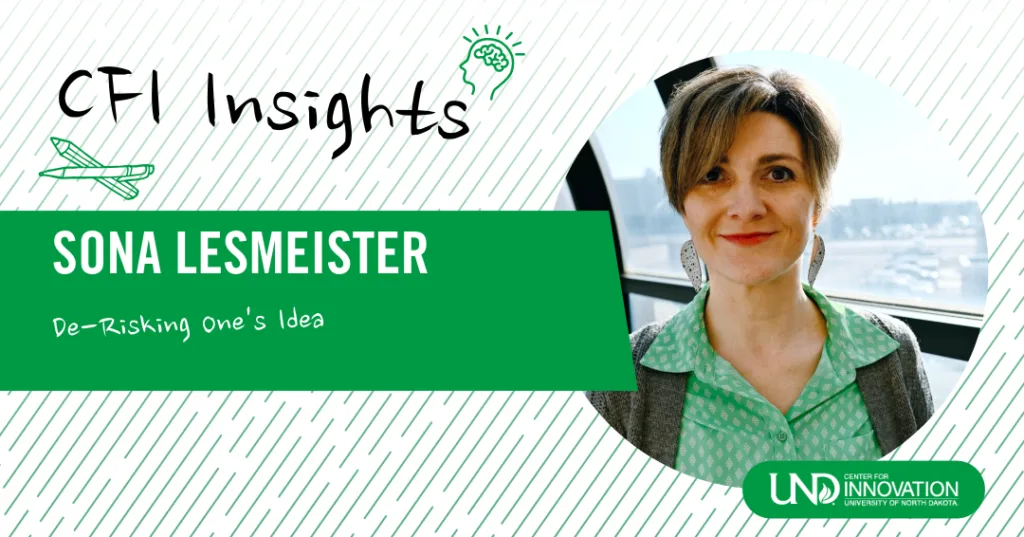
De-Risking One’s Idea

Written by Sona Lesmeister

In my career as a startup coach at the UND Center for Innovation, I get to interact with a lot of inventors, innovators, thinkers, and tinkerers. I work with very smart—often brilliant—people in their fields of expertise. It’s a privileged seat to observe so much ingenuity, creative spirit, and talent, all aiming to make a greater impact: to go beyond publishing a paper or simply checking the boxes expected of someone in their role.

Sona talking with a student at LAUNCH Showcase Event

The Excitement of Ideas

What I see most abundantly is ideas.

Ideas are fun. They’re exciting, inspiring, and often feel like good ideas. But just because something looks like a good idea doesn’t always mean it is—especially when it comes to building a business. Statistics suggest that up to 95% of businesses fail within their first five years. That might make starting a business sound like a bad idea.

Not so fast.

Hand stopping blocks from continuing to fall, symbolizing business risk.

Risk is Everywhere, Not Just in Business

With some homework and due diligence, much of that risk can be reduced.

And let’s be honest—business isn’t the only risky thing. So is being employed, especially in a rapidly changing economy. Heck, being alive is inherently risky.

The point, then, isn’t to stop participating in life or to bubble-wrap ourselves against disappointment. The point is to be smart. To do our homework—on the companies we work for, the people we build our lives with, and where we invest our time and money.

So why would business ideas be any different?

Treat Your Idea Like an Investment

They, too, deserve to be tested and probed. Before you commit your time, energy, and hard-earned dollars to bringing an idea to life, it’s worth asking whether it truly makes sense. Because unless you’re backed by a rich uncle, trade-offs are real—and priorities matter.

“Well, Sona, how might I go about doing that?” you ask.

Great question.

Group of people planning at a workshop (notes, notebook, iPad)

Customer Discovery Is the Homework

You’ve probably heard me talk about customer discovery. That’s the homework worth doing. Is it fun? It can be. Is it work? Absolutely. It requires looking at your idea honestly through the lens of the market—and more specifically, through the eyes of your potential customer.

That perspective can be uncomfortable. But if you let it teach you, with an open mind, it can uncover unexpected treasures. When you’re willing to poke holes in your great idea, you may discover something even better: a bigger, more meaningful problem—one your customers are eager to pay you to solve.

What’s one assumption you could test before investing more time or money into your idea?

Do you need support while growing your idea? Reach out anytime at info@innovators.net

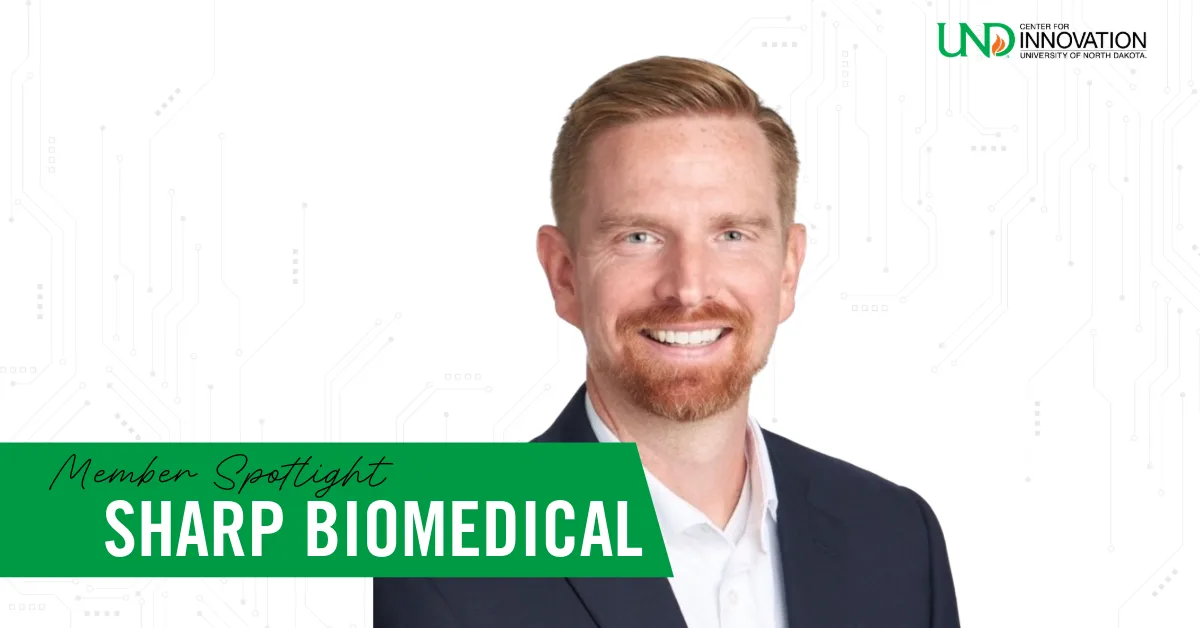
Member Spotlight: Sharp Biomedical

Dan Newman

Founded in 2024, Sharp Biomedical is redefining minimally invasive pain care with expertly redesigned solutions built specifically for interventional pain specialists. Founded by Dan Newman, a doctoral student in UND’s Biomedical Engineering Department, the company is driven by innovation at the intersection of engineering and patient-centered care. 

About Sharp Biomedical

Sharp Biomedical focuses on addressing the unmet needs of individuals living with chronic pain by developing an innovative, minimally invasive alternative to traditional surgery. The company aims to support specialists in delivering effective pain relief while reducing the need for more invasive surgical interventions.  

While Sharp Biomedical’s current primary focus is on advancing product development, the company intends to shift toward building strong relationships with UND and other local institutions in the future.  

Dan Newman holding prototype
Dan Newman holding prototype. Photo by Mark Maliskey of Mark Maliskey Photography, Grand Forks.

Turning Ideas into Impact

Sharp Biomedical translated an identified gap in interventional pain care into a focused solution designed to meet specialist and patient needs. Since identifying the need, Sharp Biomedical has moved to validate the concept through development milestones and strategic team growth.  

The company has attracted expertise, respected physicians and a high-impact spine CEO, highlighting the credibility of Sharp Biomedical, along with the company’s long-term potential.  

CFI’s Impact

The Runway Accelerator program at UND’s Center for Innovation (CFI) is a two-phase program designed to provide mentorship, start-up training, and access to funding to support UND student ventures.  

Following an introduction from Dr. Kouhyar Tavakolian, Sharp Biomedical connected with the UND Center for Innovation and enrolled in the Runway Accelerator program. “The timing proved to be perfect for the stage Sharp Biomedical was in,” Newman shared. Through Runway, the team received critical support—most notably guidance through the customer discovery process, which helped refine and strengthen their core concept. 

After completing the Runway Accelerator program at CFI, Newman continued building momentum by joining the gBeta program in Grand Forks. Designed for high-potential startups with local roots, gBeta is a pre-accelerator that provides intensive one-on-one mentorship, focused growth strategy, and preparation for raising capital. The program also connects founders to a powerful network of mentors, investors, and prospective customers. 

With strategic support from Runway and initial grant funding, Sharp Biomedical strengthened its foundation and positioned itself for rapid growth. Through a recommendation and introduction to gBeta, CFI helped further expand Sharp Biomedical’s network—“providing additional connections and accelerating the company’s growth,” Newman shared. The continued progression through these programs played a key role in securing additional investment and increasing the company’s valuation. 

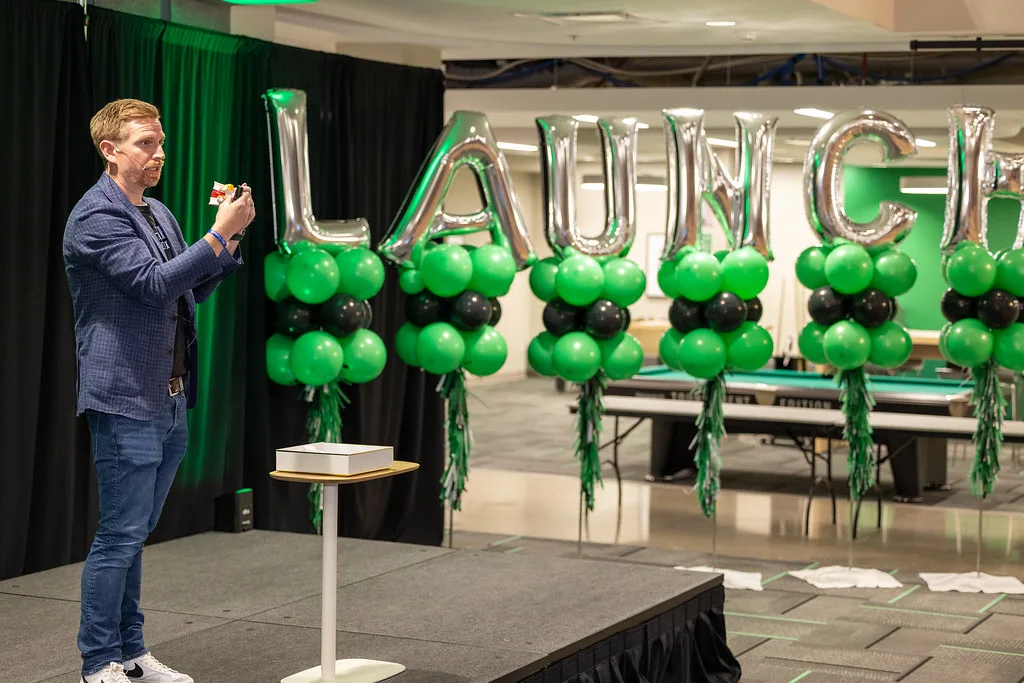
Newman presenting at the LAUNCH: Demo Day event at the UND Memorial Union.
Newman presenting at the LAUNCH: Demo Day event at the UND Memorial Union. Photo by Mark Maliskey of Mark Maliskey Photography, Grand Forks.

Looking Ahead

Funding is a top priority for Sharp Biomedical, supporting ongoing product development, testing, and efforts to bring the technology to market. At the same time, the team is preparing to file a non-provisional patent to protect its intellectual property.  

They are also refining the device through cadaver testing with physician partners, ensuring it performs effectively across the variety of anatomies found in real-world patients. 

Learn More

To learn more about Sharp Biomedical and their mission to make interventional procedures more accessible, visit sharpbiomedical.com.