Author: Haylee Bjork

What Legos Can Teach Us About the Importance of Process Documentation

By Adrian Luevano

We all want consistent results, whether we’re building Legos or completing tasks at work. The problem is that when processes aren’t documented (or we don’t have clear instructions) everyone interprets things differently; consistency is lost, and efforts are often duplicated and consequences can be significant: wasted time, frustration, and results that don’t meet expectations. 

Alt text: Colorful pile of green LEGO bricks
Colorful pile of green LEGO bricks 

A Simple Classroom Exercise with a Big Lesson

I remember an interesting exercise from a class. Our professor divided us into two teams and gave us a variety of Lego pieces, simply saying, “Build a house.” We could make any house we wanted, there were no restrictions. Once we finished, he asked us to write instructions so someone else could replicate our house, and to take a photo before disassembling it. At first, it seemed like a very simple task, build a house and write down how we built it. 

The next step was to exchange instructions and try to follow them as accurately as possible. When we compared the final result to the photo, we couldn’t stop laughing… it looked nothing like what we had intended to build! Some walls were upside down, colors didn’t match, pieces were missing and towers ended up on the wrong side.  

The lesson was clear; we wrote the instructions thinking about ourselves and didn’t consider that others might not interpret them the same way. We assumed that what was obvious to us would be obvious to everyone else, but it wasn’t. 
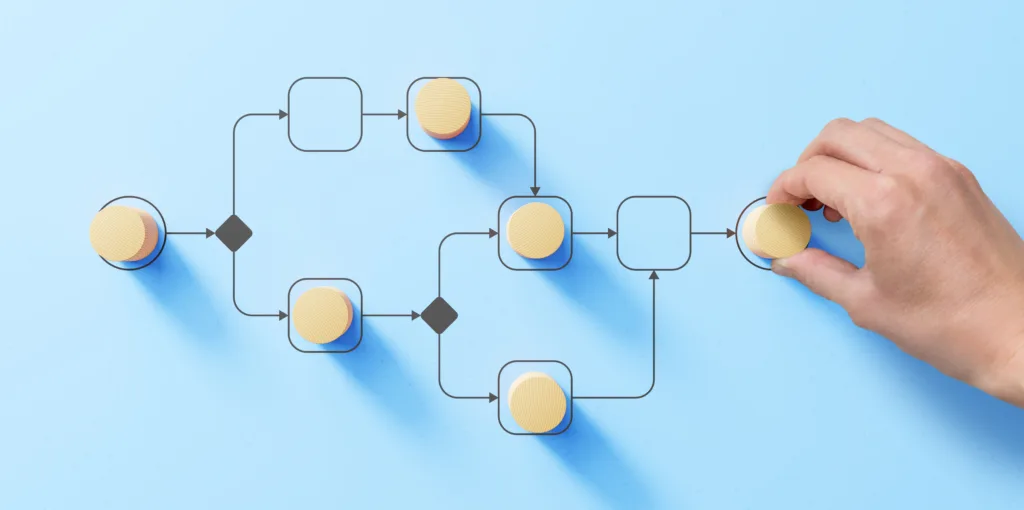
Business process management and automation concept with person moving wooden pieces on flowchart diagram.

How This Shows Up in the Workplace 

The same principle applies in the workplace: clear processes allow us to replicate successful outcomes. Without them, team members may approach the same task in completely different ways, causing confusion, mistakes, and duplicated efforts. Even a small miscommunication can escalate when multiple people are involved or when the same task is repeated over time. Documenting processes doesn’t just make life easier—it makes teams more efficient and reliable. 

Writing manuals isn’t just about listing steps; we need to consider how someone else might interpret them and strive to be as clear as possible. The goal is for the process to be followed by different people in the same way, without having to provide additional explanations each time. Think of it as creating your own Lego instruction booklet: if it’s well-designed, anyone can achieve the intended result, even if they have never built that model before. 
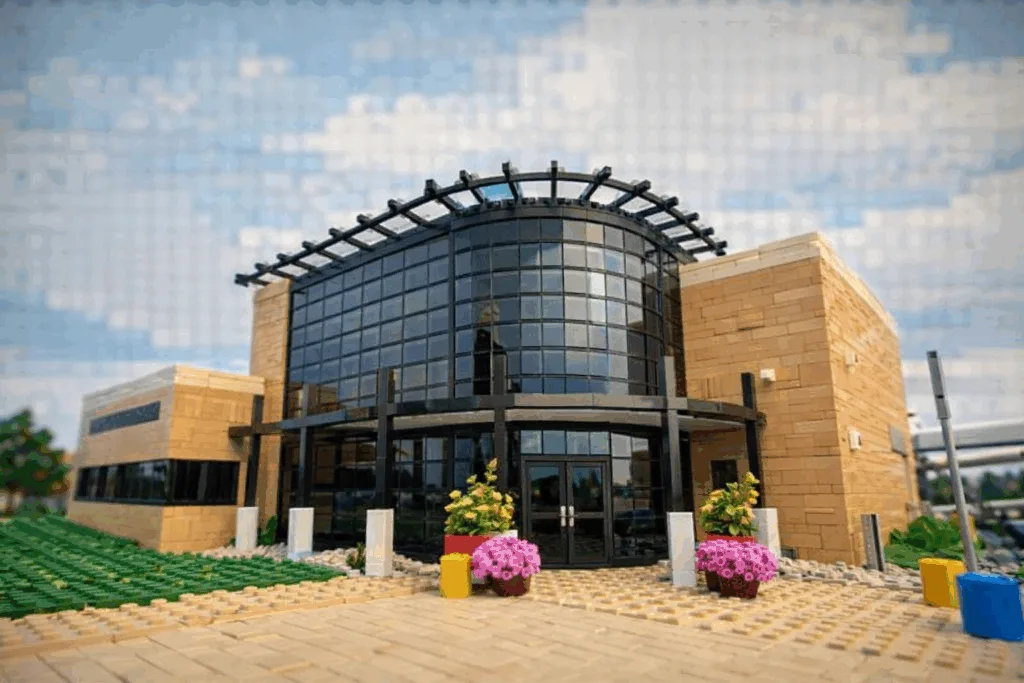
AI-generated image of the Center for Innovation made of Legos

AI-generated image of the Center for Innovation made of Legos

Why Well-Designed Processes Matter 

Personally, my favorite Legos are the pre-designed sets; they come with all the pieces and instructions needed to build the figure on the box. I love them because simply following the instructions gives me the expected result every time. 

Processes are like Lego instructions: they allow anyone to replicate successful outcomes. That’s why having well-documented processes in place is essential to maintain consistency and efficiency. It might take extra time upfront, but it saves countless hours of frustration, reduces errors, and ensures that the results are exactly what we intended. Plus, well-documented processes can serve as a training tool for new team members, a reference for future projects, and a safeguard against forgetting important steps.

AI-Generated image of Adrian Luevano

AI-Generated image of Adrian Luevano

The Final Takeaway

Investing time in properly documenting processes ensures that the final result is exactly what we expect. So now you know, document your processes, or risk ending up like me, staring at a pile of Legos, wondering what went wrong!!

Clear processes don’t happen by accident—they’re designed. If you’re interested in improving documentation, efficiency, or team alignment, email info@innovators.net to learn how the Center for Innovation can help.
New Year, New Opportunities: Why Your Story Matters in 2026

Written by Haylee Bjork

As we move into 2026 and reflect on 2025, it’s worth recognizing the twists and turns that have shaped where we are today. I try to do this daily, through showing gratitude or by doing one good deed a day (advice from my Grandma Sandy). Reflection like this doesn’t just belong in our personal lives; it’s just as valuable professionally.

Sharing your story in a professional setting is a powerful tool for growth and confidence. While working with entrepreneurs, my favorite questions are always, “How did you start your business?” or “Where did the idea come from?” The answers are often where the real impact lies.

Below are three simple ways entrepreneurs and professionals can tell their story, and why it matters more than you might think.

1. Go to Events

Attending events provides the perfect opportunity to share your story face-to-face with like-minded individuals, which is one of the most effective ways to expand your network. I know, this is easier said than done, especially if you’re a homebody or new to networking. Putting yourself in unfamiliar spaces can feel intimidating. However, Grand Forks offers welcoming events that are perfect for professionals at any stage of their journey.

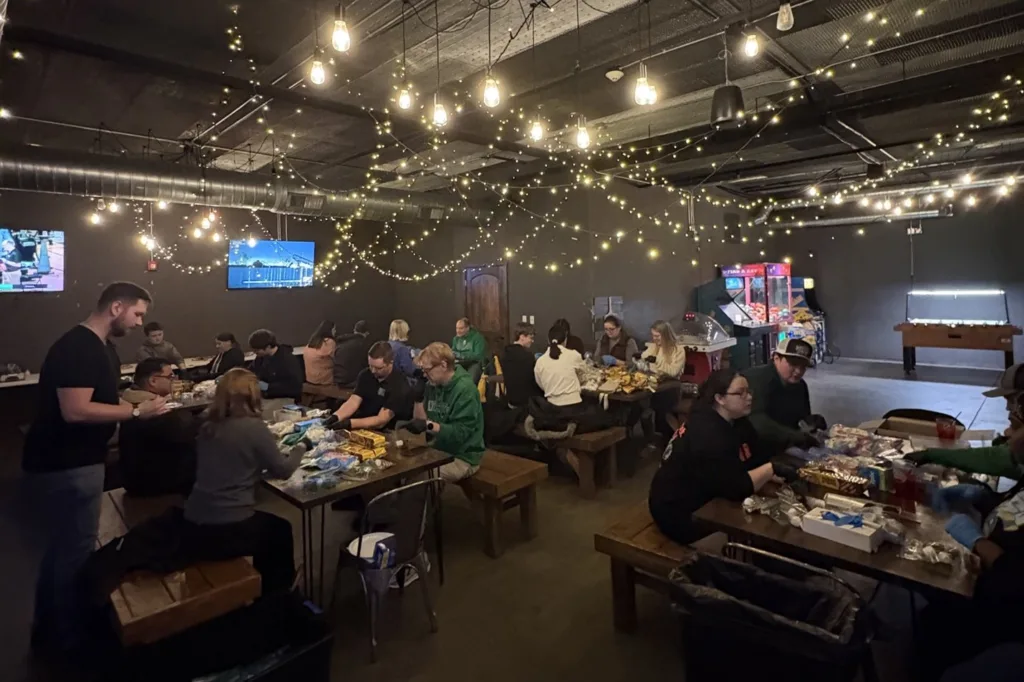
People seated at long wooden tables indoors, assembling items together under string lights in a casual community event setting.
Community members gather at GGFYP, working alongside eachother doing hands-on volunteer work.

The Greater Grand Forks Young Professionals hosts events designed to connect people across industries and experience levels (and despite the name, all ages are welcome!). From broomball nights to community volunteer opportunities, these events create relaxed environments where conversations and stories happen naturally.

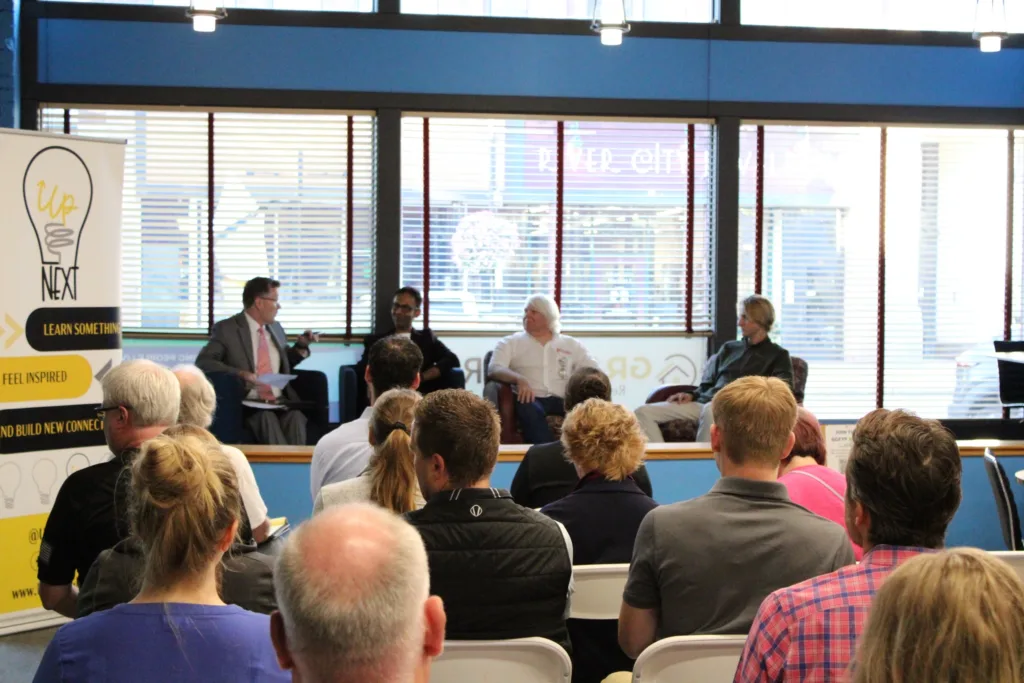
Audience members seated and listening to a panel of four speakers on stage during an indoor discussion event with large windows and a branded banner visible.
A panel of speakers at UpNext, engaging in a discussion in front of an audience during an event.

Another great series of events to look out for is UpNext, which highlights local business owners while creating meaningful networking opportunities. Events like these allow individuals to practice telling their story organically, whether that’s about their business, career path, or what led them to where they are today.

Person holding phone and coffee, looking at social media
Hands holding coffee cup and mobile phone while using social media.

2. Post on Social Media

Social media can feel overwhelming, but it’s one of the most accessible ways to tell your story on your own terms. Your story doesn’t have to be perfectly written or highly produced; it just has to be authentic.

Sharing milestones, lessons learned, challenges, or even behind-the-scenes moments on social media platforms such as LinkedIn helps humanize your work and builds trust with your audience. For entrepreneurs, especially, people are often just as interested in the why behind the business as they are in the product or service itself.

Posting consistently, even something small, can help you clarify your own narrative, build confidence in sharing it, and create connections you may not expect. You never know who is reading, resonating, or quietly rooting for your journey!

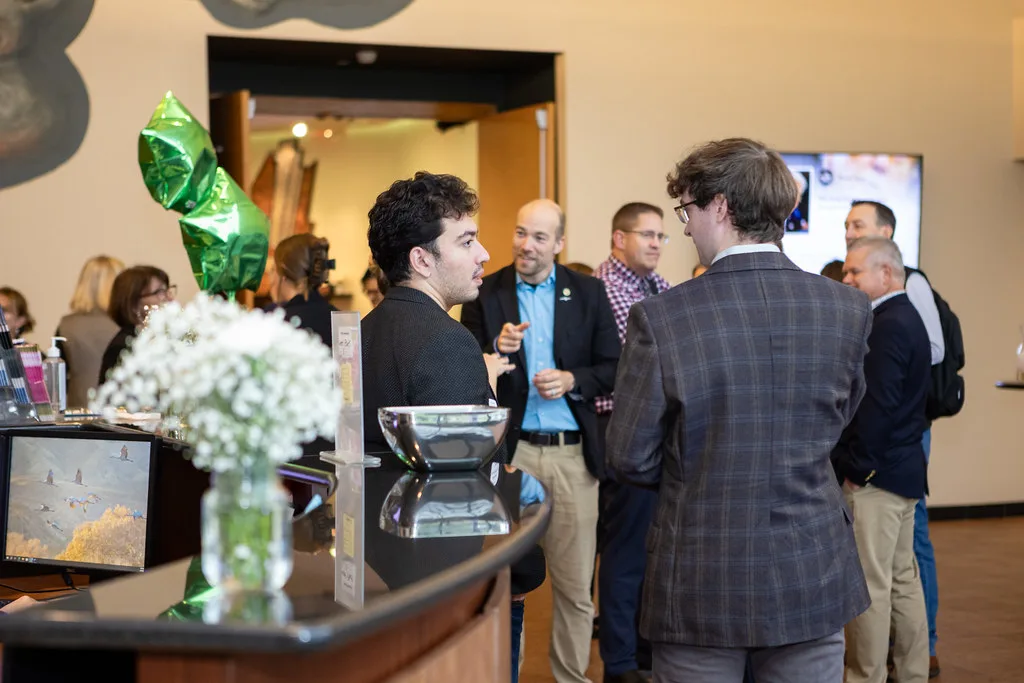
People networking at a professional event
People networking at CFI’s Innovation Symposium

3. Connect with organizations that support entrepreneurs

Telling your story becomes even more impactful when you share it with people and organizations that are invested in your growth. Connecting with groups like UND’s CFI, the Grand Forks Region EDC, Evolve Grand Forks, the Chamber, ND SBDC, and other ecosystem partners opens doors to resources, mentorship, and opportunities you may not find on your own.

These organizations want to understand your story, where you’ve been, what you’re building, and where you hope to go. The more you share, the more they can tailor support, make introductions, and help amplify your work.

Beyond the tangible benefits, these connections remind entrepreneurs that they’re not building alone. Sharing your story within a supportive ecosystem can be validating, motivating, and a powerful reminder of how far you’ve already come.

Your Story Matters

Telling your story, whether in a conversation, a post, or through community connections, allows others to see the person behind the work. When you reflect on where you’ve been and share it openly, you build trust, confidence, and meaningful relationships along the way. Your journey is still unfolding, and sharing it can be the first step toward what comes next.

Do you need support on how to start your storytelling journey? Feel free to reach out to me at haylee.b@innovators.net, and see how CFI can help you start!


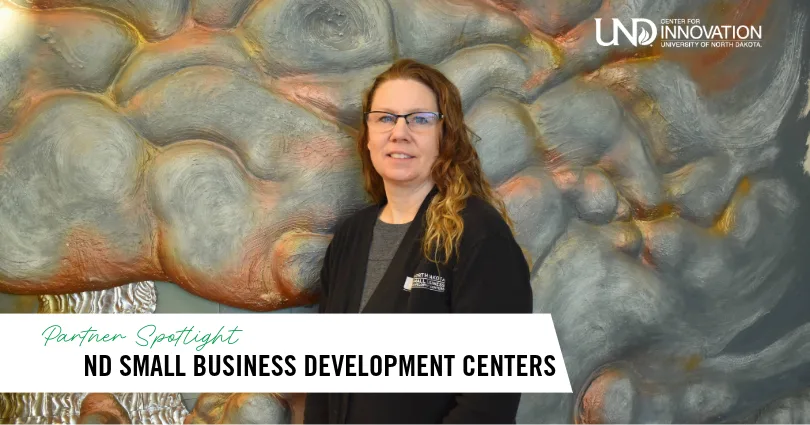
Partner Spotlight: North Dakota Small Business Development Centers (ND SBDC)

About the ND SBDC

For over 35 years, the North Dakota Small Business Development Centers (ND SBDC) has supported and empowered small businesses across the state. With a mission statement of “powering the creation, growth, and success of small business in North Dakota”, the SBDC aims to provide direction and resources to small business owners and entrepreneurs. 

The ND SBDC has “a very large number of business support services,” says Nicole Evans, Grand Forks Center Director for ND SBDC. Ranging from start-up logistics and feasibility to growth planning, turn-around work, and succession planning, the SBDC is designed to meet the needs of businesses at every phase in their journey. All services are provided at no cost to business owners, ensuring attainable assistance regardless of business size or stage. 

Partnership with the Center for Innovation

The UND Center for Innovation partners with the ND SBDC to expand the network of resources available to entrepreneurs and business owners. Nicole Evans attends and participates in CFI programs, such as the Runway program to offer mentorship and support for students. This support is also extended through collaboration and strategic networking opportunities with innovation and technology businesses. 

Opportunities for funding, including the Small Business Innovation Research (SBIR), Small Business Technology Transfer (STTR), and the InnovateND programs, are other support opportunities that the CFI and ND SBDC partner with and offer referrals to help strengthen and support innovators. 

Group of people meeting around a table.

Strengthening North Dakota’s Innovation Ecosystem

Partnership between the CFI and ND SBDC creates a strong network of resources that benefits the community and the state as a whole. It allows support to be provided to entrepreneurs at many different occasions and functions, ensuring a nurturing entrepreneurial environment. With a large business community available, the CFI and SBDC are able to assist innovators in continuing to grow, widening their network, and forming valuable relationships.

Community Impact

Through expert advising, training, and resources, the ND SBDC helps turn ideas into businesses, supports growing companies, and fuels innovators across North Dakota. In 2025, the ND SBDC assisted more than 1,600 clients, helped launch 161 businesses, and aided clients in securing $144,848,558 in capital infusion. These efforts strengthened North Dakota’s local economies and empowered entrepreneurs within our communities. By supplying these services, the SBDC continues to play a vital role in fostering business development and providing hope, which Nicole Evans says is the most rewarding part of her work with the SBDC. 

“It is the hope that feels the best because they feel like they have a chance,” Nicole shared.  “I learned in my technology career that anything is possible. It’s just how you get there, but you do get there.”

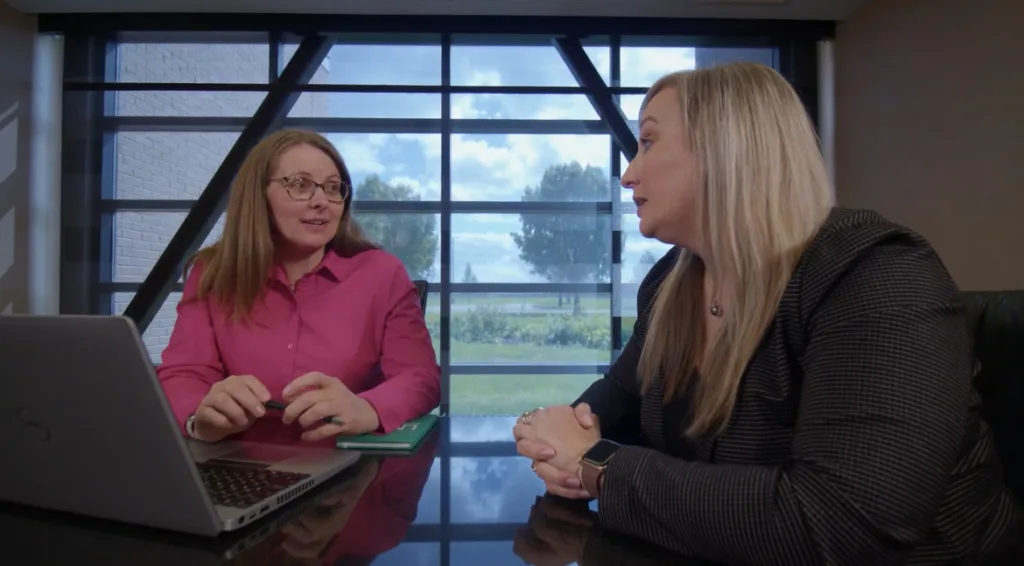
CFI Director Amy Whitney meets with Tiffany Ford, Director of the Center for Business Engagement & Development.

Get Involved

Alongside the CFI, the ND SBDC offers a wide range of resources available to business owners, entrepreneurs, and innovators. Credentialed business advisors, programs tailored to business growth and development, and guidance on accessing funding are included in these resources. Empowering the growth of and offering access to resources for North Dakota small businesses is the primary goal of the SBDC. 

“The network is wide, and there are many that are no-cost services, so what do you have to lose?” Nicole urges. 

Learn More

To learn more about the services provided by the ND SBDC, visit ndsbdc.org and connect with the SBDC team.  


InternGF: A powerful tool for workforce retention

UND students who intern with InternGF stay in Grand Forks at remarkably high rates, speakers noted at the program’s recent 2026 launch

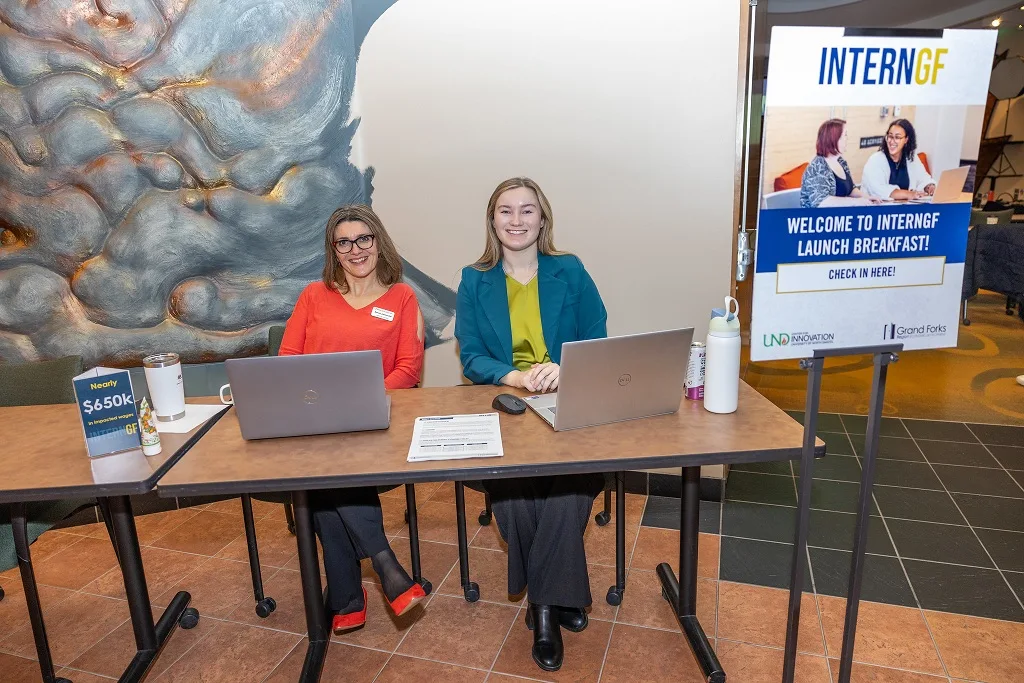
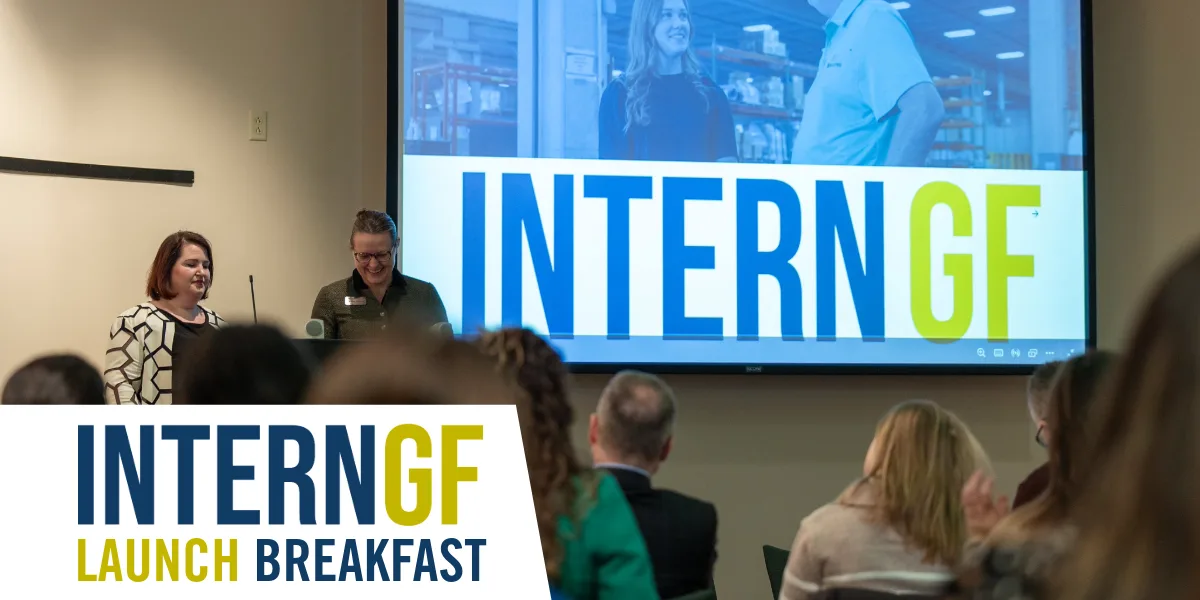
Sona Lesmeister (left), UND Center for Innovation’s Startup Specialist, and Kinley Anderson, the Grand Forks Region Economic Development Corp.’s workforce development specialist, welcome guests to the InternGF launch event on Jan. 13. The event was held at the Center for Innovation’s Idea Lab in Grand Forks. Photo by Mark Maliskey, Marketing & Communications manager, Grand Forks Region EDC.


By Haylee Bjork

On Jan. 13, UND’s Center for Innovation and the Grand Forks Region Economic Development Corp. celebrated the launch of the InternGF program for the upcoming year, hosting a breakfast and presentation that showcased the program’s progress to the UND and Grand Forks community.

Local internships are doing more than filling short-term roles in Grand Forks, speakers at the event noted. They’re shaping career paths, strengthening regional employers and keeping UND talent in the region.

That message was at the center of the event’s presentation of the InternGF program, a nationally recognized funding model designed to help organizations launch new, meaningful internship opportunities while supporting student workforce development.

A funding model built for impact

The InternGF program helps employers offset the cost of hiring interns by reimbursing a portion of intern wages. Startup organizations (within seven years of launch) are eligible for up to 50% wage reimbursement, while established EDC member companies may receive 33% reimbursement.

By lowering financial barriers, the program enables organizations to create new internship roles.

Eight years of measurable results

Since its launch, the InternGF program has funded 172 internships, awarding more than $330,000 in reimbursements. Those funds have translated into nearly $750,000 in real wages paid to UND students who receive InternGF internships.

The reach of the program spans both startups and established companies:

  • 56% of funded internships supported startups
  • 60% supported EDC member companies
  • Many organizations fell into both categories, demonstrating balanced, equitable support across the region

Internships supported by the program span a wide range of disciplines, ranging from engineering and aviation to marketing, finance and creative roles, highlighting both traditional and nontraditional career pathways available locally.

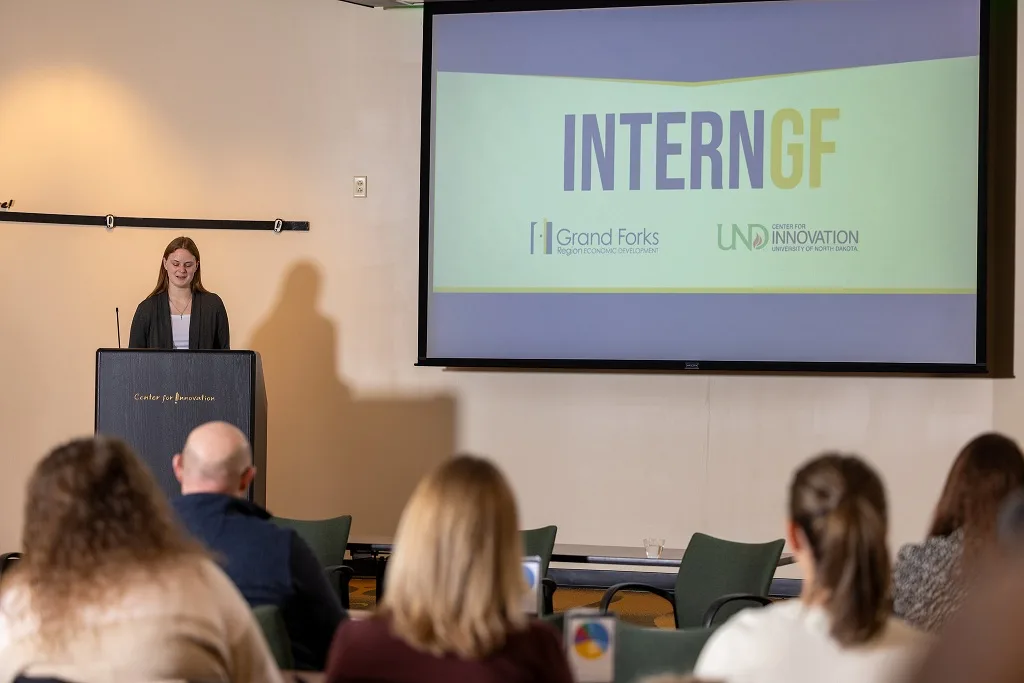
Madelynn Meek, a UND student and former marketing intern for 3 Farm Daughters in Grand Forks, talks at the InternGF launch event about her internship experience. Photo by Mark Maliskey, Marketing & Communications Manager, Grand Forks Region EDC.


Strong outcomes for students

Student feedback consistently reflects the program’s impact. On a 10-point scale:

  • Students rated internships 8.5 for applying classroom learning to real-world work
  • Students rated 8.4 for growth in professional skills and confidence

Perhaps most notably, internships influence where graduates choose to live and work. Nearly half (46%) of students from the 2018–19 cohorts are still living in Grand Forks five years later, compared to just 12% of UND alumni overall during the same period.

At the two-year mark, 71% of InternGF participants remained in the region, more than triple the general alumni average.

Employer and student voices

Robbie Lunnie, assistant professor of Aviation at UND and the founder of Vertical Works, said that while strong ideas and work ethic are important, community support is often what makes the difference.

“You can have a great idea and work incredibly hard, but that’s not always enough,” he said. “Having mentors and a support system matters.

“InternGF isn’t just about funding an intern; it connects you to people who want to help you succeed,” he continued. “That support made a real difference for me as a startup founder and helps keep talented students in Grand Forks.”

Students echoed the program’s value through personal experiences. Recent graduate and Vertical Works intern, Mateo Garcia, shared how structured reflection and mentorship set his internship apart, helping him see long-term opportunities in Grand Forks that hadn’t previously been on his radar.

Madelynn Meek, a UND student and former marketing intern for the Grand Forks-based 3 Farm Daughters pasta company, described how her internship reshaped her career goals by exposing her to multiple facets of a growing business — from supply chains to retail partnerships — while giving her real responsibility and trust. “It didn’t just prepare me for the real world,” she said. “It helped me better understand where I want to go in it.”

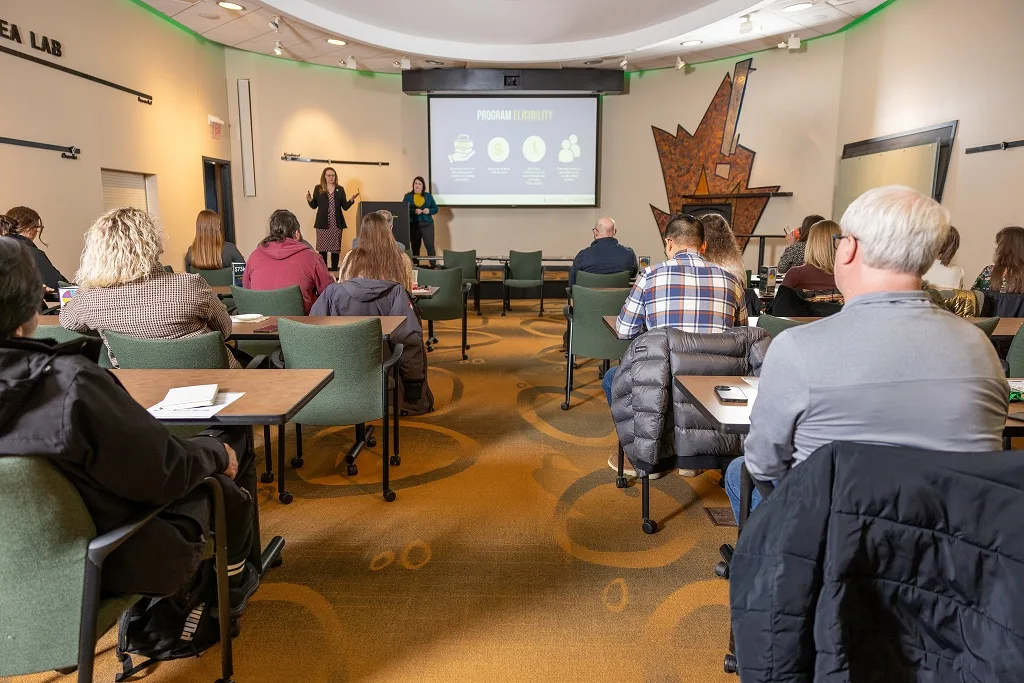
The 2026 InternGF Launch Event took place at the Idea Lab at the Center for Innovation in Grand Forks. Photo by Mark Maliskey, Marketing & Communications Manager, Grand Forks Region EDC.


Building the future workforce

To wrap up the event, Chelsea Mellenthin, director of Career Engagement at UND’s Experiential Learning Center, highlighted key resources available to employers, including using Handshake to share internships and open positions. She emphasized the platform as a one-stop shop for connecting with and recruiting UND talent.

As InternGF continues to align funding cycles with UND and employer hiring rhythms, the goal remains clear: create meaningful internships that benefit students, employers, and the Grand Forks community alike.

By investing in local experiences, the program is proving that internships aren’t just temporary positions; they’re a powerful tool for workforce retention, business growth, and long-term regional impact.

To learn more about InternGF, visit the program’s website.

3 Simple Ways to Boost Winter Creativity

Written by Amanda Voigt

As the temperature is dropping, often our motivation levels do as well.  Research shows that there are both physiological and psychological impacts to the low temperatures and short days (Pressman, 1991).  “Americans are twice as likely to say their mood declines in the winter (41%) as they are to say it improves (22%)” and in the Midwest, that number jumps to 52% of people (American Psychiatric Association, 2024).  That’s over half of us losing energy, enthusiasm, and the general joie de vie to be creative.  Today, I’m going to share with you 3 super easy ways to get your brain working for you this winter:

  1. Ask questions instead of jumping to solutions
  2. Brain-dump and come back
  3. Reset your environment
A hand holds a white speech-bubble cutout with a yellow lightbulb icon on it, surrounded by several other white speech-bubble cutouts featuring black question marks, all placed on a solid yellow background.
A hand picks up a speech bubble with a lightbulb among several speech bubbles with question marks.

1. Ask More Questions to Spark Better Ideas

First, instead of forcing yourself to look for solutions to your question, simply ask more questions!  For example – if you are trying to increase engagement on your social media, don’t immediately jump to ideas on how to do this.  Ask yourself some more questions and write them down (always write down everything, because you never know when you’ll come back to it and get some inspiration).  Ask yourself – why do I need more engagement? What am I hoping to get by increasing engagement? What does engagement look like for me?  Etc.  This will help you clarify your purpose so that when you do get to ideas for your problem, you have more detailed information about it so you can answer the right problem.

A person is writing in a spiral notebook filled with handwritten notes, holding a pen over the page. Only their hand, notebook, and part of their torso are visible. They are wearing a tan jacket and sitting at a glass table.
A person writes notes in a spiral notebook.

2. Brain-Dump Your Thoughts and Return Later

Number two – do a brain-dump.  Written down (see above for why writing it all down is important).  Write down your ideas, problems, concerns, and most outrageous thoughts. Then, take a break.  Go work on something else, get some exercise, or read a book.  Then, when your brain is refreshed, get fresh eyes on your ideas. 

See what new connections you see, build on a previous idea, or find inspiration and create more ideas. 

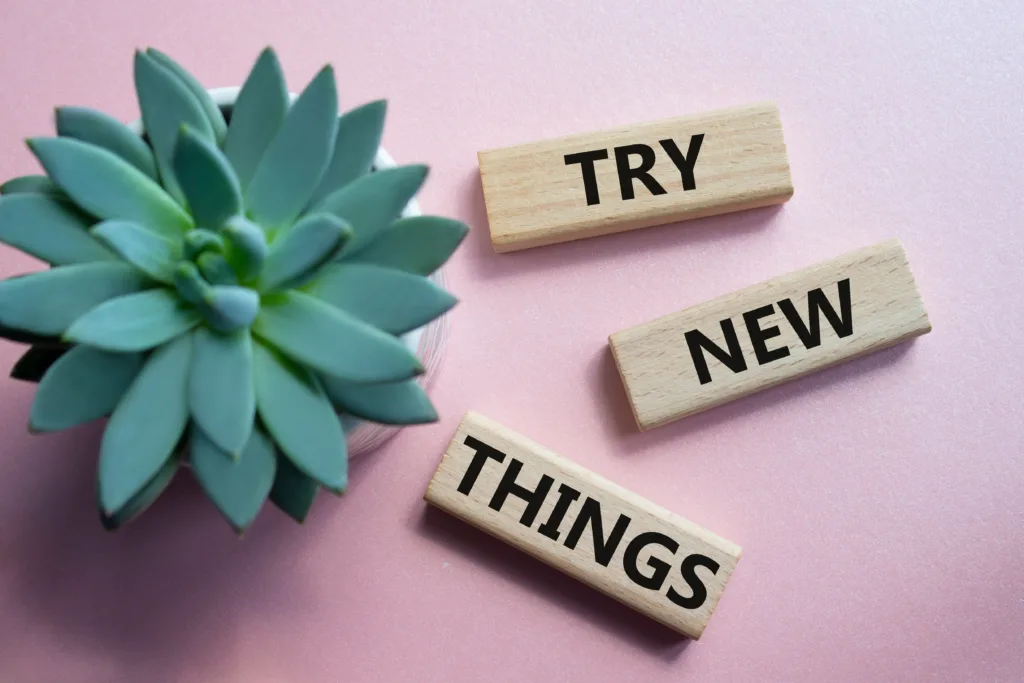
A top-view image of a green succulent plant next to three wooden blocks on a pink surface. Each block has a word printed on it, forming the phrase “Try New Things.”
A succulent sits beside wooden blocks that spell out “Try New Things.”

3. Change Your Environment to Increase Creativity

Lastly, switch it up!  Did you know that being in a specific environmental context (ex: the same seat in class, going to the same coffee shop), can increase your memory when you in that same environment (Isarida & Isarida, 2014)?  That can be so great when you sit in the same seat in the same room for class as an exam. 

However, the opposite also holds true, that switching up your environment can help you be more creative (Ritter et al., 2012).  Try going to a brand-new place – maybe instead of your office at work with no windows, go to a light-filled coffee shop.  If you normally drink coffee every work session, mix it up with caffeinated cold tea.  Think about how you can change the environment for several senses to really put yourself in a creative space.

Staying Creative and Energized Through the Winter

Don’t let winter slow you down – simply consider it a chance to be deliberately creative.  Give yourself grace and set yourself up for success by trying a few new techniques this winter to increase your creativity.  All of these ideas can be used individually, in a team, or even asynchronously. 

Interested in learning more about creativity or ideation?  Reach out to the Center for Innovation, where we are here to help!


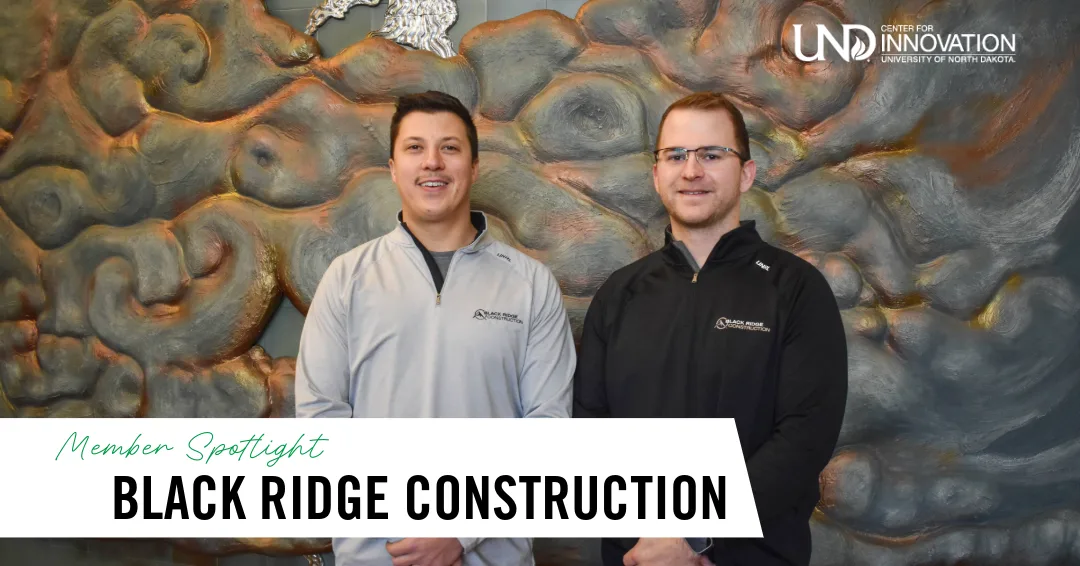
Member Spotlight: Black Ridge Construction

Black Ridge Construction Founders
Will Klinke & Casey Schumacher

Black Ridge Construction (BRC) is a construction management firm founded in 2023 by Will Klinke and Casey Schumacher. From the beginning, BRC set out to do things differently, focusing on select niche sectors while bringing renewed emphasis on open communication, transparency, and collaboration to every project. What started as a long-standing vision has quickly grown into a purpose-driven business with a strong foundation and an exciting future ahead!

Turning Experience into Intention

Black Ridge Construction officially launched in May 2023, but the idea had been taking shape long before that. After years of working in the construction industry, Will and Casey shared a common goal of building a firm rooted in their values and experience.

Starting BRC allowed them to take what they had learned and apply it intentionally, creating a company that serves clients with clarity, purpose, and trust. While the region has no shortage of construction firms, they recognized an opportunity to focus on niche markets and elevate the overall client experience.

In the early days, that meant starting smaller than the large commercial projects they were used to managing. Those first projects were instrumental. They reinforced the importance of hands-on execution, strengthened client relationships, and helped BRC grow deliberately and sustainably, earning trust one project at a time.

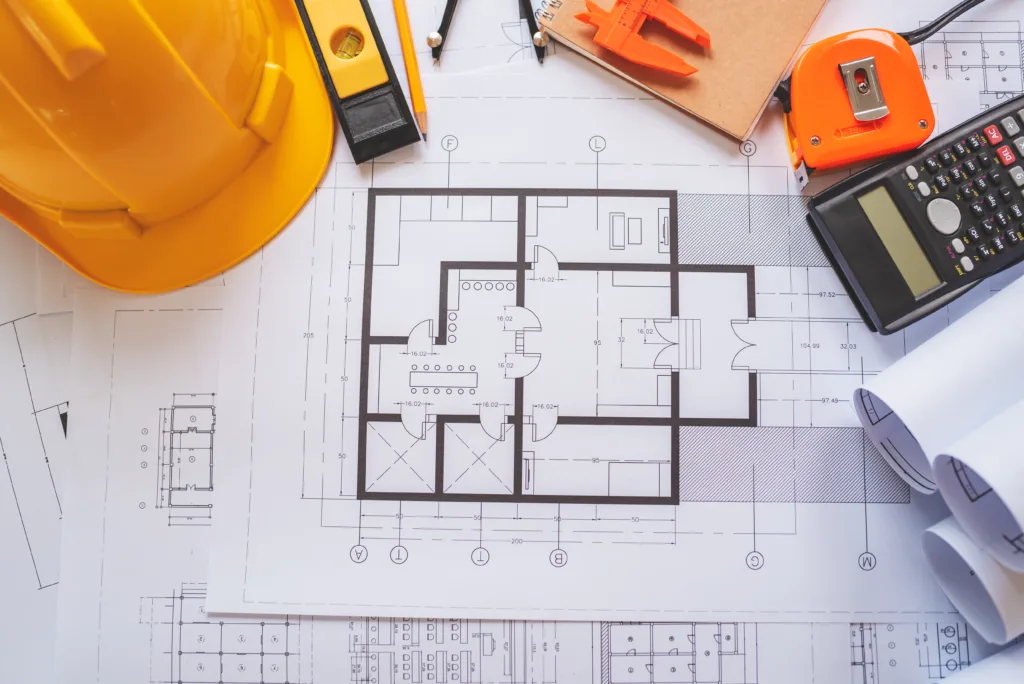
Architectural floor plan on a desk with a yellow hard hat, measuring tape, calculator, level, and drafting tools used for construction planning.
Top view of architectural blueprints on the worktable desk.

Building Momentum the Right Way

In a short time, BRC has reached several meaningful milestones. Taking the leap from traditional working roles into entrepreneurship was the first step. From there came hiring their first employee and then moving into their very own office with more room to expand.

Each year has brought visible progress, and the team makes a point to reflect on how far they’ve come. Growth hasn’t always been straightforward, though. One of the biggest challenges was determining when to hire additional team members, balancing the reality of wearing many hats while ensuring there was enough work to support expansion.

Through disciplined planning and a strategic approach to scaling, BRC navigated those decisions thoughtfully. At every stage, their core values have remained unchanged: open communication, transparency, and strong, long-term relationships. These principles continue to guide how they manage projects and serve clients and have become a defining part of BRC’s reputation.

CFI’s Impact: A Foundation for Early Growth

The UND Center for Innovation played a pivotal role during BRC’s early years. Will and Casey had previously worked out of the Center nearly a decade ago with another employer and stayed connected with Travis Fretheim and the CFI team over the years. When it came time to launch BRC, returning to CFI felt like a natural fit.

Being part of the Center for Innovation during those first couple of years was monumental. CFI provided a professional working environment that aligned perfectly with the needs of a small but ambitious business, along with accessible resources and a strong entrepreneurial network.

Just as valuable was the community. Working alongside other founders and startups created opportunities to share challenges, exchange ideas, and learn from others navigating similar paths. The relationships formed at CFI have become an ongoing resource, one BRC hopes to maintain for years to come.

Graduation & the Next Chapter

Graduating from CFI marks an important transition for Black Ridge Construction. Since moving into their new space, the company has already hired an additional team member with extensive construction experience, adding depth to their capabilities and momentum to their growth trajectory.

The move itself is an exciting step forward. With dedicated space for materials, tools, and equipment, BRC now has the flexibility to operate more efficiently and better serve clients. For a construction company, having room to grow physically is just as important as growing strategically.

A hand moves a chess pawn across a network-style board, symbolizing strategy and connected decision-making.

Looking Ahead

BRC understands that growth is rarely a straight line. There will be curves, changes, and moments that require adaptation. Their long-term goal is simple but meaningful: to remain a successful construction management firm in North Dakota and the broader Midwest for years to come.

By staying lean, tight-knit, and values-driven, Black Ridge Construction aims to support not only its team but also the communities they’re fortunate to work in, building projects, relationships, and trust that last.

Learn More

To learn more about Black Ridge Construction or to discuss an upcoming project, visit BrConst.com and connect with the BRC team.


2026 InternGF Launch Party

InternGF Launch

January 13, 2026 @ 8:30 am – 10:00 am

Join the UND Center for Innovation and Grand Forks Region EDC for the 2026 Launch of InternGF! Enjoy breakfast, learn about InternGF internship funding opportunities, hear from past participants, and celebrate successes!

InternGF is a unique partnership between the UND Center for Innovation and the Grand Forks Region Economic Development Corporation. It is designed to introduce UND students to high-wage, in-demand careers and employers in the Grand Forks region. The goal of the program is to aid in local recruitment and retention efforts by showcasing regional companies, career opportunities, and community assets.

Event Outline

8:30 AM – Breakfast

8:45 AM – Presentation & Student Testimonials

9:05 AM – Panel of InternGF Employer Participants

9:35 AM – Ending Session: How to Get Started with Internships

9:50-10:00 AM – Social

Learn More About InternGF


De-Risking Innovation: The Power of SBIR/STTR Grants for Startups 

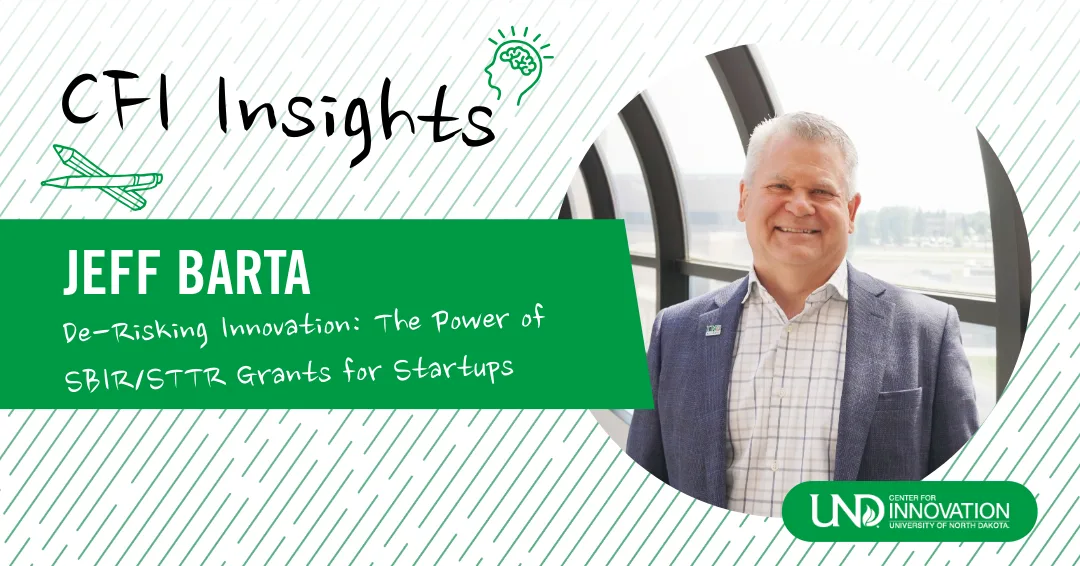
Written by Jeff Barta

The world is full of innovative ideas, but moving those ideas to an impactful solution is no easy task for any entrepreneur. One of the biggest hurdles innovators and start-ups face is having enough capital to support their product development efforts. That is where the SBIR/STTR program enters. The SBIR/STTR program is two federal initiatives that offer grant funding on a competitive basis to small businesses looking to move their Research and Development (R&D) into commercialization.  

Administered by the Small Business Administration, the goal of the program is not only to stimulate technological innovation, but to bring it to life and into an impactful societal use. 

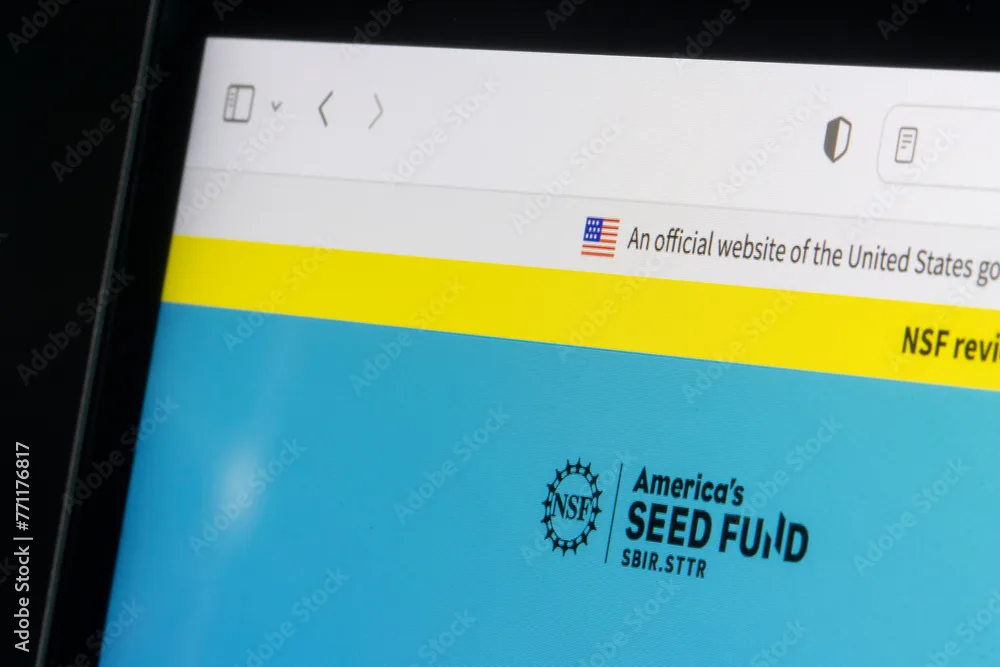
A close-up photo of a computer screen displaying a webpage from an official U.S. government site. At the top of the browser window, a small American flag icon appears next to the text “An official website of the United States government.” Below it is a bright yellow banner, and further down, part of a blue section is visible featuring the National Science Foundation (NSF) logo and the text “America’s SEED FUND SBIR/STTR.
Computer screen showing the NSF America’s Seed Fund webpage with the U.S. government site header. 

SBIR: Small Business Innovation Research 

Eleven federal agencies participate in the Small Business Innovation Research (SBIR) Program by listing topics specific to research and development they wish to explore and that align with the mission of their agency. Businesses are not required to collaborate with research institutions, but partnerships are allowed and encouraged.  

STTR: Small Business Technology Transfer 

The Small Business Technology Transfer (STTR) Program differs slightly from SBIRs in that it requires collaboration between small businesses and a non-profit research institution, such as a university. It focuses on technology transfer and commercialization through the collaboration of those partners. Only five federal agencies participate in the STTR program: Department of War (DOW), Department of Energy (DOE), Department of Health & Human Services (HHS), National Aeronautics and Space Administration (NASA), and the National Science Foundation (NSF). 

America’s Seed Fund 

Labeled as “America’s Seed Fund”, SBIR/STTR is a three-phased process that moves research from concept to commercialization. Applications to the program are scored and awarded based on two things: scientific merit and the potential for commercialization. Winning an award can be a giant step forward for small businesses and academic researchers, as investors and industry partners look favorably on this process because of its progressive de-risking nature.  

Stacks of coins with growing plants on top, symbolizing financial growth. 

Typical Funding Ranges 

Phase I: Provides the smallest award for funding. The goal of Phase I is to establish feasibility, scientific and technical merit, and proof of concept. The length of the award is approximately 6-12 months. 

Phase II: Provides significantly larger awards intended to support continued R&D and creation of prototypes. The length of the award is up to 2 years. 

Phase III: No funds provided by either SBIR or STTR, and companies are expected to continue their commercialization efforts either through private investment or follow-on federal contracts.  

Range of SBIR/STTR Funding Awards by Phase 
Program Phase I Phase II Phase III 
 SBIR ~ $50,000 – $300,000 (depending on agency) $400,000 – $1,800,000 (depending on agency) No direct funding. Focus is on commercialization through private or non-SBIR federal contracts. 
 STTR ~ $50,000 – $300,000 (depending on agency) $400,000 – $1,800,000 (depending on agency) No direct funding.  Same as, SBIR commercialization support only. 

Benefits for Small Businesses and Researchers 

The benefits small businesses or academic researchers gain by participating in the SBIR/STTR program can be significant. They, 

  1. could receive non-dilutive capital to support early-stage R&D in the form of grants or contracts, without losing equity. This is ideal for high-risk, high-reward innovations that many investors shy away from. 
  1. gain access to federal agencies and their expertise. The ability to work directly with a federal agency allows their innovation to gain credibility and technical validation, both which are appealing to potential investors. 
  1. will retain the rights to their intellectual property. This ability to protect IP can be a critical factor for future commercialization. 

To learn more about the SBIR/STTR programs, visit https://www.innovators.net/sbir-sttr/ 


Celebrating Small Businesses in Grand Forks, ND: Food, Coffee, Shopping, Wellness, Art & Resources

Graphic that reads "Celebrating Small Businesses in Grand Forks, ND"
Graphic that says "Celebrating Small Businesses in Grand Forks, ND"

Grand Forks, North Dakota is filled with countless amazing small businesses, and this guide highlights just a handful of them. This list is not ranked, not a “top” list, and definitely not the only great places in town; it’s simply a spotlight to help you discover some local businesses across a variety of categories. There are many more incredible spots in Grand Forks worth exploring!

Coffee Shops in Grand Forks, ND

If you’re searching for coffee in Grand Forks, here are a few local cafes to check out, listed in no particular order.

  • Urban Stampede – A cozy downtown coffeehouse known for local art and specialty brews.
  • Bully Brew Coffee – A woman-owned, locally roasted coffee brand with community-focused locations.
  • Happy Camper Coffee – A mobile, vintage camper serving espresso drinks and treats around town.

These are just a few stops in the vibrant Grand Forks coffee scene, with many more worth visiting.

Food & Drink in Grand Forks, ND

Looking for places to eat in Grand Forks? Here are several local dining options:

Local Shopping & Boutiques in Grand Forks

If you’re searching for boutique shopping in Grand Forks, here are a few unique local stores to explore.

Wellness & Self-Care in Grand Forks

Grand Forks has a growing wellness community, and these are just a few options:

Arts, Jewelry & Creative Spaces in Grand Forks

Grand Forks offers a thriving arts scene, and these are a few creative spaces to explore.

Numerous other artists and venues contribute to Grand Forks’ vibrant creative culture.

Entrepreneur & Small Business Resources in Grand Forks

If you’re looking to start or grow a business, here are a few local resource organizations—listed without any ranking or preference.

And there are additional resources available throughout the region, including us, the UND Center for Innovation!

Why This Matters

Small businesses power the Grand Forks community. By shopping, dining, and seeking entertainment locally, we help strengthen the economy and celebrate the people who make this city thrive.