Tag: Grand Forks

Member Spotlight: My CareLinq

Every family eventually faces a moment when care becomes complicated. It may be a new diagnosis, an aging parent who needs more help, a hospital discharge, a loved one in crisis, or a personal health challenge that suddenly requires more support. In those moments, the burden often extends far beyond healthcare. It affects work, relationships, finances, mental well-being, and the family’s ability to manage everyday life. 

MyCareLinq was created with a bold but practical vision: make high-quality care navigation and coordination accessible to everyone. The company is building a technology-enabled care assistant that helps individuals and families understand what is needed, organize next steps, evaluate options, connect with support, and follow through over time. Instead of leaving families to search, plan, coordinate, and decide on their own, MyCareLinq helps turn complexity into a clear path forward.

Caregiver assisting an elderly woman using a walker while walking along a park path outdoors.

Caregiver assisting an elderly woman outdoors. Source: amazing studio / Adobe Stock

Founder and CEO Min Pomper brings deep experience in healthcare strategy, operations, innovation, and care coordination. The idea for MyCareLinq was also personal. While helping care for a sick parent, Pomper saw how difficult it can be for families to find, organize, and coordinate care while also managing work, family responsibilities, and daily life.   

As MyCareLinq continues to grow, the company is expanding its presence in North Dakota with support from the University of North Dakota Center for Innovation (CFI) and regional partners focused on advancing innovation and entrepreneurship. 

Creating a Better Care Experience

MyCareLinq began with a focus on family caregiving. Through product development, customer feedback, and changing market needs, it has grown into a broader care navigation and coordination solution that can support people across different stages of life and care needs. 

Today, MyCareLinq helps users identify and understand care needs, organize tasks, create actionable care plans, qualify and connect with relevant services, and support follow-through so care tasks are completed, and support actually happens. 

Woman participating and waving in an online video meeting from home, engaged in conversation on her laptop.

Woman on a video call from home. Source: nenetus / Adobe Stock

Valuable Support Expanding into North Dakota

Although MyCareLinq is based in California, the company has built meaningful relationships in North Dakota through its first investor, an owner of InnoVets Aerospace, a disabled veteran-owned business based in Grand Forks. That connection introduced MyCareLinq to North Dakota’s innovation ecosystem, including the University of North Dakota Center for Innovation, the Grand Forks Region Economic Development Corporation, and the gBeta accelerator program.  

According to Min, North Dakota represents a strategic market because of its collaborative business environment, strong regional partnerships, and openness to practical solutions that improve access, experience, and reduce friction for individuals, families, payers, employers, and communities.  

 Grandmother and young children sharing a warm hug while sitting together on a sofa in a family home.

Grandmother and children hugging on a couch. Source: Azee/peopleimages.com / Adobe Stock

Looking Ahead

MyCareLinq is focused on expanding partnerships with employers, healthcare organizations, and community partners that can help bring care navigation support to more families. The company is also partnering with the owners of InnoVets Aerospace to expand government contracting opportunities, with the goal of supporting veterans, military personnel, and their families. 

MyCareLinq’s vision is to make high-quality care navigation accessible to everyone, giving individuals and families a clear, affordable path to understand their needs, make informed decisions, and put the right support in place when care becomes complex. 

Learn More

To learn more about MyCareLinq, explore partnership opportunities, or connect with the team, email hello@mycarelinq.com 

When Should you Protect an Idea? A Guide to Patents and Intellectual Property

By Amy Whitney

So you’ve come up with a great idea, something new, unique, and positioned to do something in a different way. Before you start sharing it widely, it’s important to think about how you’ll protect it.  

Taking steps to protect the design or function of an idea can prevent others from copying or claiming it as their own. 

Two people looking over re-reading paper

Why Protecting Your Idea Matters

The decision to protect your idea should start before you disclose it publicly. In the world of intellectual property (IP), timing is everything. Once an invention is publicly shared you may lose the ability to secure certain rights, including patent protection. Public disclosure can include things like presentations, articles, or meetings with people not considered protected by non-disclosure or confidentiality agreements. 

Hand holding glowing lightbulb representing the proposal of an idea

Timing Is Everything in Intellectual Property

If you believe your idea has market potential, or if you believe the design or function matters to your competitive advantage, it’s worth considering a patent strategy early.  

The U.S. patent system operates on a first-to-file basis, not first-to-invent. That means whoever submits a patent application first typically has the legal advantage, regardless of who created the idea first.

Clock shown in front of person working on computer

Understanding the U.S. “First-to-File” Patent System

When you file, you must be able to clearly describe how your invention works and what makes it different. This means you will need to include drawings, exhibits, and descriptions in detail, especially in comparison to inventions that are relatively close to ideas like what you have developed. It is always a good idea to complete a prior art search, either by yourself with an internet search using sites such as Google Patent, or with the help of a patent attorney or patent agent. 

Business patent and process represented on screen

Provisional vs. Non-Provisional Patents: A Cost-Effective Strategy

For many early-stage founders, cost is a major concern. Patents can be expensive and time-intensive. There is a practical, cost-effective first option, a provisional patent application. A provisional patent filing gives you a full year of “patent pending” status and secures your place in line while you refine your idea, validate your market, or seek funding.  

During the 12 months of your patent-pending status from the provisional patent filing, you can continue developing your invention and decide whether a full nonprovisional patent is worth pursuing. 

Pile of coins shown with an increasing arrow and fluctuating chart

Final Thoughts: Protect Before You Publish

In short, consider protecting your idea when it is genuinely new, when owning the rights matter to the competitive advantage of your business, and before you reveal details publicly.  

Pursuing protection using tools like a provisional or full patent can help safeguard your innovation, giving you additional time to explore its market potential, refine your idea and seek additional funding. 

Team meeting and discussing graphs and charts
Team meeting and discussing graphs and charts

Need Support Protecting Your Idea?

Reach out before you publicly share your idea. Early guidance can save time, money, and legal risk. 

Contact our team to explore your options at und.techtransfer@und.edu 

LAUNCH Demo Day Showcasing Startups and Research Breakthroughs, on April 29th

LAUNCH Event Graphic

The UND Center for Innovation is excited to announce the upcoming LAUNCH Showcase. Members of the media are invited to attend and cover this special occasion, which will showcase innovative projects, highlight student startup ventures, and provide opportunities to connect with campus leaders and partners.

Event Details

What: LAUNCH Showcase

When: 5:30 p.m. – 8 p.m.

Where: Social Stairs in the Memorial Union on UND’s campus

2901 University Ave, Grand Forks, ND 58202

About the LAUNCH Showcase

The Launch Showcase is an annual celebration of startup innovation and the second installment of this growing event. Held on April 29, 2026, at the UND Memorial Union Social Stairs, the Showcase features short startup pitches followed by networking with founders from across UND’s entrepreneurship pipeline. Participating companies include Runway Accelerator founders, NSF I-Corps teams, ventures supported through SBA FAST and SBIR/STTR programs, and potential companies emerging from the Innovation Moonshot Initiative. The event brings together an audience of investors, industry leaders, and entrepreneurial ecosystem partners to help advance these companies and accelerate their development and impact.

RSVP: Registration is open to all. Visit the event’s webpage to register.

For all media inquiries or questions regarding the event, please contact Haylee Bjork.

Contact Information

Haylee Bjork, Marketing Coordinator, UND Center for Innovation

Phone: 701.777.3281

Email: haylee.bjork@UND.edu

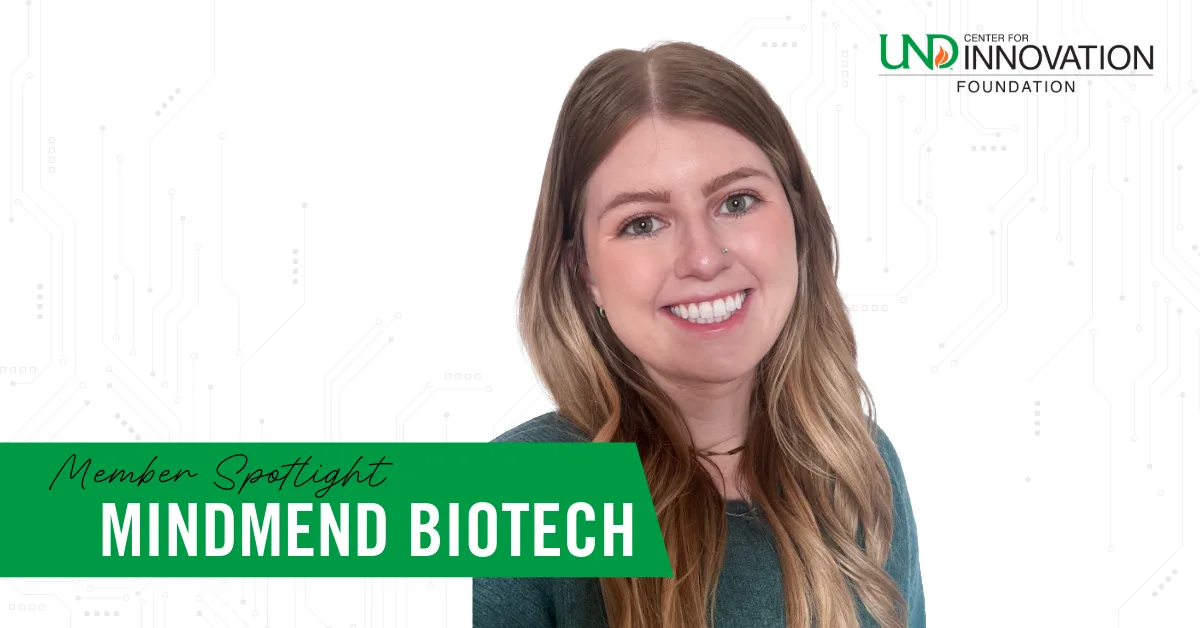
Member Spotlight: MindMend Biotech

Mercedes Terry

Mercedes Terry, Co-Founder and CEO of MindMend Biotech

From Challenge to Innovation

MindMend Biotech is a startup that aims to use continuously tracked health data, rather than subjective diagnosis, to monitor the symptoms of Parkinson’s disease and other neurodegenerative diseases through a wearable device. Mercedes Terry, co-founder and CEO of MindMend Biotech, was inspired by her grandmother’s experience with Parkinson’s Disease. After her grandmother was misdiagnosed and put on medication that negatively affected her health as a result, Terry realized the lack of research and diagnosis tools currently available for others who are also affected by neurodegenerative diseases.

About MindMend

The current diagnosis indicators of Parkinson’s disease are primarily subjective, with lots of symptoms and data being missed between appointments. With MindMend’s wearable device, there will be real-time data available that accurately measures a biological marker, giving consistent objective data that can be used to monitor neurodegenerative diseases.  

This innovation that started by only supporting people with Parkinson’s disease has quickly grown into a tool that also supports the tracking of disease progression, and a company that is “expanding our focus to support both patient care and clinical research,” says Terry. 

Senior woman and doctor talking about healthcare data.

Woman and doctor talking about healthcare data.

Steps Forward

MindMend achieved a major milestone by receiving a patent for their device in December 2025. Not only does this patent recognize the potential of the innovation, but it also highlights its promise to create meaningful impact in the disease research field.  

Each step toward this milestone requires time, resources, and adherence to regulatory requirements before moving on. The process is challenging but rewarding. “I learned that building something meaningful takes constant iteration and the ability to keep going when things do not work the first time,” Terry explained. “Resilience comes from staying focused on the problem you are solving, listening to feedback, and adjusting quickly instead of getting stuck on one idea.” 

CFI’s Impact

The CFI ecosystem offers structure, personalized guidance, and access to resources that support startups throughout the development process. “It helped us stay focused, connect with the right people, and move faster by learning from others who have gone through the process,” said Terry. This support ensures teams move efficiently from initial concept to functional prototypes, all while addressing hurdles along the way.  

NSF I-Corps Training is a five-week program where researchers are able to learn more about commercializing their research or innovation and the societal impact of their work. The program helps businesses develop meaningful business connections, refine their audience, and identify market needs. “Sona Leismeister played a key role by encouraging us to participate in the I-Corps program, which ended up having a major impact on our progress,” Terry shared.

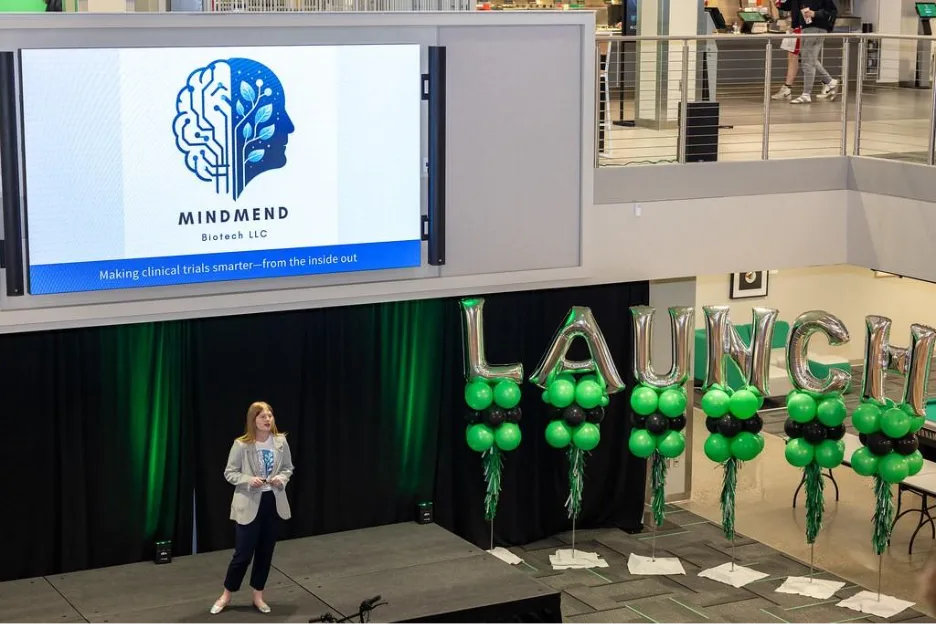
Terry presenting at the LAUNCH: Demo Day event at the UND Memorial Union. Photo by Mark Maliskey or Mark Maliskey Photography, Grand Forks.

Terry presenting at the LAUNCH: Demo Day event at the UND Memorial Union. Photo by Mark Maliskey of Mark Maliskey Photography, Grand Forks.

Looking Ahead

The ability to make a real impact in how neurodegenerative diseases are understood and managed is what’s most exciting when looking into MindMend’s future. Improving how treatments are developed and evaluated through objective data, to achieve better patient outcomes remains central to their mission.

Learn More

To learn more about MindMend Biotech, visit their LinkedIn.  

De-Risking One’s Idea

Written by Sona Lesmeister

In my career as a startup coach at the UND Center for Innovation, I get to interact with a lot of inventors, innovators, thinkers, and tinkerers. I work with very smart—often brilliant—people in their fields of expertise. It’s a privileged seat to observe so much ingenuity, creative spirit, and talent, all aiming to make a greater impact: to go beyond publishing a paper or simply checking the boxes expected of someone in their role.

Sona talking with a student at LAUNCH Showcase Event

The Excitement of Ideas

What I see most abundantly is ideas.

Ideas are fun. They’re exciting, inspiring, and often feel like good ideas. But just because something looks like a good idea doesn’t always mean it is—especially when it comes to building a business. Statistics suggest that up to 95% of businesses fail within their first five years. That might make starting a business sound like a bad idea.

Not so fast.

Hand stopping blocks from continuing to fall, symbolizing business risk.

Risk is Everywhere, Not Just in Business

With some homework and due diligence, much of that risk can be reduced.

And let’s be honest—business isn’t the only risky thing. So is being employed, especially in a rapidly changing economy. Heck, being alive is inherently risky.

The point, then, isn’t to stop participating in life or to bubble-wrap ourselves against disappointment. The point is to be smart. To do our homework—on the companies we work for, the people we build our lives with, and where we invest our time and money.

So why would business ideas be any different?

Treat Your Idea Like an Investment

They, too, deserve to be tested and probed. Before you commit your time, energy, and hard-earned dollars to bringing an idea to life, it’s worth asking whether it truly makes sense. Because unless you’re backed by a rich uncle, trade-offs are real—and priorities matter.

“Well, Sona, how might I go about doing that?” you ask.

Great question.

Group of people planning at a workshop (notes, notebook, iPad)

Customer Discovery Is the Homework

You’ve probably heard me talk about customer discovery. That’s the homework worth doing. Is it fun? It can be. Is it work? Absolutely. It requires looking at your idea honestly through the lens of the market—and more specifically, through the eyes of your potential customer.

That perspective can be uncomfortable. But if you let it teach you, with an open mind, it can uncover unexpected treasures. When you’re willing to poke holes in your great idea, you may discover something even better: a bigger, more meaningful problem—one your customers are eager to pay you to solve.

What’s one assumption you could test before investing more time or money into your idea?

Do you need support while growing your idea? Reach out anytime at info@innovators.net

New Year, New Opportunities: Why Your Story Matters in 2026

Written by Haylee Bjork

As we move into 2026 and reflect on 2025, it’s worth recognizing the twists and turns that have shaped where we are today. I try to do this daily, through showing gratitude or by doing one good deed a day (advice from my Grandma Sandy). Reflection like this doesn’t just belong in our personal lives; it’s just as valuable professionally.

Sharing your story in a professional setting is a powerful tool for growth and confidence. While working with entrepreneurs, my favorite questions are always, “How did you start your business?” or “Where did the idea come from?” The answers are often where the real impact lies.

Below are three simple ways entrepreneurs and professionals can tell their story, and why it matters more than you might think.

1. Go to Events

Attending events provides the perfect opportunity to share your story face-to-face with like-minded individuals, which is one of the most effective ways to expand your network. I know, this is easier said than done, especially if you’re a homebody or new to networking. Putting yourself in unfamiliar spaces can feel intimidating. However, Grand Forks offers welcoming events that are perfect for professionals at any stage of their journey.

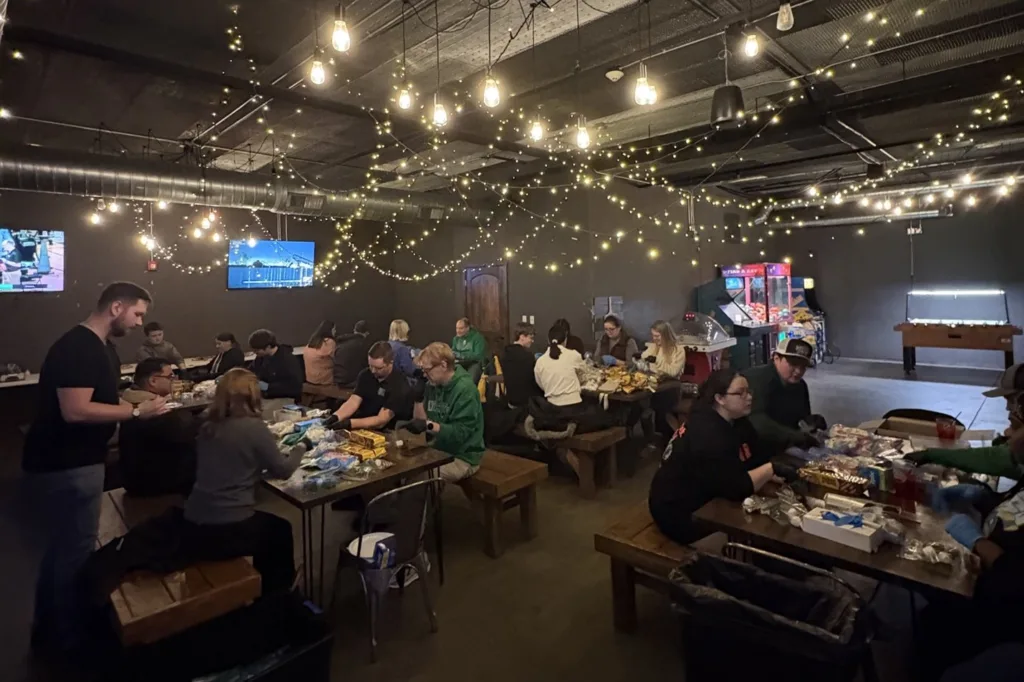
People seated at long wooden tables indoors, assembling items together under string lights in a casual community event setting.
Community members gather at GGFYP, working alongside eachother doing hands-on volunteer work.

The Greater Grand Forks Young Professionals hosts events designed to connect people across industries and experience levels (and despite the name, all ages are welcome!). From broomball nights to community volunteer opportunities, these events create relaxed environments where conversations and stories happen naturally.

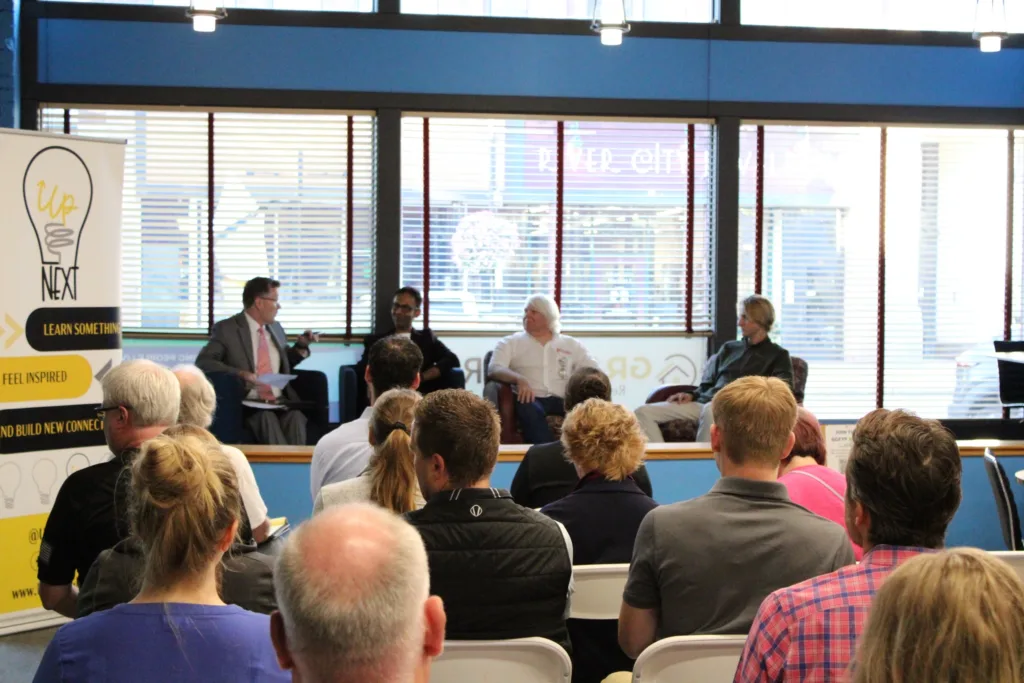
Audience members seated and listening to a panel of four speakers on stage during an indoor discussion event with large windows and a branded banner visible.
A panel of speakers at UpNext, engaging in a discussion in front of an audience during an event.

Another great series of events to look out for is UpNext, which highlights local business owners while creating meaningful networking opportunities. Events like these allow individuals to practice telling their story organically, whether that’s about their business, career path, or what led them to where they are today.

Person holding phone and coffee, looking at social media
Hands holding coffee cup and mobile phone while using social media.

2. Post on Social Media

Social media can feel overwhelming, but it’s one of the most accessible ways to tell your story on your own terms. Your story doesn’t have to be perfectly written or highly produced; it just has to be authentic.

Sharing milestones, lessons learned, challenges, or even behind-the-scenes moments on social media platforms such as LinkedIn helps humanize your work and builds trust with your audience. For entrepreneurs, especially, people are often just as interested in the why behind the business as they are in the product or service itself.

Posting consistently, even something small, can help you clarify your own narrative, build confidence in sharing it, and create connections you may not expect. You never know who is reading, resonating, or quietly rooting for your journey!

People networking at a professional event
People networking at CFI’s Innovation Symposium

3. Connect with organizations that support entrepreneurs

Telling your story becomes even more impactful when you share it with people and organizations that are invested in your growth. Connecting with groups like UND’s CFI, the Grand Forks Region EDC, Evolve Grand Forks, the Chamber, ND SBDC, and other ecosystem partners opens doors to resources, mentorship, and opportunities you may not find on your own.

These organizations want to understand your story, where you’ve been, what you’re building, and where you hope to go. The more you share, the more they can tailor support, make introductions, and help amplify your work.

Beyond the tangible benefits, these connections remind entrepreneurs that they’re not building alone. Sharing your story within a supportive ecosystem can be validating, motivating, and a powerful reminder of how far you’ve already come.

Your Story Matters

Telling your story, whether in a conversation, a post, or through community connections, allows others to see the person behind the work. When you reflect on where you’ve been and share it openly, you build trust, confidence, and meaningful relationships along the way. Your journey is still unfolding, and sharing it can be the first step toward what comes next.

Do you need support on how to start your storytelling journey? Feel free to reach out to me at haylee.b@innovators.net, and see how CFI can help you start!


Celebrating Small Businesses in Grand Forks, ND: Food, Coffee, Shopping, Wellness, Art & Resources

Graphic that reads "Celebrating Small Businesses in Grand Forks, ND"
Graphic that says "Celebrating Small Businesses in Grand Forks, ND"

Grand Forks, North Dakota is filled with countless amazing small businesses, and this guide highlights just a handful of them. This list is not ranked, not a “top” list, and definitely not the only great places in town; it’s simply a spotlight to help you discover some local businesses across a variety of categories. There are many more incredible spots in Grand Forks worth exploring!

Coffee Shops in Grand Forks, ND

If you’re searching for coffee in Grand Forks, here are a few local cafes to check out, listed in no particular order.

  • Urban Stampede – A cozy downtown coffeehouse known for local art and specialty brews.
  • Bully Brew Coffee – A woman-owned, locally roasted coffee brand with community-focused locations.
  • Happy Camper Coffee – A mobile, vintage camper serving espresso drinks and treats around town.

These are just a few stops in the vibrant Grand Forks coffee scene, with many more worth visiting.

Food & Drink in Grand Forks, ND

Looking for places to eat in Grand Forks? Here are several local dining options:

Local Shopping & Boutiques in Grand Forks

If you’re searching for boutique shopping in Grand Forks, here are a few unique local stores to explore.

Wellness & Self-Care in Grand Forks

Grand Forks has a growing wellness community, and these are just a few options:

Arts, Jewelry & Creative Spaces in Grand Forks

Grand Forks offers a thriving arts scene, and these are a few creative spaces to explore.

Numerous other artists and venues contribute to Grand Forks’ vibrant creative culture.

Entrepreneur & Small Business Resources in Grand Forks

If you’re looking to start or grow a business, here are a few local resource organizations—listed without any ranking or preference.

And there are additional resources available throughout the region, including us, the UND Center for Innovation!

Why This Matters

Small businesses power the Grand Forks community. By shopping, dining, and seeking entertainment locally, we help strengthen the economy and celebrate the people who make this city thrive.

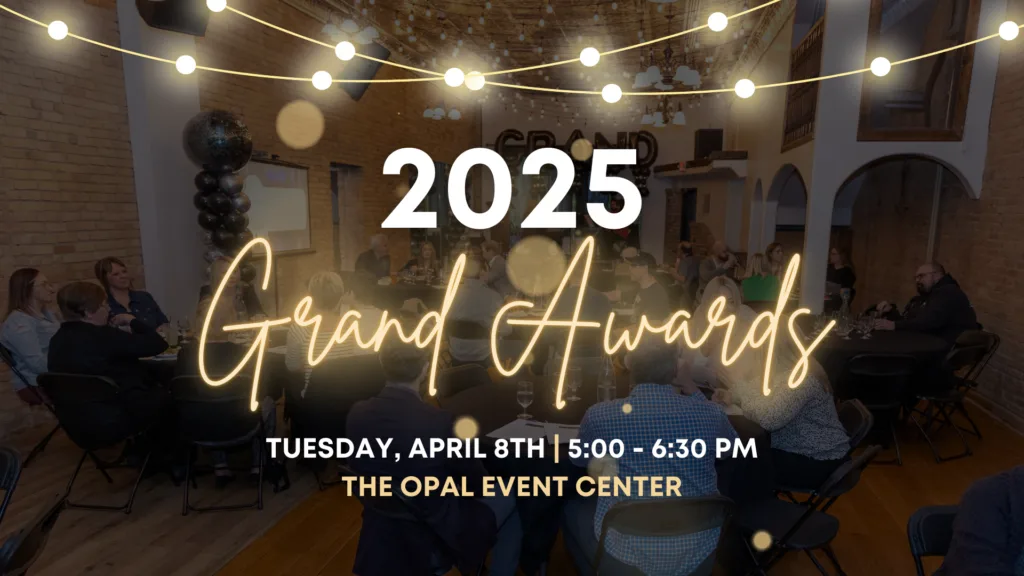
Attend the 2025 Grand Awards!

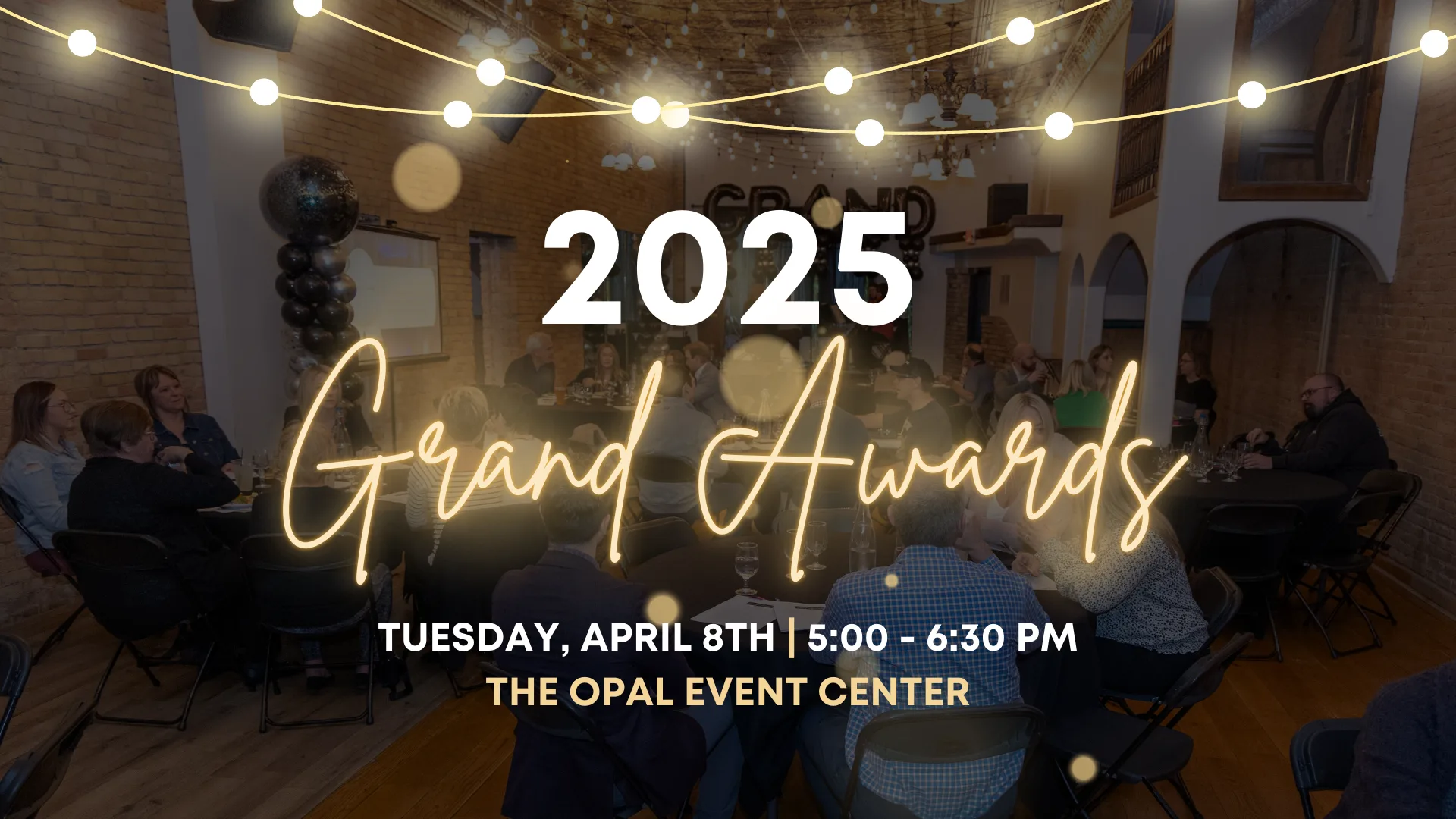
Grand Awards Graphic

Come and celebrate the Grand Forks region’s entrepreneurs on Tuesday, April 8th, 2025 at the Grand Awards!

The Grand Awards is an evening dedicated to celebrating local entrepreneurs who have made significant contributions to our community.

Hosted by Evolve GF and the Grand Forks Entrepreneurial Ecosystem, this event showcases the innovation, resilience, and success defining our business landscape. From groundbreaking startups to established businesses, we’re committed to recognizing outstanding achievements that make our community grand.

Come together with business leaders, community supporters, and entrepreneurs for an inspiring evening honoring those shaping the future of business in our community.

Details

Date/Time: Tuesday, April 8th | 5:00 – 6:30 PM

Location: The Opal Event Center 402 Demers Ave, Suite 200 Grand Forks, ND 58201