Tag: innovation

Member Spotlight: Midwest Planning, LLC

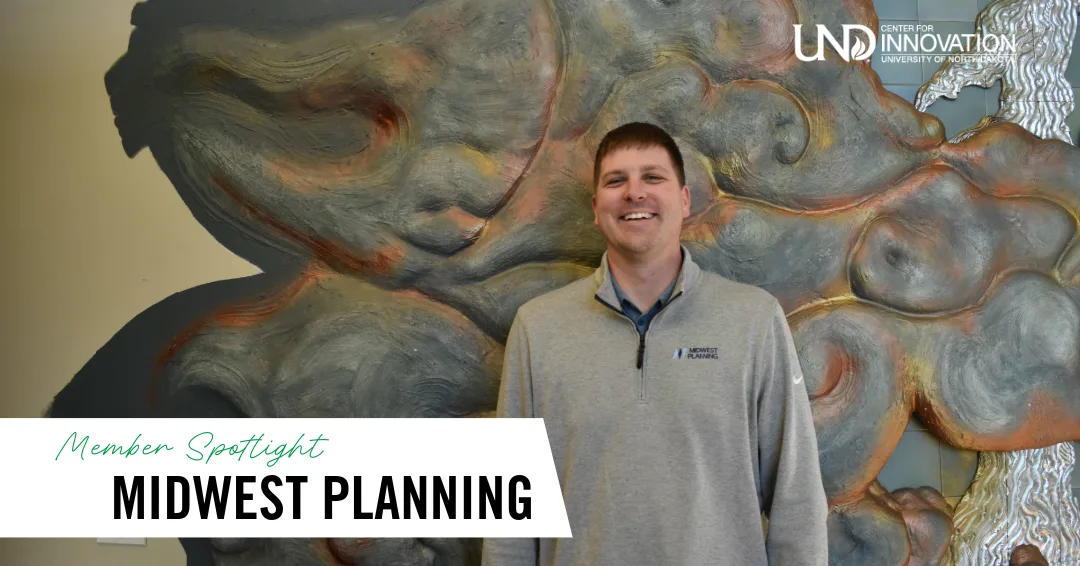
Zach Bopp, founder of Midwest Planning LLC.

When Zach Bopp founded Midwest Planning in 2019, he wasn’t simply starting a business, he was building the kind of consulting firm he wished existed throughout his career, one that combined technical strength with practical usability. After more than a decade in municipal design, master planning, and construction engineering, Zach saw a persistent gap between regulatory expectations and the practical realities of field implementation.

“I wanted to create a firm that was technically strong, but also grounded in real-world application,” he explained. “Infrastructure has to work for the people who build it and maintain it.”

Growing up in an agricultural environment shaped Zach’s values: work hard, focus on the details, and solve problems with practicality and purpose. Those principles became the foundation of Midwest Planning, LLC, a firm defined by responsiveness, clarity, and commitment from project conception to completion.

About Midwest Planning

Midwest Planning specializes in civil and environmental consulting with a focus on:

  • Municipal utility design
  • Land and site development
  • Stormwater and wastewater engineering
  • Water resources planning

Their projects span everything from parking lot layouts to hydraulic modeling, erosion control, and large-scale infrastructure planning. What makes Midwest Planning stand out is the way field experience is integrated into every phase of the design process.

“Our goal is always constructability and long-term usability,” Zach said. “Plans have to be more than compliant; they need to function.”

The firm’s modular, logic-driven design approach supports clearer communication and smoother approvals across agencies, contractors, and community partners.

Impact on the Community

From stormwater systems to wastewater treatment solutions, Midwest Planning plays a quiet but critical role in building resilient communities. Their work helps clients navigate complex regulatory environments while ensuring infrastructure is practical, maintainable, and built to last.

“Our work is meant to support communities for decades,” Zach shared. “By combining technical precision with a deep understanding of local needs, we contribute to safer, more sustainable environments for the people who live and work there.”

Two engineers working on a project and discussing together looking at blueprint paperwork.

Project Highlights

Midwest Planning has built strong regional partnerships, including work with:

These projects highlight the firm’s commitment to technical excellence and regional resilience.

Challenges and Opportunities

One ongoing industry challenge is balancing regulatory expectations with the needs of field teams, who must implement the work in real-world conditions.

“To us, that’s an opportunity,” Zach said. “We focus on bridging that gap, so documentation satisfies agencies and still makes sense to the crews on the ground.”

Connection to the Center for Innovation

Zach’s connection to the UND Center for Innovation began through a colleague who encouraged him to explore CFI’s resources and network. One conversation led to another, and before long, the relationship became a natural fit.

“CFI opened doors to collaboration and helped us connect with other entrepreneurs and innovators,” Zach shared.

Support from CFI

Through the Center for Innovation, Midwest Planning has gained visibility within the regional business community, deepened its network, and connected with resources that support long-term business development.

“CFI has given us a platform to share our story and explore new opportunities,” Zach said. “It’s been invaluable.”

Looking Ahead

Midwest Planning is focused on steady, sustainable growth, continuing to build strong client relationships while expanding regional partnerships.

“We want to grow without ever compromising the quality of our work or the trust we’ve built,” Zach emphasized.

For Midwest Planning, the path forward is rooted in responsiveness, high standards, and a commitment to serving the communities that rely on resilient infrastructure.


To learn more about Midwest Planning, reach out to Zach at Zach@mwplanning.com
One Step Closer to Widespread Drone Use in Rural Areas

Group photo

Project RuralReach, an initiative designed to use drones to dramatically improve rural life, successfully completes second use-case test

Launch Group photo
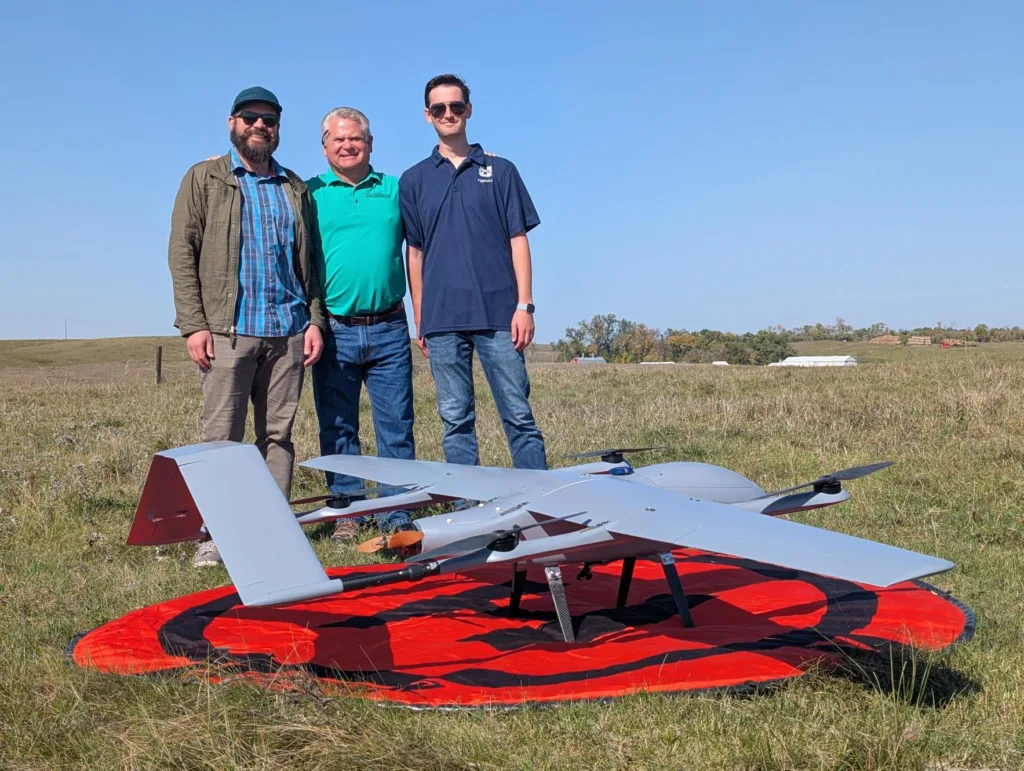
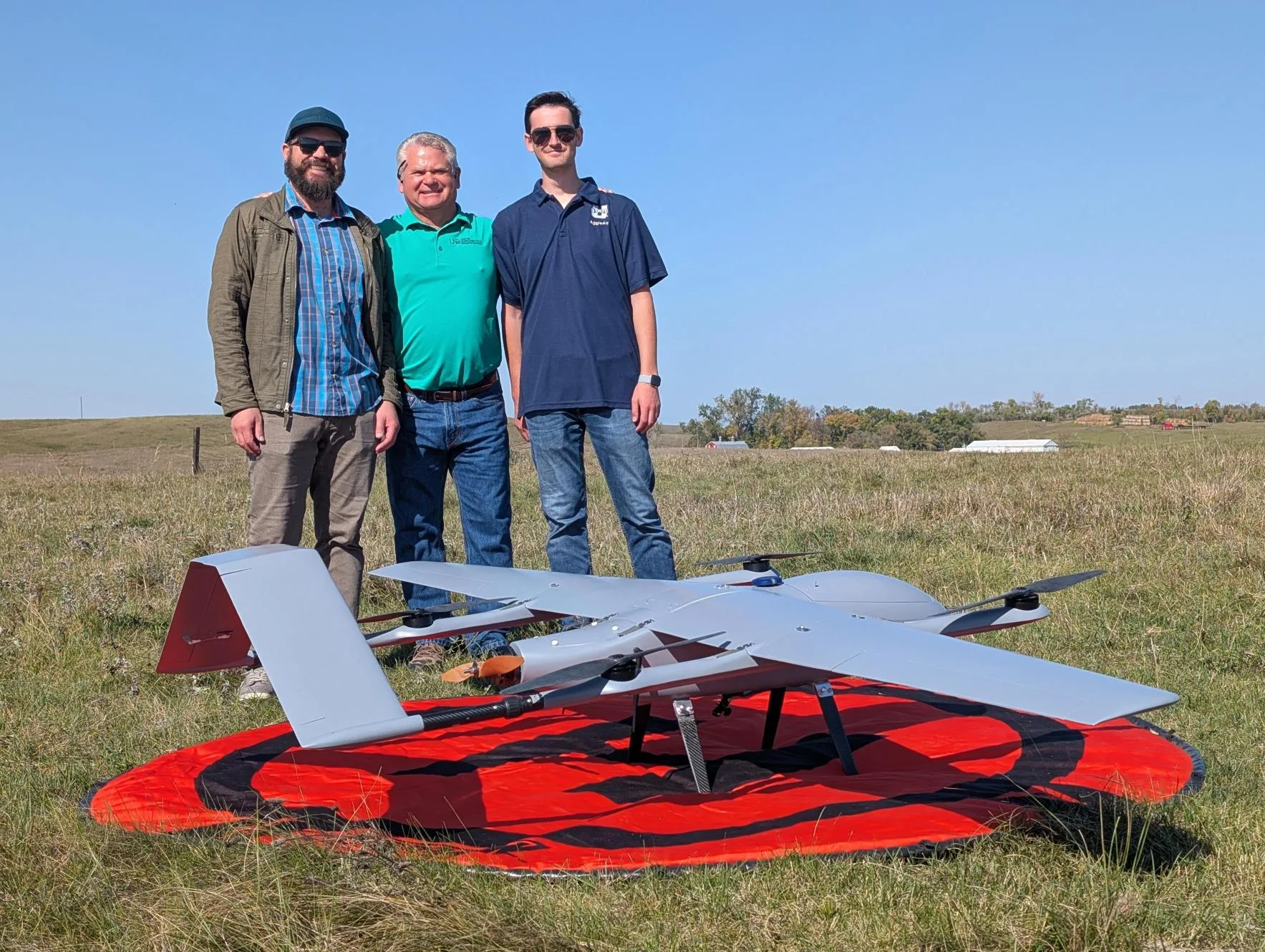
(From left) Cal Coopman, AggieAir director at Utah State University; Jeff Barta, small business innovation research specialist at the UND Center for Innovation; and Brandon Curdy, a UAS pilot from the AggieAir Service Center Team, stand by the aircraft used in the recent use-case test. Photo courtesy of Botlink.

GRAND FORKS — The UND Center for Innovation is proud to announce the successful completion of the second use-case test for Project RuralReach, regarding the use of UAS innovations and sustainable power.

The flight operations took place on Sept. 29 in collaboration with Botlink (a drone-control hardware and software company),  Utah State University’s AggieAir and Dunlevy Consulting. The team carried out two flights, each covering 53 nautical miles with approximately 63 minutes of airtime — surpassing the project goals of achieving electric vehicle (EV) flights beyond 40 minutes and more than 50 miles in distance.

The aircraft used for this test was the ANGEL 1-BE, a small, fully electric vertical take-off and landing (VTOL) platform designed and built by extended-range, sustainable operations — including the internal electrical configuration, which was altered by AggieAir specifically for the endurance mission. The test took place in the southeast region of North Dakota, and was designed to explore sustainable power opportunities and environmental conditions to extend the operational range of autonomous vehicles.

“Botlink CEO Terri Zimmerman’s leadership in North Dakota UAS has been great to watch, and our organization was pleased to partner with Botlink and Badland Batteries as we demonstrated endurance missions with North Dakotan UAS and North Dakotan energy storage systems,” said Matt Dunlevy of Dunlevy Consulting.

“Working with Amy Whitney and Jeff Barta of the UND Center for Innovation was also fantastic, as always. The success of this mission underscores North Dakota’s growing capability to lead the nation in energy-resilient aerospace operations.

“It also validates the strength of collaboration between industry and academia in advancing homegrown innovation that can compete globally.”

A significant step forward

Powering the ANGEL 1-BE were four Badland Batteries 6S 17000-milliamp batteries, which are Packet Digital’s first off-the-shelf battery packs. Badland Batteries are designed, assembled, shipped and supported from Fargo, N.D., where Packet Digital is located. For purchase information, visit badlandbatteries.com/store.

Also onboard the ANGEL 1-BE was the Botlink XRD2, which maintained cellular connectivity over the Verizon cell network for the entire flight, streaming telemetry and video data with the ability to transmit telemetry data to UTM or Unmanned Traffic Management suppliers, such as North Dakota’s Vantis network’s API.

The Botlink XRD2 is compatible worldwide and ready to ship. For purchase information, visit botlink.com/xrd2.

“This was a great success for Badland Batteries and Botlink,” Botlink General Manager Matt Sather said. “This project showcases the impact drones can have in rural environments. Being able to use North Dakota-made batteries and cellular connectivity throughout highlights the incredible things going on in our state across the UAS industry.”

Funded through the U.S. Economic Development Administration’s ARPA Economic Adjustment Assistance Program, Project RuralReach continues to explore innovative ways to enhance connectivity, efficiency, and sustainability in remote regions. With this successful test, the project moves another step closer to scalable, real-world applications that can serve rural industries and communities.

Media Contact

Haylee Bjork, Marketing Outreach Coordinator
Organization: UND Center for Innovation

Email: haylee.bjork@und.edu
Phone: 701.777.3281

Member Spotlight: Wildflowers of Hope — Growing Light from Loss

Kelly Entzel and her son Oscar at the UND Center for Innovation
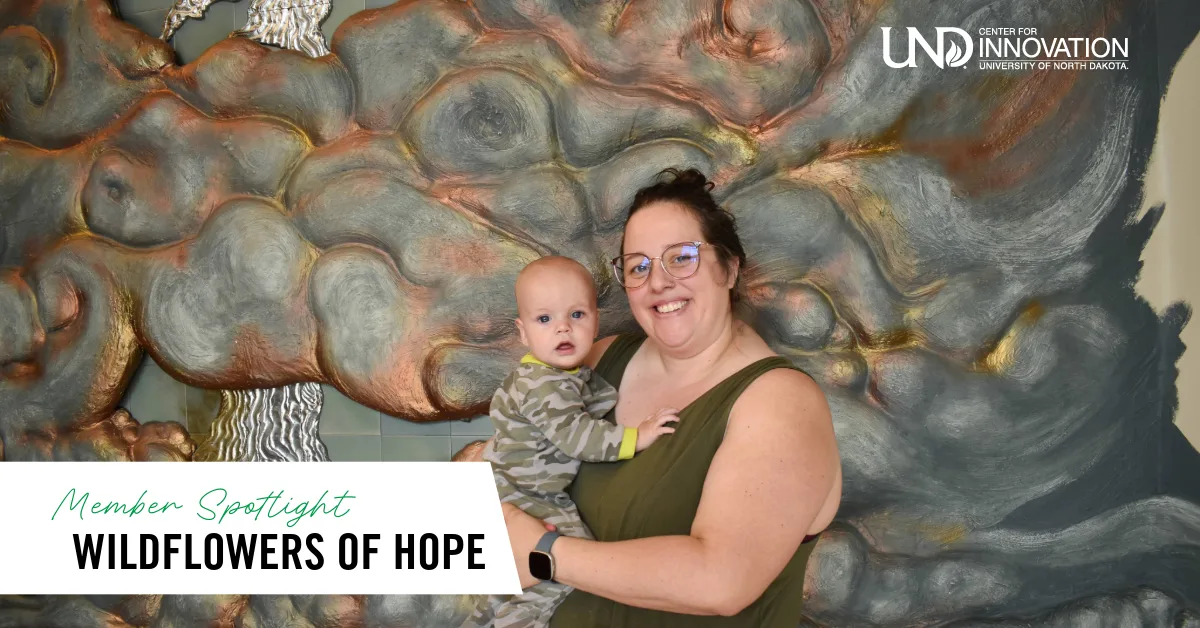
Kelly Entzel, the founder of Wildflowers of Hope with her son, Oscar. Photo by Haylee Bjork

When grief blooms into purpose, beautiful things can happen. For Kelly Entzel, a UND alum and former English teacher, that purpose took root in 2024 with the creation of Wildflowers of Hope, a nonprofit dedicated to supporting all individuals and families in the Red River Valley experiencing pregnancy and infant loss.

Kelly’s story began years earlier. Originally from Fosston, Minnesota, she came to UND in 2009 to pursue her degree in education, a decision that led not only to her career of 13 years as a teacher but also to meeting her husband. The two married in 2013 and started building their family in Grand Forks.

Their journey, however, wasn’t without heartbreak. After two miscarriages and the devastating loss of their daughter, Collette, in October 2023 due to a rare genetic condition called Triploidy, Kelly and her family experienced profound grief.

“I knew our family wasn’t complete, but I also knew that grief is isolating,” Kelly shared. “Unless you’ve been through it, it’s hard to understand. I wanted to create a space where families could find hope, community, and healing.”


On Collette’s half-birthday, April 18, 2024, Kelly and her sister Emma Preston, began dreaming up a way to support others in their grief journey. As plans for their nonprofit began to sprout, Kelly asked her friend Sarah Anderson, to come alongside them to build and launch Wildflowers of Hope, named for the resilience and renewal that wildflowers symbolize, was officially established in October 2024. “Every spring, new life and new hope come back. Flowers bring joy and the promise of something better,” Kelly said.

At home, Kelly’s life is filled with energy and love. She’s the proud mom of four energetic kids who keep her days bright and busy.

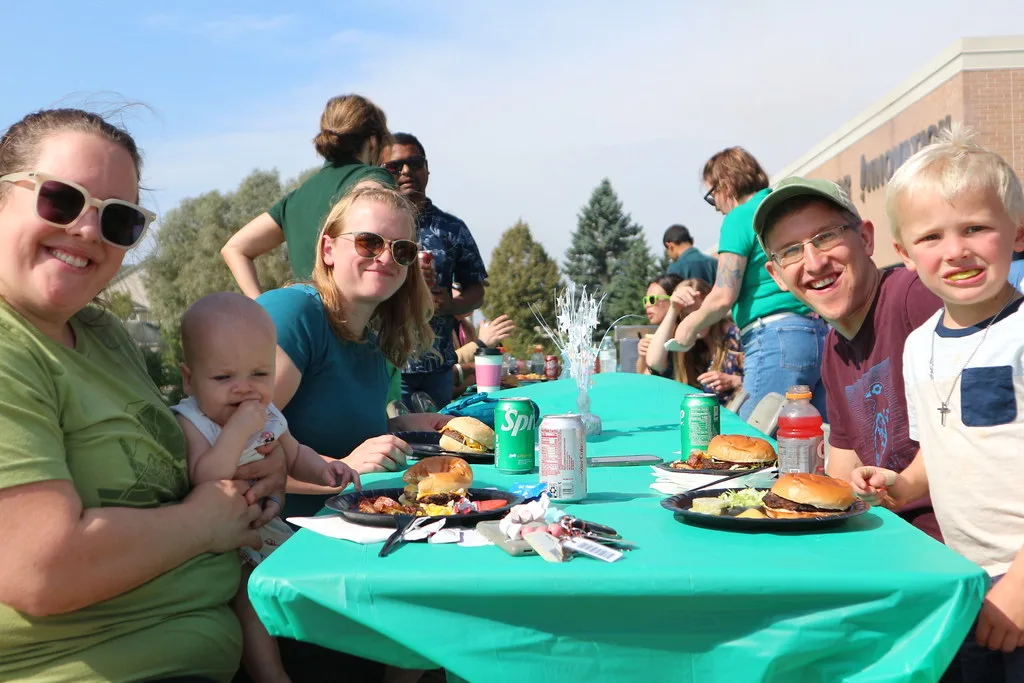
Kelly and Sarah Anderson at CFI’s Grill & Gather event, Photo by Alex Johnson

Building Community Through Compassion

As a member of UND’s Center for Innovation, Kelly found both practical and personal support to grow her nonprofit idea into reality. Through CFI, Wildflowers of Hope gained workspace and printing access, as well as valuable connections to community partners — including The Sunshine House, where the group now holds its monthly meetings.

“The Center for Innovation gave us a home base when we were just getting started,” Kelly said. “Having access to resources, a space to work, and people who believed in our mission made all the difference.”

Wildflowers of Hope offers monthly support groups for families navigating pregnancy and infant loss, hosted at the Sunshine House in Grand Forks. Kelly explained that choosing a neutral, comforting space was important. “After loss, the last place you want to be is a hospital or funeral home. The Sunshine House has been a beautiful place for people to come, breathe, and share.”

Local businesses have also rallied around the organization, with All Seasons Garden Center donating wildflower seed packets, and The Wired Bean and Bernie’s providing coffee and pastries for meetings. “It’s been amazing to see the community come together to support something so personal,” Kelly said.

Each month, Wildflowers of Hope also sends remembrance cards and wildflower seeds to families across the region. Their newsletter and online store, featuring beautifully designed flower cards by co-founder Sarah Anderson, help spread awareness and raise funds for their outreach.

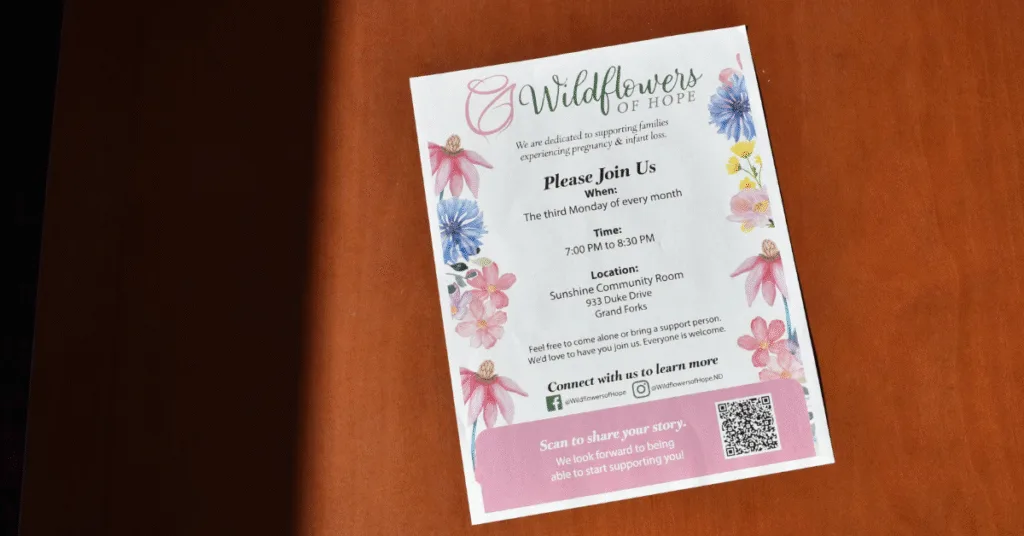
Wildflowers of Hope Flyer, Photo by Haylee Bjork.

Finding Purpose in Growth

Though it’s in its second year, Wildflowers of Hope has already touched lives throughout the Red River Valley. Kelly’s long-term vision includes expanding mental health partnerships, offering educational resources, and eventually growing into a full-scale nonprofit providing comprehensive grief and postpartum support.

“My dream is to do this full-time, to walk alongside families in their darkest times and remind them they’re not alone,” Kelly said. “Hope is necessary when you’re going through grief. Without it, it’s easy to get stuck in a dark place.”

As October marks Pregnancy and Infant Loss Awareness Month, Wildflowers of Hope will also take part in the International Wave of Light on October 15, lighting candles at 7 p.m. to honor babies gone too soon. “The idea is that a candle is lit in every time zone,” Kelly explained. “It creates a wave of light across the world as a symbol that our babies’ lives still shine.”

Get Involved

Wildflowers of Hope hosts group meetings on the third Monday of each month at 7 p.m. at the Sunshine House in Grand Forks. Individuals can get involved by:

  • Purchasing items from their online store or donating to support their mission
  • Joining their newsletter to stay connected
  • Volunteering as a local partner, sponsor, or fiber artist (to make small “lovies” for families)
  • Spreading the word about their mission

For Kelly, every wildflower planted represents a story of love, loss, and resilience. “Collette’s life gave us purpose,” she said. “Through her, something beautiful has grown.”


Learn more or support Wildflowers of Hope on their website, or follow them on Instagram or Facebook!

Member Spotlight: Vorbeck – Advanced Materials, Big Vision, and North Dakota Roots

Vorbeck team at UND's Center for Innovation
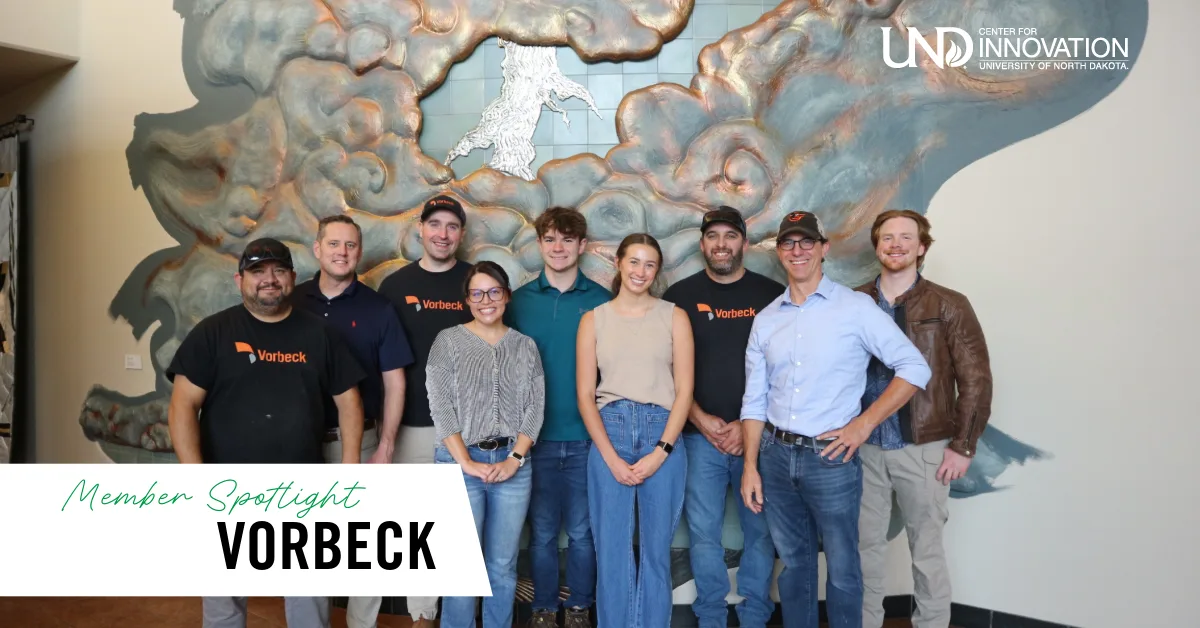
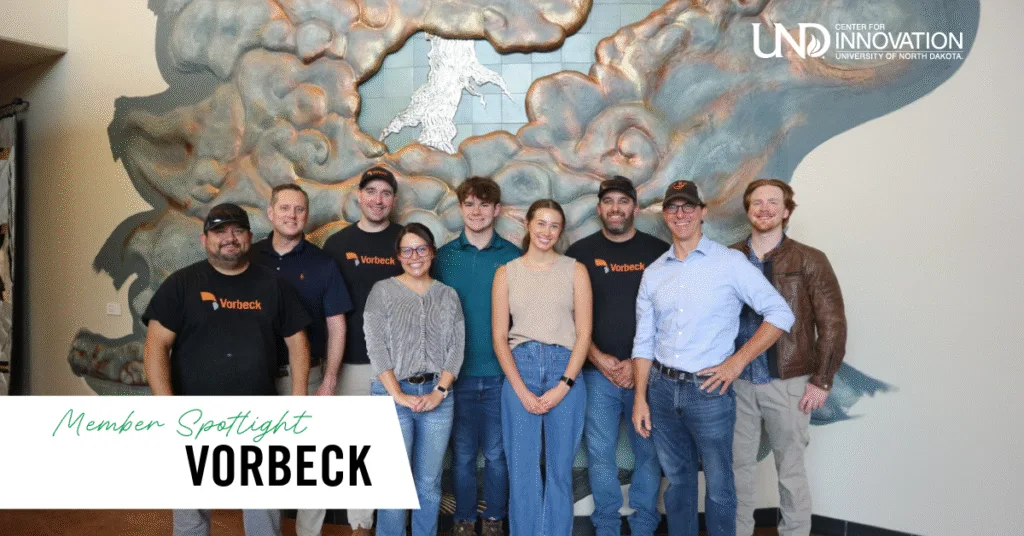
Vorbeck team at UND’s Center for Innovation, Photo by Haylee Bjork

When Tyler Sletten joined Vorbeck as the site leader for the company’s North Dakota operations, he knew he was stepping into something special. With a background as SBIR/STTR Director at the Center for Innovation and experience running his own businesses, Tyler was inspired by Vorbeck’s leadership team, Department of Defense partnerships, and potential to play a key role in North Dakota’s growing defense ecosystem.

“Vorbeck is at the right time and the right place,” Tyler said. “North Dakota—and the Red River Valley in particular—is a perfect fit for our work.”

About Vorbeck

Founded in 2006, Vorbeck has built a reputation for innovation in advanced materials for extreme environments, particularly for the Department of Defense. With more than 100 patents, much of their work is centered on printed electronics and graphene-based technologies.

Vorbeck's new facility in Grand Forks
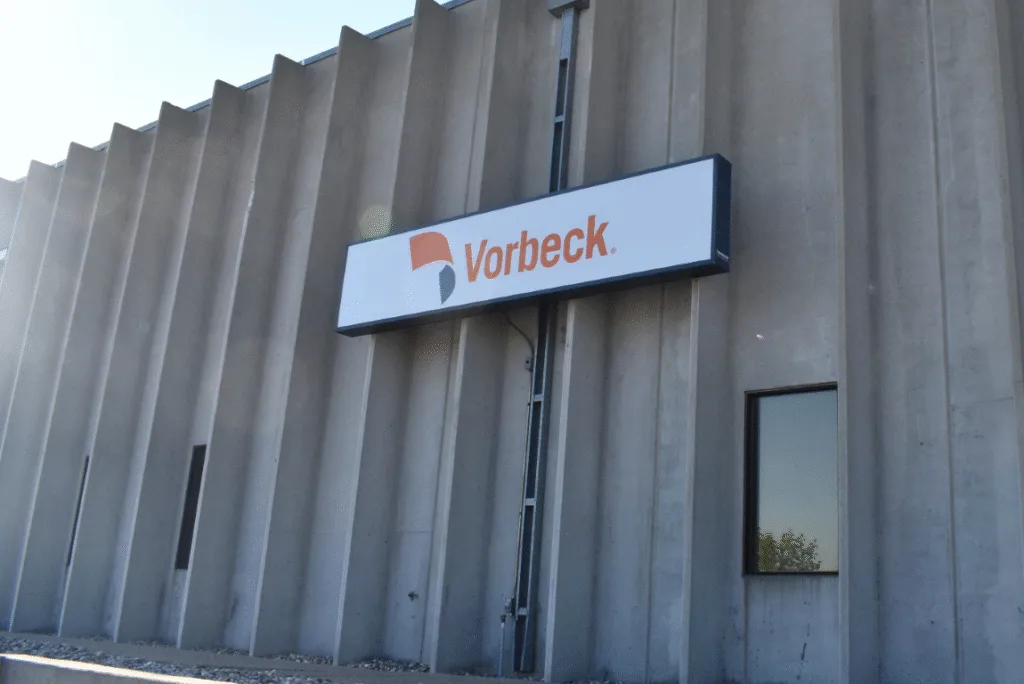
Vorbeck’s new facility in Grand Forks, Photo by Haylee Bjork

Why North Dakota?

Vorbeck’s journey to Grand Forks began when Chairman William “Bill” Kilberg connected with Governor Doug Burgum. The welcome they received on their first visit sparked multiple return trips—and ultimately the decision to establish a long-term presence here.

“It quickly became clear that North Dakota could be a place where we could plant deep roots,” Tyler shared.

Building a Team, Building a Future

Like many expansions, Vorbeck faced challenges: assembling a new team, securing facilities, and operating across two locations 1,400 miles apart. Their solution? Invest in people.

One key step was hiring Amanda Odegard, now company-wide HR Director, whose leadership helped stabilize operations and set the foundation for growth.

From there, the team grew into a powerhouse of talent:

  • Andrew Knable and Ryan Chappell – designing and building the plant
  • Morgan LaRock – first to be brought on to the team directly from UND, now leading Logistics and Supply Chain
  • Andy Lafferty – Master Electrician, pivotal to plant construction
  • Chris Vondra and Zach Edwards – skilled technicians supporting expansion

“More than the milestones, it’s the people who make this work,” Tyler said.

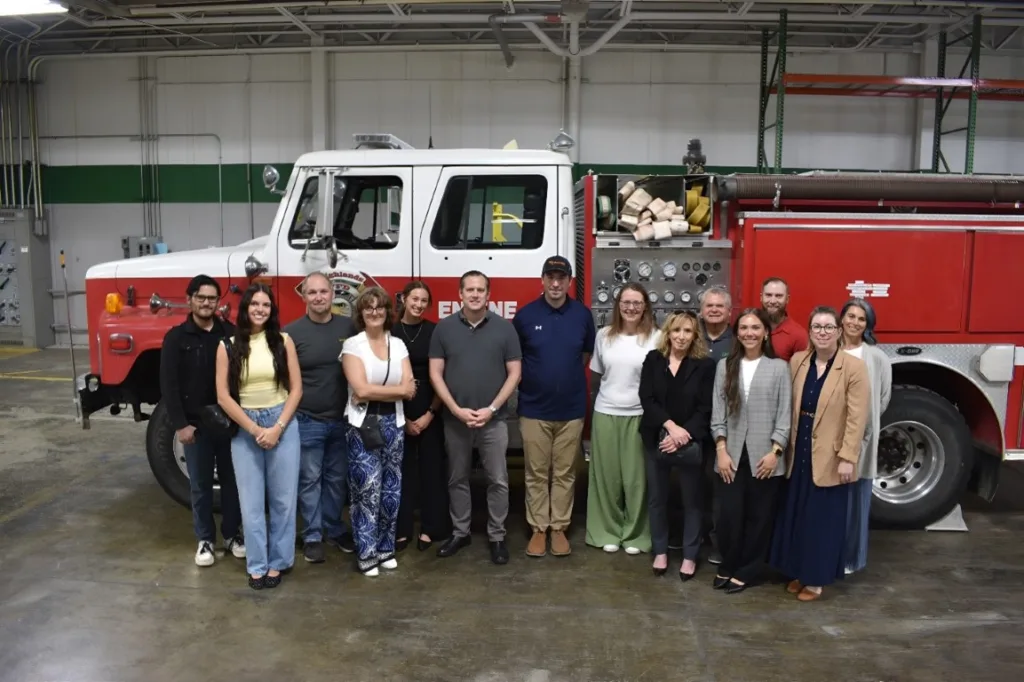
Group photo taken while touring the Vorbeck Facility, Photo by Haylee Bjork

Support Along the Way

Vorbeck credits a strong ecosystem of partners for helping fuel their success:

As a former CFI staff member, Tyler has a unique perspective: “CFI has been instrumental in our growth. Amy Whitney introduced me to NSF I-Corps, which reshaped how we think about customer needs. Anthony Maher’s coaching sharpened our pitches, often with the tough advice only a trusted advisor can give. And Travis Fretheim guided us through every step of our tenancy—from a single office, to larger Skalicky spaces, and eventually to our graduation into a permanent home.

I’d also like to thank Haylee Bjork, Jeff Barta, Sona Lesmeister, Amanda Voigt, and Kevin Lunke —each played a role in making the road a little smoother. Simply put, CFI has been a partner every step of the way.

Recent Highlights

  • Moving into a new, larger facility with the support of Russell Crary and Crary Development
  • Launching internship opportunities for UND students across engineering disciplines
  • Establishing a scholarship for excellence in electrical engineering at UND’s College of Engineering & Mines
  • Developing collaborations with UND’s EERC, Aerospace, Space Studies, and CEM

“This expansion sets the stage for our next chapter,” Tyler explained. “We can now bring all production under one roof, with room to grow.”

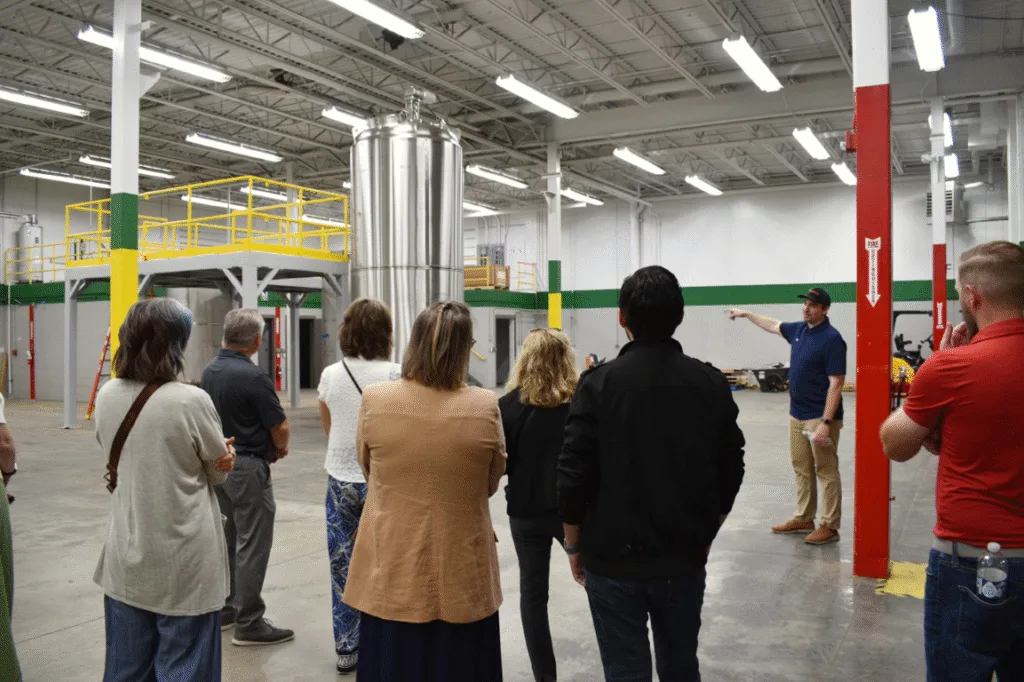
Andrew Knable leading a tour of Vorbeck’s new facility, Photo by Haylee Bjork

Looking Ahead

Vorbeck’s near-term focus is finishing its plant buildout this fall and growing its North Dakota team from 20 to 50+ employees. Longer term, the company envisions becoming a cornerstone of advanced manufacturing in North Dakota, known for PFAS-free firefighting foams, cutting-edge graphene applications, and deep ties to UND in research and workforce development.

“In five years, we want to be at full scale—delivering mission-critical technologies for the Department of Defense and beyond, while creating jobs and opportunities right here in Grand Forks.”

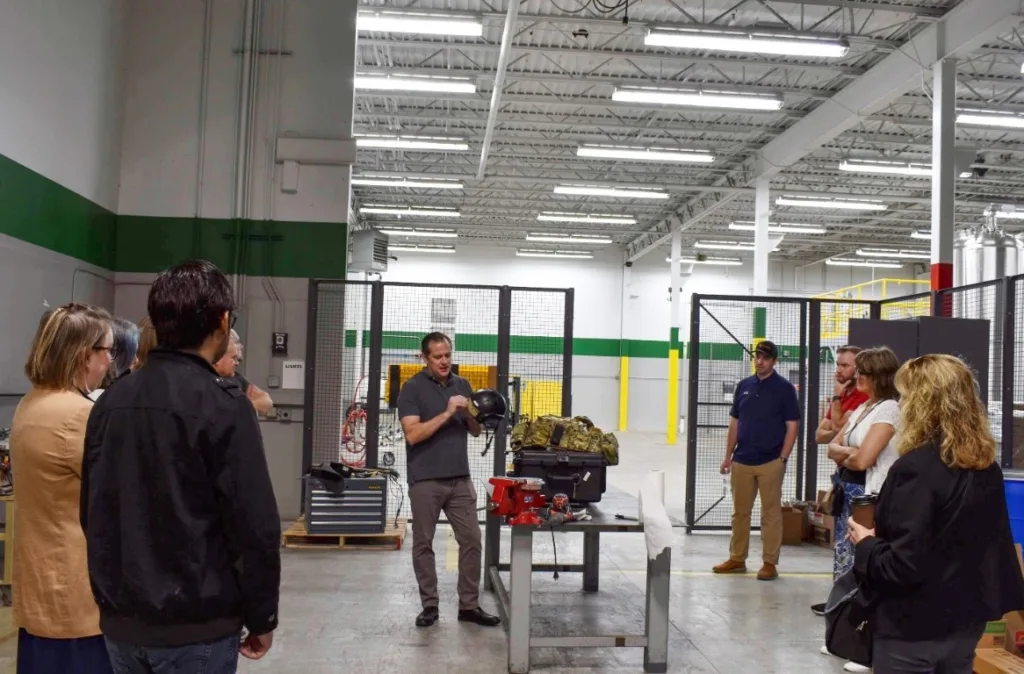
Tyler Sletten giving a product demonstration, Photo by Haylee Bjork

Advice for Fellow Innovators

When asked what advice he’d give to other entrepreneurs, Tyler pointed to the wisdom of Teddy Roosevelt, paraphrasing one of his most famous ideas:

“Think boldly; dare greatly.”


Learn more about Vorbeck and their mission to pioneer advanced materials that support national defense while creating jobs and opportunities in North Dakota by following them on LinkedIn or visiting their website.

MEDIA ADVISORY: Demonstration to show how drones can boost rural resilience

Gorman Field


Censys Technologies to lead live UAS demonstration for Project RuralReach at UND’s Gorman Field UAS Test Range

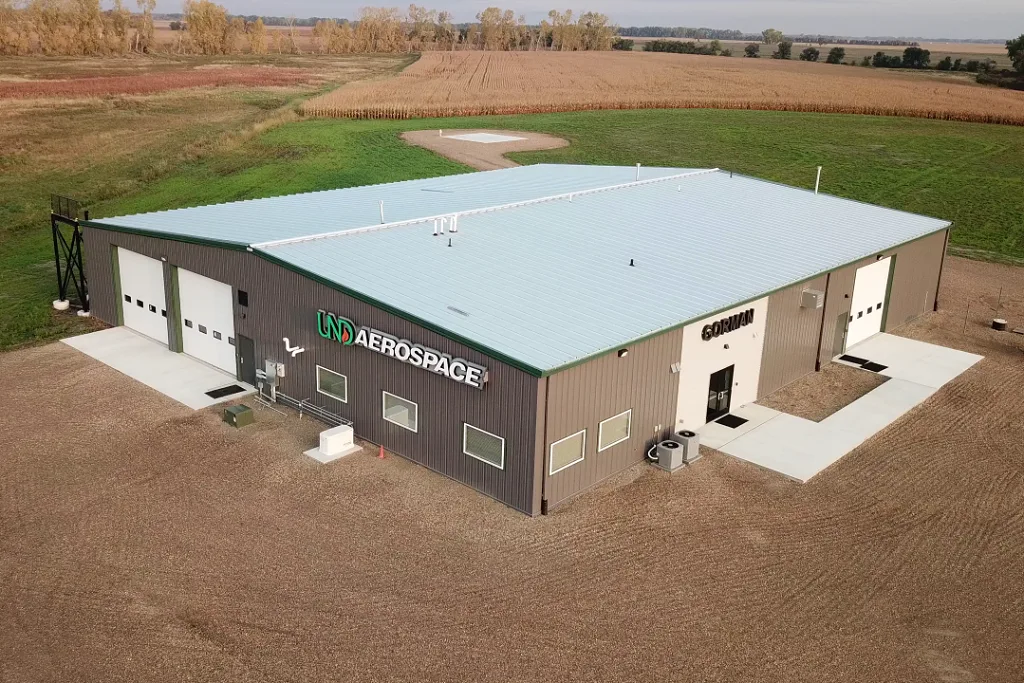
The UND Aerospace UAS Test Range at Gorman Field in Emerado, N.D., is a facility designed to test and train new UAS technology. At the Range, the building pictured offers office, work and hanger space for UAV testing and development. Center for Innovation photo.

What:

Project RuralReach will launch a critical use case test with advanced unmanned aircraft systems (UAS), demonstrating the systems’ potential to enhance disaster response, situational awareness and resource mobilization in rural communities.

The live demonstration will feature multiple flight missions, including search and rescue, transmission line inspection, and data collection using RGB and LiDAR sensors, all operated by Censys Technologies. (RGB or Red, Green and Blue sensors are especially useful for creating high-resolution, color-accurate images from aerial perspectives.  LiDAR or Light Detection and Ranging sensors generate precise, three-dimensional information that can be used to develop digital and highly detailed maps.)

Flights will take place over the English Coulee Diversion area, launching from the Gorman Field UAS Test Range.

When:

Wednesday, September 10, 2025
9 a.m. – 3 p.m. (weather permitting)

Where:

Gorman Field UAS Test Range
1209 24th St NE, Emerado, N.D. 58228

Flight Details:

  • Multiple flight missions throughout the day:
    • Launch #1: Search & Rescue Mission (9:15 a.m.)
    • Launch #2: Transmission Line Flyover (~11:15 a.m., 30 minutes)
    • Launch #3: Data Collection (RGB & LiDAR) (1:30 p.m.)
  • Payload swaps and Q&A sessions after missions
  • Demonstration of real-time situational awareness, data collection and resource mobilization in rural scenarios

Why It Matters:

This demonstration highlights the growing role of UAS technology in strengthening rural resilience and supporting emergency response. Project RuralReach showcases real-world drone applications that help first responders and communities respond more efficiently to emergencies, gather critical data and improve overall safety and connectivity in sparsely populated areas.

Visual Opportunities:

  • Live drone launches and landings
  • Payload swaps and real-time data demonstrations
  • Interviews with flight operators and project stakeholders
  • Behind-the-scenes look at UAS prep and operations

Image:

Gorman Field building, 1.4MB: The UND Aerospace UAS Test Range at Gorman Field in Emerado, N.D., is a facility designed to test and train new UAS technology. At the Range, the building pictured offers office, work and hanger space for UAV testing and development. Center for Innovation photo.

Media Contact:

Haylee Bjork, Marketing Outreach Coordinator
Organization: UND Center for Innovation

Email: haylee.bjork@und.edu
Phone: 701.777.3281

From Idea to Impact: Pitching for Up to $2M in NSF Seed Funding

Learn how to pitch your innovation and compete for up to $2M in NSF seed funding.

Event Graphic for Learn how to pitch your innovation and compete for up to $2M in NSF seed funding.

Discover how to turn your innovative idea into a compelling grant proposal in this interactive session on America’s Seed Fund, powered by the U.S. National Science Foundation. Learn how to craft an effective Project Pitch—the crucial first step toward securing up to $2 million in non-dilutive funding for your startup. This session will guide you through defining a significant problem, presenting a unique solution, and highlighting the potential impact of your innovation. Come prepared to share your idea, receive practical insights, and gain the confidence to take your innovation to the next level.

We’re excited to host Elizabeth (Ela) Mirowski, NSF SBIR/STTR Program Director, who will share insights on how to:

  • Define the problem your innovation solves
  • Present your unique solution
  • Showcase your potential impact

📅 Date: September 10, 2025, 3:00 – 5:00 pm

📍 Location: Grand Farm Classroom (In-person & Virtual)

3717 153rd Ave SE, Wheatland, ND 58079

Project Rural Reach: Emergency Response UAS Test Launch

Date: Wednesday, September 10, 2025
Time: 9:00 AM
Location: Gorman Field UAS Test Range, 1209 24th St NE, Emerado, ND 58228

As part of Project RuralReach, Censys Technologies has been selected to lead a critical use case test focused on improving disaster response, real-time situational awareness, and resource mobilization through advanced unmanned aircraft systems (UAS).

This live demonstration will highlight how UAS technology can be deployed in emergency scenarios to support first responders and rural communities.

Flight Timeline:

  • 9:00 AM – Welcome & overview of Censys Technologies and Project Rural Reach
  • 9:15 AM – Launch #1: Search & Rescue Mission
  • 11:00 AM – Land & open Q&A session (payload swap)
  • 11:15 AM – Launch #2: Transmission Line Flyover (~30 min)
  • 1:00 PM – Land & payload swap
  • 1:30 PM – Launch #3: Data Collection (RGB & LiDAR)
  • 3:00 PM – Final landing & event conclusion

📢 Who’s Invited:
Media representatives, community members, and anyone interested in seeing cutting-edge UAS technology in action.

This is a unique opportunity to experience Project RuralReach in motion — testing real-world drone solutions designed to strengthen rural resilience and emergency response capabilities.

Center for Innovation, partners complete landmark medical drone delivery trial

Project Rural Reach flight carries medical supplies from Williston, N.D., to Watford City, N.D., in just over 35 minutes

Dr.Kazin collecting medical supplies from drone
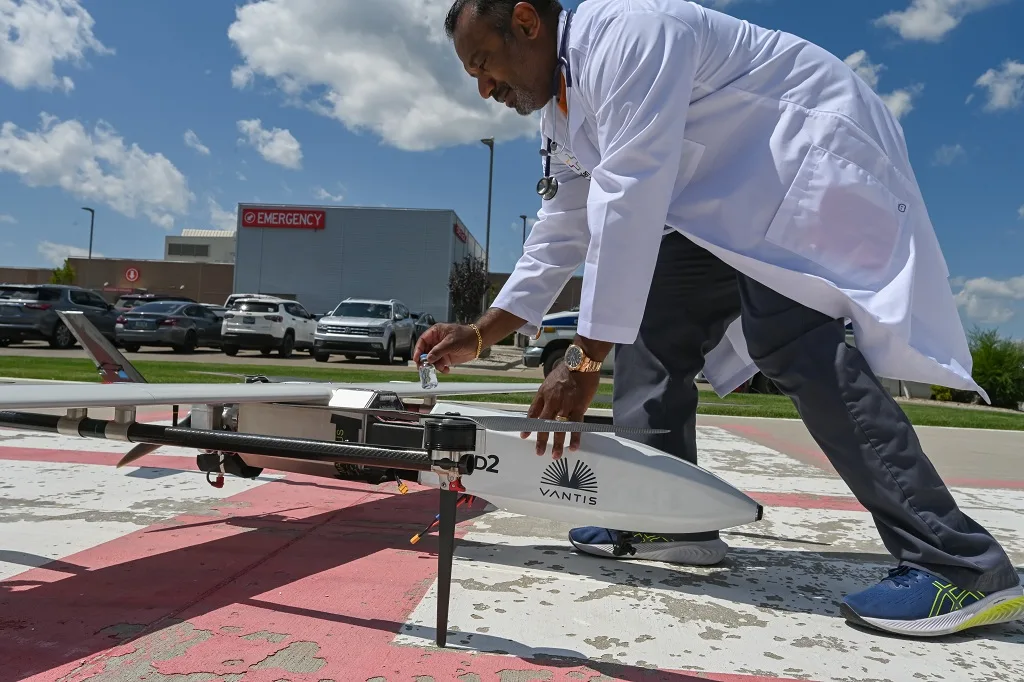
Dr. Ben Kazim of McKenzie Health, a hospital and clinic in Watford City, N.D., receives medical supplies at the hospital from the drone. Photo courtesy of Absolute Studios.

By Haylee Bjork

In a notable step toward improving health care access in rural communities, Project Rural Reach successfully launched its first long-range drone delivery flight on July 24. The mission showed how unmanned aircraft systems can bridge critical gaps in medical logistics across North Dakota’s rural landscape.

“The 80-mile flight carried medical supplies over the western North Dakota prairie, from Williston to Watford City,” reported AirMed&Rescue, a publication dedicated to the international air medical and search-and-rescue community.

“The trial demonstrates the real-world potential of Beyond Visual Line of Sight or BVLOS drone deliveries in rural areas,” the story continued. “Unlike previous deliveries, which were conducted in tightly controlled urban environments, this mission aimed to demonstrate the ability of drones to navigate a ‘dynamic, uncontrolled airspace, populated by low-flying, non-cooperative aircraft.’”

Jeff Barta, project manager for UND’s Center for Innovation, noted that the successful delivery took only a little over a half hour. That’s important: “Instead of a delivery taking 60 to 90 minutes from start to finish, UAS technology can complete emergency medication deliveries in 35 minutes,” he said.

“Those saved minutes could mean the difference between life and death, especially in underserved rural areas.”

Project RuralReach is a federally funded initiative initiative led by the Center for Innovation in partnership with the Northern Plains UAS Test SiteVantisiSight Drone Services and McKenzie Health, a hospital and clinic in Watford City, N.D. It was funded by the U.S. Economic Development Administration (EDA) through its ARPA Economic Adjustment Assistance Program.

This first use case initiative showcases the power of UAS to improve access to rural health care supplies, while testing the capabilities of North Dakota’s statewide Vantis network, the nation’s first UAS system for beyond visual line of sight flights.

“The use of drones has the potential to enhance the delivery of health care by rapidly transporting crucial lab samples, medications and supplies to and from remote clinics and locations,” said Peter Edis, CEO of McKenzie Health. “This technology can reduce delays caused by geographic isolation, harsh weather or staffing shortages. By improving logistics, drones can help ensure timely care, continuity of services and better patient outcomes — especially when time is of the essence.”

Project Rural Reach Featured on KFYR
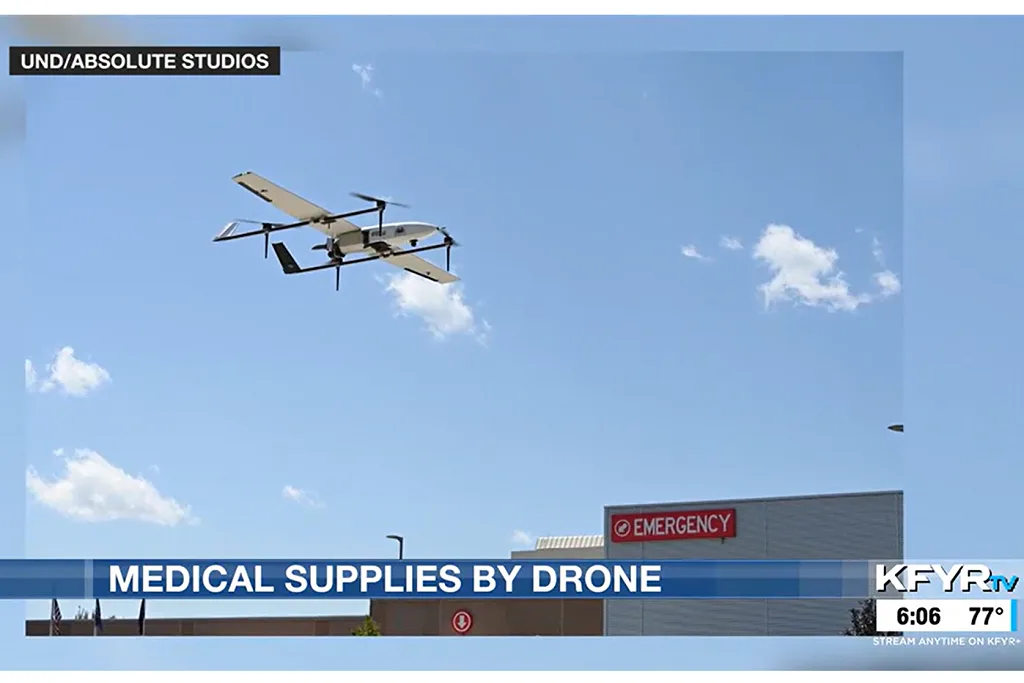
In this screenshot from a KFYR-TV news report, the Supervolo drone operated by iFlight Drone Services is shown arriving at its destination in Watford City, N.D.

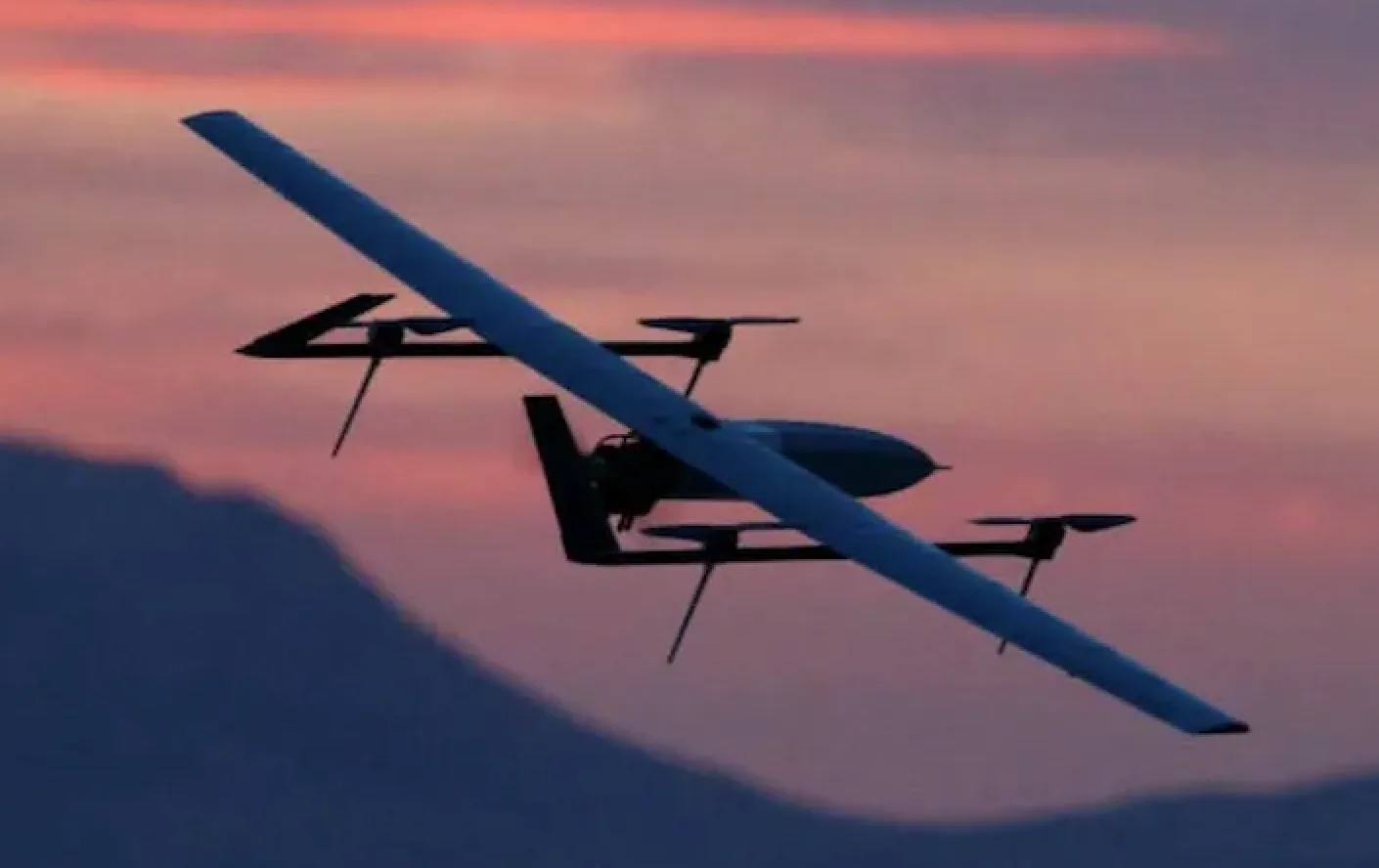
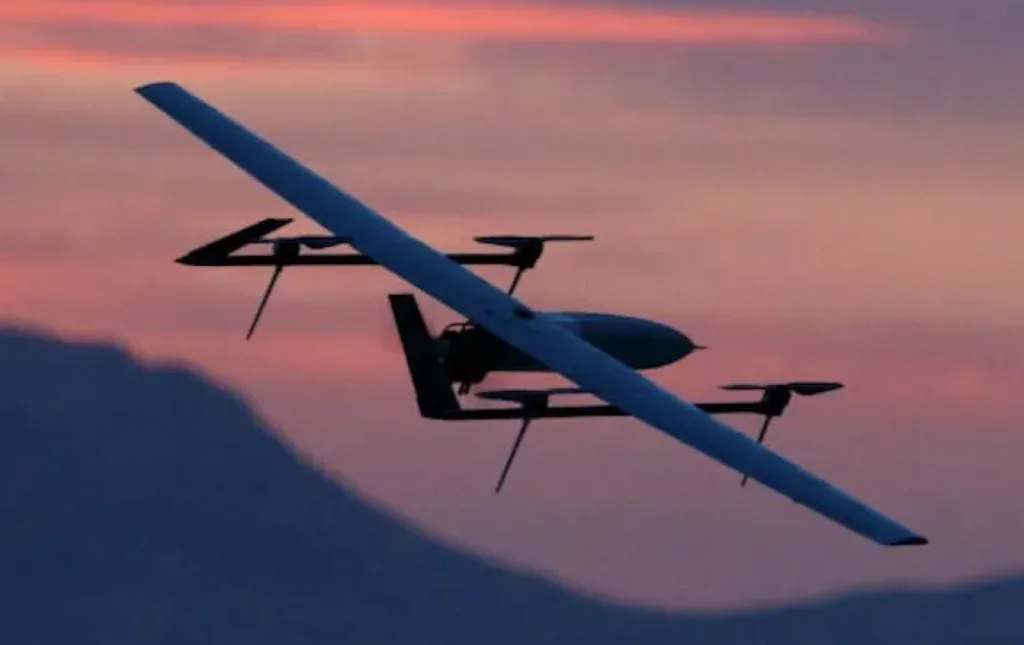
The Supervolo drone, measuring just over 6 feet long and with a wingspan of nearly 10 feet, was operated by iSight Drone Services of Grand Forks, N.D.

The successful launch marks the beginning of a series of flight tests aimed at evaluating how UAS technology can be integrated into health care infrastructure to serve remote communities more efficiently. Future flights will expand to additional rural areas and include further use cases to examine power needs and partnerships with emergency responders.

“Rural communities don’t have the luxury of cooperative-only airspace,” said Erin Roesler, deputy executive director of the Northern Plains UAS Test Site. “What makes this operation so impactful is that it proves BVLOS can be done safely, even in complex, real-world rural environments, and that it can bring real value to North Dakota communities.”

In a few weeks, the next flight will use Censys Technologies’ drones to evaluate the resources, technology and infrastructure needed to deploy drones in partnership with emergency responders as part of disaster response, real-time situational awareness and crisis resource mobilization. This data will build on this first use case for rural medical care supply delivery.

For UND and its partners, Project Rural Reach is more than a tech demonstration, Barta said. It’s part of a bold vision for transforming rural health care through innovation and collaboration.

MEDIA ADVISORY: Long-range test flight to show drones’ potential to supply rural North Dakota

Drone
Drone

What:
Project RuralReach will launch its first use-case test with a long-range drone flight, demonstrating the potential of unmanned aircraft to connect rural communities with medical goods using the Vantis system.

The flight will feature a Supervolo drone operated by iSight Drone Services and showcase a 34-mile Beyond Visual Line of Sight (BVLOS) journey between Williston and Watford City, N.D.

When:
Thursday, July 24, 2025
9 a.m. (weather permitting)

Where:
Launch from Williston TrainND Unmanned Aerial Systems (UAS) park, located at 1500 E. Dakota Parkway, Williston, N.D. 

Landing at Watford City Municipal Airport, 200 12th Street Southeast, Watford City, N.D.
(One-hour drive between locations)

Flight Details:

  • 34-mile flight path
  • Up to 4,000 feet in altitude
  • iSight drone operated on the Vantis statewide UAS network
  • Estimated flight duration: ~1 hour

Why It Matters:
The flight will mark a key milestone in North Dakota’s commitment to advancing unmanned aircraft systems (UAS) for public benefit, improving connectivity, delivery, and emergency response across rural regions. Project RuralReach aims to demonstrate real-world drone applications in sparsely populated areas.

Visual Opportunities:

  • Drone launch and landing
  • Interviews with flight operators and project stakeholders
  • Behind-the-scenes look at UAS flight prep and live tracking

Media Contact:

Haylee Bjork, Marketing Outreach Coordinator
Organization: UND Center for Innovation

Email: haylee.bjork@und.edu
Phone: 701.777.3281