

By DeAnna Carlson Zink
The End of Predictable Advancement
Advancement has entered a new era—and many organizations are still operating like it hasn’t.
For years, the work was predictable. Campaigns followed familiar cycles. Engagement strategies were repeatable. Annual plans often looked like a refined version of the year before.
That world is gone.
Today, advancement is operating in a reality where the pace of change is constant—and accelerating. What worked a year ago may already be outdated. And organizations that are not evolving are not standing still—they are falling behind.
This is not a call for incremental improvement. It is a call for a mindset shift.
Because the question is no longer, “How do we do more?”
The question is, “How do we adapt fast enough to remain relevant?”

The Role of AI and Innovation in Modern Philanthropy
At the center of this shift is artificial intelligence and a wave of new technologies that are reshaping how we understand, prioritize, and engage donors.
AI can surface insights in seconds that once took weeks. It can identify patterns we would have missed. It can streamline work that has long been manual and time-consuming.
But speed is not the goal.
Impact is.
If AI simply helps us move faster through outdated models, we have missed the opportunity. The real value of innovation is not efficiency alone—it is elevation. It should allow us to think more strategically, engage more meaningfully, and focus more intentionally on the relationships that matter most.
Why Human Connection Still Drives Philanthropy
Because for all the change around us, one truth remains:
Philanthropy is—and always will be—human.
No algorithm replaces trust. No automation replaces connection. No system replaces shared purpose.
The Future of Advancement Teams
This is why the future of advancement is not about fewer people—it is about different people.
We will need teams that are more agile, more curious, and more willing to challenge assumptions. Professionals who can blend relationship-building with data fluency. Leaders who are comfortable testing new ideas, learning quickly, and evolving continuously.
Innovation and Opportunity at UND
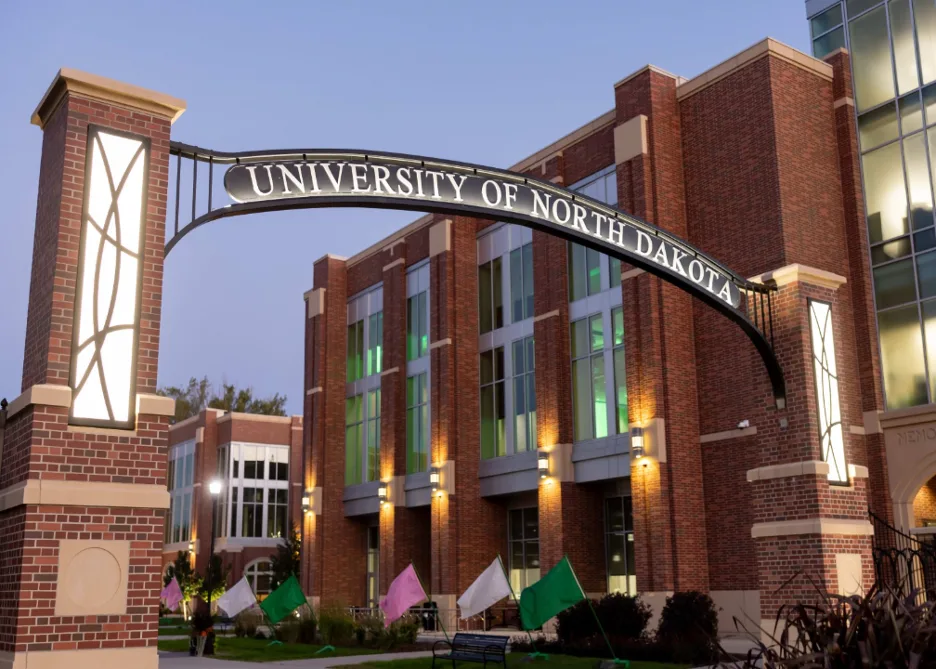
At institutions like the University of North Dakota—where innovation is central to how we prepare students and serve our communities—this moment represents more than disruption. It represents opportunity.
An opportunity to rethink how philanthropy fuels progress.
An opportunity to better connect people to purpose.
And an opportunity to ensure that every advancement strategy ultimately drives meaningful outcomes.

Call to Focus on Impact
Because ultimately, this work is not about activity. And it is not about keeping pace for the sake of it.
It is about impact.
It is about changing lives—opening doors for students, fueling ideas that shape industries, and creating opportunities that extend far beyond a single campus.
The future of advancement will belong to those who can embrace change without losing their core—who can leverage innovation without sacrificing authenticity.
Who can move faster, think bigger, and still remember:
This work is about people.
About the Author
DeAnna Carlson Zink serves as Chief Executive Officer of the University of North Dakota Alumni Association & Foundation. With more than two decades of experience in advancement, she is passionate about building modern, high-performing philanthropic organizations that drive impact, expand opportunity, and strengthen the future of higher education. She also serves on the Board of the UND Center for Innovation Foundation, supporting entrepreneurship and innovation across the region.