
Student Innovators
STUDENT OPPORTUNITIES
At the UND Center for Innovation Foundation (CFIF), we’re not just a resource for aspiring entrepreneurs across the Northern Plains. We also offer various innovative services and programs for UND students, staff, and faculty as a department of the University of North Dakota. Explore how we can help you unlock new opportunities within the UND community today!
Learn more about our opportunities for UND students below!
Runway Accelerator
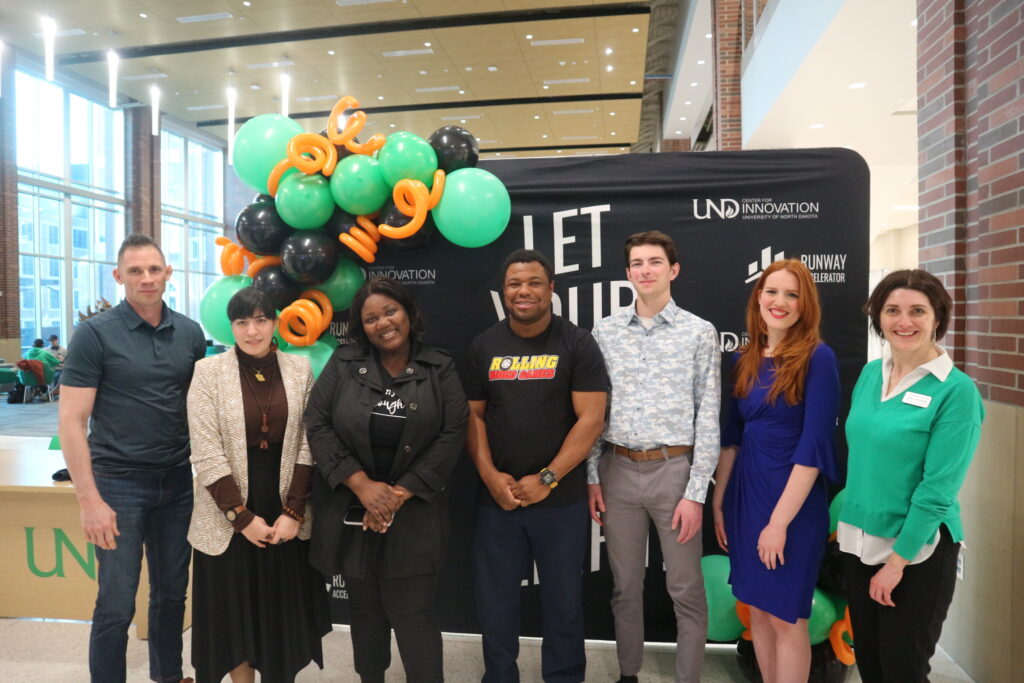
Runway is powered by the Center for Innovation’s (CFI) Start-up Fund and Nistler College of Business & Public Administration’s Edson Larson Foundation Fund. This is a two-phase program that combines start-up training, mentorship by dedicated staff & seasoned business owners, networking with peers and industry experts, and access to up to $10,000 in mini-grant funding to support UND student ventures. Runway is offered to any UND student or Alumni during the UND academic year.
NSF I-Corps Hub Great Plains Region
The National Science Foundation Innovation (I-Corps) program is an immersive, entrepreneurial training program that facilitates the transformation of invention to impact. I-Corps prepares researchers to extend their focus beyond the laboratory to increase the economic and societal impact of NSF-funded and other basic research projects.
Prodigy Consulting
Prodigy Consulting is a student-run business here at UND! Prodigy is a digital consulting company dedicated to helping startups and early-stage entrepreneurs tell their stories and increase brand awareness. Prodigy Consulting offers SEO, website development, online marketing, journalism, press releases, product photography, social media management, engineering consulting, UAS consulting, and general business strategy.


Dakota Venture Group
The Dakota Venture Group (DVG) is a University of North Dakota student-run venture capital investment fund. It is unique because DVG is the first fund where students complete all due diligence, make the final investment decision, and negotiate the deal’s term structure. By participating in Dakota Venture Group UND students receive an unheard-of opportunity for experiential learning in the field of venture capital and angel investing.
Mueller Internship Program
Mueller internships assist UND students interested in examining whether their passion and interests are viable business ideas. Students can apply as individuals or as a team and receive up to $3,000. If accepted, Mueller Interns receive startup coaching services at the UND Center for Innovation.
Testimonials
Our Team